UNDP's commitment to addressing HIV and other major health and development challenges is based on the principles that health is a driver for and an indicator and outcome of development.
As outlined in the UNDP Strategic Plan 2022-2025, UNDP’s support to countries aims to eradicate poverty in all its forms and dimensions, accelerating structural transformation for sustainable development and supporting governments to build resilience to shocks and crises.
UNDP defines capacity development as the process through which individuals, organizations and societies obtain, strengthen and maintain the capabilities to set and achieve their own development objectives over time.
Strong partnerships are the cornerstone of UNDP's work to strengthen systems for health. In its support to countries UNDP works closely with other United Nations entities, development organizations, civil society organizations, the private sector, academia and key populations to develop resilient and sustainable systems for health.
The effectiveness of UNDP's model of health programme support, with its emphasis on end-to-end capacity development, is evident in the results of its long-standing partnership with the Global Fund to Fight AIDS, Tuberculosis and Malaria (the Global Fund).
Whether in its role as an implementing partner managing large-scale HIV, TB, and malaria programmes funded by the Global Fund or as a technical assistance
Investments in resilient and sustainable systems for health lay the foundation for the effective and equitable delivery of HIV, tuberculosis (TB) and malaria.
Human rights barriers include stigma and discrimination, punitive laws, policies and practices, violence, harassment, gender, and social and economic inequalities.
People most affected by HIV, tuberculosis (TB) and malaria are often the same people who are marginalised and have limited or no access to health care.
Gender equality is essential to achieving health and well-being for all, accelerate progress towards the health-related Sustainable Development Goal (SDG) targets and ensuring that no one is left behind.
The objective of capacity development planning with a national coordinating body, such as national AIDS commissions (NACs), is to design and implement a process to strengthen capacities in national coordination, communication, and monitoring and evaluation. The intended results are greater national ownership; resilient, accountable and transparent systems; and effective and efficient approaches for the monitoring and evaluation of national strategies by national entities.
National coordinating bodies capacities
The capacities required by NACs to effectively and efficiently act as the custodians of national strategic plans (NSPs) as part of a coordinated multisectoral approach include:
Coordination: coordination among national and local government, civil society organizations, key populations and the private sector is central to the achievement of NSPs through a multisectoral approach. Coordination activities include the ability to carry out joint stakeholder planning, advocacy activities, sector meetings, mentoring and joint review visits.
Communication: communication strategies and campaigns aligned to NSPs that have clear target audiences at local, regional and national levels, and relevant messages for identified key populations, are crucial to the response. NACs also need to have effective communication skills to negotiate with, motivate and represent the various sectors involved in HIV/AIDS.
Legal framework: the national legal framework can hinder the full implementation of NSPs. NACs should have the capacity to carry out legal environmental assessments and to work with government to create an enabling environment for the implementation of the approach, in consultation with civil society organizations and key populations.
Policy engagement: NACs need to work in collaboration with other key partners, including technical working groups, to review national policies and update these in line with current international best practice. Policy focus should include gender, human rights, discrimination and stigma, and support to people living with HIV and key populations.
Resource mobilization: resource mobilization at international, national and provincial levels ensures the financial sustainability of NSPs. NACs need the ability to cost national plans, monitor all donor funding within the country and identify gaps and overlaps to maximize resources.
Monitoring and evaluation: monitoring and evaluation (M&E) of the national strategy using one harmonized M&E framework is key to national responses. NACs need to be able to map all activities being implemented within the country and to source and analyse data from all implementing sectors. National strategic plans should be supported by a national M&E plan. NACs need capacity to update and harmonize the M&E plan and should have national M&E guidelines, a database to collect verified data from all sectors, systems for analysing the data and processes for evaluating the national strategy.
Risk management: risk management is key to identifying the risks that may hinder full achievement of NSPs. NACs should possess the capacity to assess the environment and identify both programmatic and financial risks and ways to mitigate these.
Governance: good governance includes being responsible and accountable as a national coordinating body to the other sectors within the country and developing robust, resilient and sustainable systems, with effective oversight.
Financial management: although most NACs do not usually directly implement health activities, they do manage funds. As such, they need strong financial management and systems aimed at mitigating risk and ensuring that they are accountable to country stakeholders.
Human resources: NACs need skilled human resources to reflect the roles that they play in coordination, communication and law, rights and policy engagement. Staff performance needs to be monitored through staff performance systems, and staff need clear roles and responsibilities.
Programme management: capacity in programme management includes the ability to facilitate national and sectoral work planning, developing the capacity of civil society organizations or other groups working in the country, partner selection and contracting, and monitoring and reporting.
Procurement: NACs need the capacity to carry out procurement for non-health products and to select and contract technical assistance. There is a need for procurement policies, procedures, oversight and procurement plans.
UNDP’s approach
UNDP supports national AIDS coordinating bodies to establish and implement capacity development plans to provide a framework to:
ensure a clear vision and structure to coordinate, monitor and evaluate the national strategy
coordinate and represent all the key sectors operating within the country
strengthen policies and guidelines to meet the country’s needs, in line with the national strategy
develop good-quality products and services to respond to the needs of stakeholders and key populations.
Tools
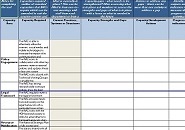
UNDP has developed and tested the Capacity Assessment and Planning Tool for NACs, which can be amended to suit the country context as required. UNDP provides guidance and support to participatory capacity-planning processes, which lead to a more country-led capacity development work plan. Strong coordination is key to an efficient and effective response and is required for the successful implementation of national strategies. Capacity development plans for national coordinating bodies should identify coordination challenges, both internally and at national and district levels, and should also identify the sectors working within the response, mapping these and monitoring and evaluating all partners and their roles.