UNDP's commitment to addressing HIV and other major health and development challenges is based on the principles that health is a driver for and an indicator and outcome of development.
As outlined in the UNDP Strategic Plan 2022-2025, UNDP’s support to countries aims to eradicate poverty in all its forms and dimensions, accelerating structural transformation for sustainable development and supporting governments to build resilience to shocks and crises.
UNDP defines capacity development as the process through which individuals, organizations and societies obtain, strengthen and maintain the capabilities to set and achieve their own development objectives over time.
Strong partnerships are the cornerstone of UNDP's work to strengthen systems for health. In its support to countries UNDP works closely with other United Nations entities, development organizations, civil society organizations, the private sector, academia and key populations to develop resilient and sustainable systems for health.
The effectiveness of UNDP's model of health programme support, with its emphasis on end-to-end capacity development, is evident in the results of its long-standing partnership with the Global Fund to Fight AIDS, Tuberculosis and Malaria (the Global Fund).
Whether in its role as an implementing partner managing large-scale HIV, TB, and malaria programmes funded by the Global Fund or as a technical assistance
Investments in resilient and sustainable systems for health lay the foundation for the effective and equitable delivery of HIV, tuberculosis (TB) and malaria.
Human rights barriers include stigma and discrimination, punitive laws, policies and practices, violence, harassment, gender, and social and economic inequalities.
People most affected by HIV, tuberculosis (TB) and malaria are often the same people who are marginalised and have limited or no access to health care.
Gender equality is essential to achieving health and well-being for all, accelerate progress towards the health-related Sustainable Development Goal (SDG) targets and ensuring that no one is left behind.
Successful and sustainable capacity development can only occur when there is commitment from individuals who invest in the process from the design stage onwards. Engaging stakeholders to build consensus from the time of designing the capacity development process is vital to ensure that all country partners are kept informed, consulted and engaged as necessary. Each organization will have a different role and view of the capacity development effort. UNDP works with organizations to bring country stakeholders together, along with tools to outline the scope and process for the capacity development.
In the context of programmes funded by the Global Fund to Fight AIDS, Tuberculosis and Malaria (The Global Fund), note that the capacity assessment process described here is not intended to replace the Principal Recipient assessment performed by the Global Fund. The Global Fund assessment identifies capacity gaps from the viewpoint of risk to itself, while this assessment identifies capacity needs from the viewpoint of defining plans for improvement.
UNDP’s approach
UNDP helps to convene and facilitate the stakeholders of a health programme to:
Plan the assessment: identify how the assessment will be conducted, including whether it will be conducted with or without support from an external facilitator; the type of information-gathering method used, such as group meetings, workshops and one-on-one assessment meetings; and which organizations will be involved.
Confirm the scope of capacities to be assessed: review and update the specific skills and capacities to be assessed within each focus area. Depending on the country context, focus areas might include programme management, health information systems, procurement and supply chain management, financial management, and legal and policy environments.
Review existing documentary evidence: review and capture existing documentary evidence of current capacity from previous assessments, strategy documents and audit reports.
Conduct the assessment: capture strengths, needs and recommendations for each capacity.
Verify the assessment: review and confirm initial findings from further discussions with relevant partners and stakeholders.
Draft an assessment report if required: to consolidate the assessment results and develop draft conclusions.
Tools and guidance
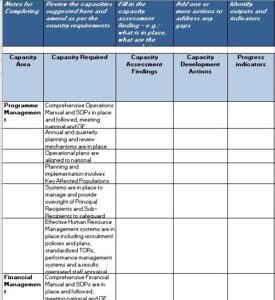
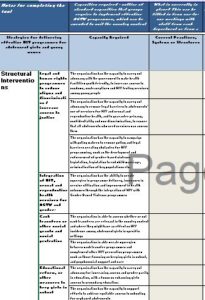
UNDP has developed a set of capacity assessment tools that are tailored to the needs of ministries of health, large organizations such as international non-governmental organizations or networks, and local civil society organization (CSO) implementing partners. UNDP has also supported capacity assessment processes tailored to specific programme components, such as interventions for adolescent girls and young women and key populations.
Key considerations for conducting an effective capacity assessment can be found here.
This comprehensive tool is designed for HIV, TB and Malaria with the main purpose to strengthen the systems and procedures of national entities to manage national programmes.
The tool is designed for assessing the capacity of potential PRs and to detail activities that need to take place before transition to a new Global Fund PR can fully...
This rapid tool is designed for HIV, TB and malaria with the main purpose to strengthen the systems and procedures of national entities to manage national programmes.
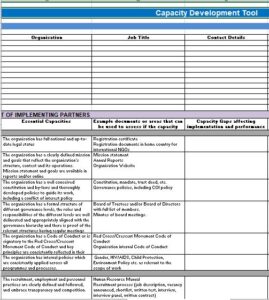
This tool is to support the capacity assessment and development of CSOs, covering programme management, monitoring and evaluation, financial management and procurement.
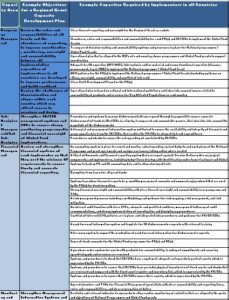
The plan outlines and prioritizes capacity development objectives, interventions and output indicators designed to enhance implementers’ capacity in multiple countries.
These tools & guidelines provide a shared approach to assess the strengths and weaknesses of a national health strategy or plan. JANS can support the assessment of what is required...