Purpose
Successful and sustainable capacity development can only occur when there is commitment from individuals who invest in the process from the design stage onwards. Engaging stakeholders to build consensus from the time of designing the capacity development process is vital to ensure that all country partners are kept informed, consulted and engaged as necessary. Each organization will have a different role and view of the capacity development effort. UNDP works with organizations to bring country stakeholders together, along with tools to outline the scope and process for the capacity development.
In the context of programmes funded by the Global Fund to Fight AIDS, Tuberculosis and Malaria (The Global Fund), note that the capacity assessment process described here is not intended to replace the Principal Recipient assessment performed by the Global Fund. The Global Fund assessment identifies capacity gaps from the viewpoint of risk to itself, while this assessment identifies capacity needs from the viewpoint of defining plans for improvement.
UNDP’s approach
UNDP helps to convene and facilitate the stakeholders of a health programme to:
- Plan the assessment: identify how the assessment will be conducted, including whether it will be conducted with or without support from an external facilitator; the type of information-gathering method used, such as group meetings, workshops and one-on-one assessment meetings; and which organizations will be involved.
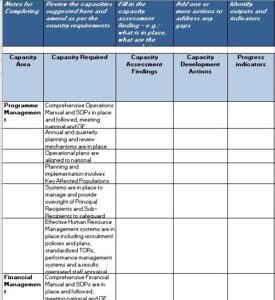
- Confirm the scope of capacities to be assessed: review and update the specific skills and capacities to be assessed within each focus area. Depending on the country context, focus areas might include programme management, health information systems, procurement and supply chain management, financial management, and legal and policy environments.
- Review existing documentary evidence: review and capture existing documentary evidence of current capacity from previous assessments, strategy documents and audit reports.
- Conduct the assessment: capture strengths, needs and recommendations for each capacity.
- Verify the assessment: review and confirm initial findings from further discussions with relevant partners and stakeholders.
- Draft an assessment report if required: to consolidate the assessment results and develop draft conclusions.
Tools and guidance
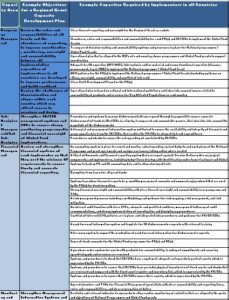
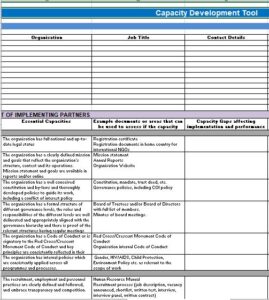
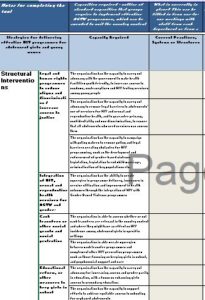
UNDP has developed a set of capacity assessment tools that are tailored to the needs of ministries of health, large organizations such as international non-governmental organizations or networks, and local civil society organization (CSO) implementing partners. UNDP has also supported capacity assessment processes tailored to specific programme components, such as interventions for adolescent girls and young women and key populations.
Key considerations for conducting an effective capacity assessment can be found here.