Strengthening national systems for health: focus areas
Investments in resilient and sustainable systems for health lay the foundation for the effective and equitable delivery of HIV, tuberculosis (TB) and malaria programmes, other essential health services and the achievement of universal health coverage. As a key partner of the Global Fund to Fight AIDS, Tuberculosis and Malaria (The Global Fund), UNDP supports investments in strengthening systems for health. UNDP is increasingly requested by governments to provide technical assistance in core functional areas of health system strengthening, such as procurement and supply chain management or financial management systems.
These investments in building enabling processes, capacities and policy environments for health yield cross-cutting benefits in terms of improving health outcomes and advancing countriesʼ achievement of the health-related Sustainable Development Goals (SDGs). This includes efforts to enhance the sustainability and resilience of health systems that enable governments to accelerate progress towards universal health coverage and withstand the impact of global health crises and other emerging threats. The COVID-19 pandemic has underscored the vital role of health systems, revealing the costs of inadequate systems, processes and capacities as countries have had to cope with increased demands while maintaining the delivery of essential health services. The pandemic response has likewise illuminated the value of previous investments in building strong community systems for, for example, health, procurement and supply chain management systems, or health management information systems, which countries could adapt to mitigate the impact of COVID-19.
Key areas for building resilient and sustainable systems for health
The Global Fund’s Modular Framework Handbook underlines the following key areas for investment in resilient and sustainable systems for health:
Health product management and systems strengthening. This includes policy strategy and governance; storage and distribution capacity; procurement capacity; regulatory and quality assurance support; and avoidance, reduction and management of health-care waste.
Health management information systems and monitoring and evaluation. This includes routine reporting; programme and data quality; analyses, evaluations, reviews and transparency; surveys; administrative and finance data sources; and civil registration and vital statistics.
Human resources for health including community health workers. This includes education and production; remuneration and deployment; in-service training; and policy and governance frameworks.
Integrated service delivery and quality improvement. This includes quality of care; service organization and facility management; and service infrastructure.
Financial management systems. This includes public financial management systems and routine grant financial management.
Health sector governance and planning. This includes national health sector strategies and financing; and policy and planning for national disease control programmes.
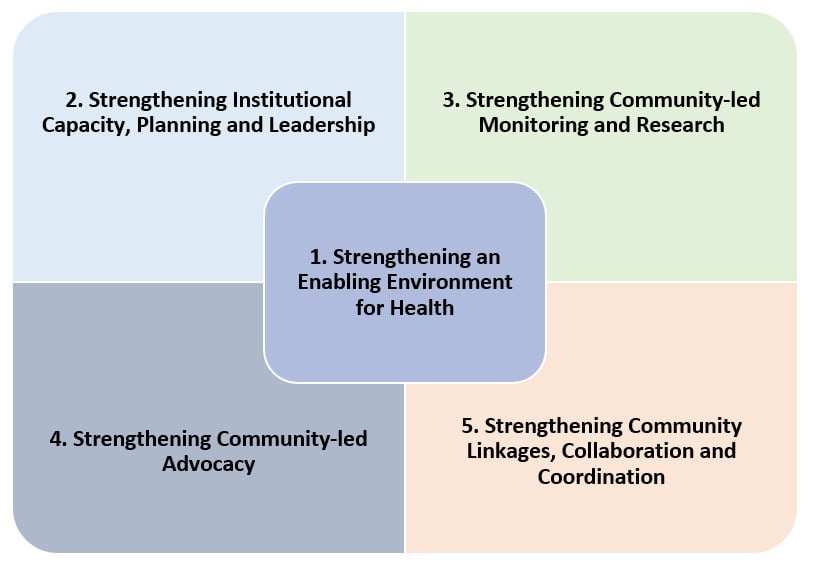
Community systems strengthening. This includes community-based monitoring; community-led advocacy and research; social mobilization; building community linkages and coordination; and institutional capacity building, planning and leadership development.
Laboratory systems. This includes national laboratory governance and management structures; infrastructure and equipment management systems; quality management systems and accreditation; information systems and integrated specimen transport networks; and laboratory supply chain systems.
Examples
Case Study: Building Resilience Against Health Crises Through Long-Term Investments in Health Systems
In 2020, the simultaneous threats of malaria, Ebola, and COVID-19 placed immense strain on Burundi’s healthcare system. Since 2017, UNDP, with funding from the Global Fund, has supported the Ministry of Health in scaling up programs, procuring essential medical supplies, and strengthening supply chains. Key interventions included distributing 6.8 million bed nets, deploying mobile clinics, and conducting insecticide spraying in high-risk areas. Investments in health infrastructure and medical equipment enhanced Burundi’s ability to respond to emerging outbreaks. The national health crisis center, originally established for Ebola, became the coordination hub for COVID-19, equipped with 200 smartphones and laptops. Additionally, malaria control pumps were repurposed for medical decontamination, and a health monitoring app was adapted to track COVID-19 cases.
These efforts not only controlled disease outbreaks but also fortified Burundi’s healthcare system, ensuring life-saving medicines and diagnostic tools reached even remote communities. By strengthening disease surveillance and response capacity, Burundi reduced malaria-related deaths and enhanced its resilience against future health crises, protecting millions of lives.
Case Study: Building resilience through strengthened ICU care
Strengthening the Intensive Care Unit ICU care in Afghanistan
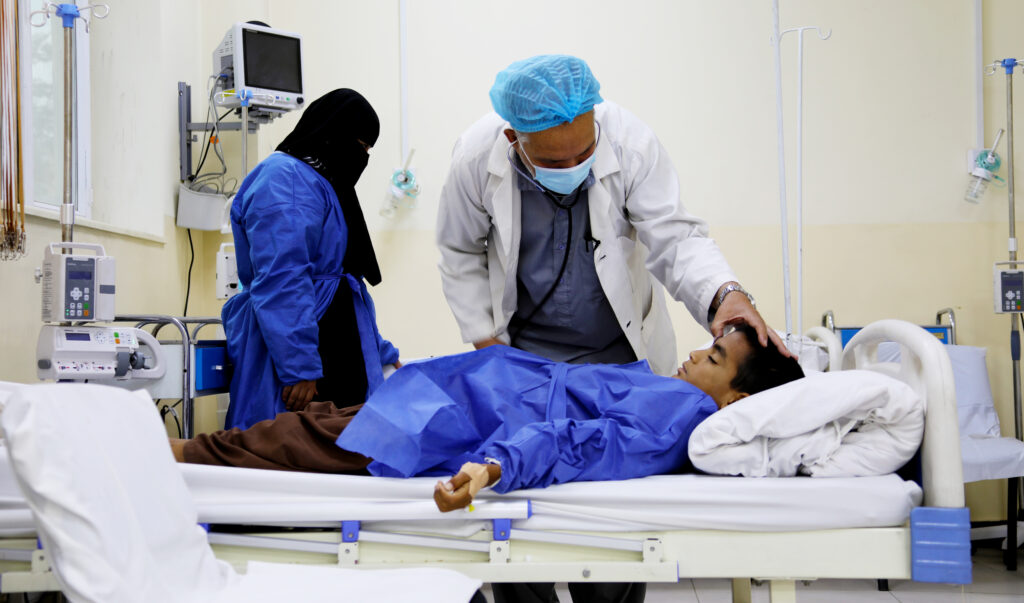
In Afghanistan, Intensive Care Units (ICUs) play a crucial role in providing emergency care, particularly in regions affected by conflict, disasters and public health crises. With support from the Global Fund, UNDP upgraded ICUs in Kandahar, Logar, and Balkh provinces, enhancing emergency care and infectious disease treatment for over 500 patients monthly. These improvements included renovating ICU wards and installing oxygen plants that deliver oxygen directly to patients’ beds while also generating backup supplies in cylinders. These measures enable the ICUs to provide intensive care services to patients in need.
These investments provide the infrastructure, equipment and healthcare capacity to improve critical care, manage infectious diseases and chronic illnesses, improve maternal and neonatal health and respond to emergencies and disasters. Crucially, this also ensures a more integrated healthcare network, enabling telecommunication links between departments and boosting the long-term readiness of facilities to respond to crises. With hundreds of patients now receiving care each month from the upgraded ICUs, this approach helps safeguard communities, bolster health systems and build resilience against future health emergencies.
World Health OrganizationThis resource is intended to be the universally accepted standard for guiding the collection, reporting and use of health information by all developing countries and global agencies.
The tool helps to enhance entire health information and statistical systems, and to concentrate efforts on strengthening country leadership for health information production and use.
AUTHOR:The Global FundLANGUAGE:EnglishFILE FORMAT:Web Link
Strengthening national health information systems
The role of a health information system (HIS) is to ensure the production, analysis, dissemination and use of reliable and timely data by decision makers at all levels of the health system. A well-functioning HIS provides information on which to base programme decisions, to support the development of solid national health policies, strategies and plans, to monitor progress of interventions against national priorities and to contribute to reliable procurement and supply of health products through accurate data on needs and usage. Information is also essential for effective health system governance and regulation, health research, human resources development, health education and training, service delivery and financing.
At the policy level, decisions informed by evidence contribute to more efficient use of resources and, at the delivery level, they provide information about the quality and effectiveness of services. A well-functioning HIS should, among other core functions:
generate and compile information from service delivery points to district level routine information systems, disease surveillance systems, laboratory/procurement information systems, hospital patient administration systems and human resource management information systems
detect events that threaten public health security
analyse, synthesize and communicate information for use in planning and implementation.
The COVID-19 pandemic has further underlined the crucial role of health information systems in enabling countries to effectively respond to disease outbreaks. Weaknesses in surveillance systems and capacities to collect, manage and utilize data, particularly at the community level, undermine the delivery of life-saving health services, most notably in the face of global health threats.
Defining the health information system
A health information system (HIS) is composed of people, tools and methods that interact at different stages of the health information production process. These stages can be defined as a system that integrates data collection, processing and reporting, and uses the information necessary for improving health service effectiveness and efficiency through better management at all levels of health services. It encompasses all health data sources, including health facility and community data, electronic health records for patient care, population-based data, human resources information, financial information, supply chain information and surveillance information, along with the use and communication of this information.
UNDP’s approach
Many countries in which UNDP supports systems for health, particularly through its partnership with the Global Fund to Fight AIDS, Tuberculosis and Malaria (The Global Fund), are low-income countries or are characterized by challenging operating environments. These tend to have young or fragmented health information systems (HIS), sometimes set up in an ad hoc way in response to different donor requirements. UNDP works to assess what is in place and how this can be strengthened to form a sustainable HIS. Working closely with national entities, UNDP’s support includes work to:
assess the country requirements based on the national health strategy and priorities
support the development of national health information strategies
support the integration and harmonization of data management systems, to reduce silos
support the assessment of where information and communications technology (ICT) can deliver better data and information for decision makers
assess needs for other elements of a comprehensive HIS, such as logistics management information systems or human resource management information systems
strengthen data literacy of the health workforce
strengthen reporting and communication of results at all levels of the health pyramid
support the development of study protocols and implementation of related databases and research projects.
When UNDP serves as interim Principal Recipient of the Global Fund programmes in a country, support to health management information systems is often a key area for capacity development, in line with national priorities and the Global Fund guidelines for strengthening data systems. This includes doing so through capacity-building to enable health sector personnel to move beyond a focus on data solely for reporting, to the active use of real-time data in decision-making at all levels, such as in the management and evaluation of programmes and the formulation of budgets. UNDP likewise supports countries with the development of applications to the Global Fund to ensure inclusion of activities to strengthen national HISs, including those to promote enhanced integration across data systems. Examples of focus areas that can be included in the Global Fund funding applications are:
routine information systems (the establishment, maintenance and strengthening of national health information systems, district HISs, mobile platforms for community-level data collection and reporting, and support for human resources for data systems)
programme and data quality (activities related to assessments of programme and/or data quality, as well as monitoring of quality improvement activities)
evaluations, reviews, data analysis and use
surveys and studies
administration and financing of data systems
civil registration and vital statistics systems.
Tools and guidance
To support comprehensive improvements to HIS, UNDP aligns its focus with international standards and recommendations developed by the World Health Organization (WHO). The WHO UHC Technical Brief: Strengthening Health Information Systems, for instance, details seven strategic areas for actions that are required to strengthen national HIS:
Improve governance. HIS strengthening requires an enabling environment and robust collaboration between health and other sectors, including the information and communications technology (ICT) sector.
Invest in data sources and capacities. These investments strengthen health information, workforce skills and capacities for using health statistics and data.
Align stakeholders in support of HIS. Development partners and national institutions should make sure that their investments are complementary. Data, monitoring and accountability should be integrated into one plan and one budget for the health sector, and should be aligned with the health Sustainable Development Goals.
Use the digital revolution. The power of ICT innovation can help improve the availability, completeness, timeliness, quality and use of data for decision-making in health. Minimizing the burden of data collection, analysis and reporting through eHealth strategies can improve health service delivery and management.
Strengthen the capacity for systems and applications to be reusable. The use of scalable, affordable and open access software systems should be promoted and common health information architecture, standards, guides, tools and solutions to data management and analysis should be developed.
Use data to improve policy and service delivery. With a focus on equity, disaggregated data and access to needs-based, good–quality services, health information should be provided to decision makers at all levels for improving health policy, systems and services.
Strengthen accountability and reporting of results. There should be national oversight mechanisms for key indicators of national health targets and goals and mechanisms for regular transparent reviews to assess progress against national health sector targets.
A number of tools are also available to strengthen monitoring and evaluation (M&E) systems for health programmes and systems, as a distinct but interconnected component of broader HIS strengthening. Most notably, in the context of the Global Fund programmes, stakeholders should refer to the guidance and tools made available on the Global Fund website, which includes information related to national M&E system assessments, data systems for HIV surveillance and DHIS-2 strengthening.
Health information system versus monitoring and evaluation system
The health information system (HIS) is sometimes equated with national monitoring and evaluation (M&E) systems, but this is an oversimplification. In addition to being essential for M&E, the HIS also serves broader objectives, such as providing alert and early warning capability, supporting patient and health facility management, enabling planning, stimulating research, permitting health situation and trends analyses, and reinforcing communication of health challenges to different groups.
Information is of little value if it is not available in formats that meet the needs of different groups, i.e. policymakers, planners, managers, health-care providers, communities and individuals. The way information is collated and presented, and its dissemination and communication, are therefore essential attributes of the system. The HIS supports strategic and management decisions for the entire health sector and so the HIS is the responsibility of multiple stakeholders (e.g. ministries of health as well as national statistics offices). The national M&E system needs to contribute to and draw on existing data from the HIS. As such, the performance of the M&E system is directly linked to the capacity of the HIS. For example, health workers who report and manage HIV-specific data are often also responsible for collecting and managing data about other health services.
For additional guidance related to UNDP’s support to strengthen electronic logistics management information systems and their interoperability within HISs, visit the Logistic management information systems (LMIS) page. Further details on digital solutions that UNDP has employed to strengthen systems for health information, M&E and logistics data can be found on the Real-time data solutions page.
Strengthening systems with District Health Information System 2
UNDP has amassed experience providing technical assistance to national entities in diverse country contexts for the roll-out, scale-up and integration of national health information systems (HISs), particularly through District Health Information System 2 (DHIS-2). UNDP personnel in country offices and at the global level play an important role in the international DHIS-2 community, including facilitating DHIS-2 academies and sharing best practices and experiences with colleagues in other countries about strategic approaches to strengthening HISs in both fragile and relatively stable contexts.
In Sudan, for example, UNDP has helped the country to achieve considerable progress since 2015, for example by launching a web-based DHIS-2 database to implement one national routine HIS. To facilitate the sustainable uptake of the system, UNDP supported the training of 900 staff on the use of the HIS at national and subnational levels. This was complemented by support to revise, print and distribute guidance and reporting tools for the use of the system at health facilities.
In Angola, further to providing implementation support for the deployment of DHIS-2, UNDP supported the development and integration of new HIV data collection tools into the system, which allowed the government to collect key information for understanding HIV/tuberculosis co-infection and the impact on key populations.
Suggested capacity development indicators
National health information strategy in place
Comprehensiveness of health data capturing prevalence, incidence and qualitative social and behavioural data, disaggregated by age and gender
The percentage of districts that submit timely, complete and accurate reports at the national level
Level of use of data collection systems for studies and evaluations
Level of integration of health data into management and forecasting reports and processes the percentage of evaluations completed per plan
Availability and transparency of data for management and partner review
World Health OrganizationThis resource is intended to be the universally accepted standard for guiding the collection, reporting and use of health information by all developing countries and global agencies.
The tool helps to enhance entire health information and statistical systems, and to concentrate efforts on strengthening country leadership for health information production and use.
AUTHOR:The Global FundLANGUAGE:EnglishFILE FORMAT:Web Link
Strengthening the collection and use of data for decision-making and accountability
Purpose
The role of a health information system (HIS) is to enable the use of reliable and timely data by decision makers at all levels of the health system. The HIS is therefore reliant on, and is only as good as, the quality of data collected. High-quality and up-to-date data are necessary for countries to respond quickly to public health crises and ensure the effectiveness of ongoing health service delivery. This includes making information available on vulnerable groups and key populations most affected by health issues, to ensure that services can be effectively tailored to the needs and unique barriers to health access faced by those communities. The strength of the HIS also ensures that when an emergency health situation arises, decision makers are aware of it early and can divert the necessary resources to prevent epidemics.
In many countries, the quality of data gathered at health facilities and the capacity to analyse and use these data remain inadequate to support decision-making that will accelerate the achievement of universal health coverage. Most countries have health facility registries and service-use reporting forms; they maintain medical record rooms and may have health information units overflowing with data. Despite this abundance of data, many still find it challenging to collect high-quality data in a timely manner, produce disaggregated data and use them for policy and planning.
Among the challenges is the fact that data may be incomplete or of poor quality or that there may be duplication and fragmentation of data across reporting systems developed by different users. This makes it difficult to connect the resources invested to the results achieved. Data needs and demands are also changing with the rise in non-communicable diseases. More technical skills in key areas such as epidemiology, biostatistics and database management are needed, as well as skills to analyse statistics across different programmes and sectors. Responsibility for data entry, verification, validation and management is distributed across various individuals, professions, units, departments and facilities at the different levels of the HIS. Programmatic or patient care data are often collected and managed separately from health products or stock data. Staff rotation is another concern in relation to maintaining appropriate standards, as such a situation affects data quality. In addition, data quality is rarely seen as a priority and the resources available are limited.
UNDP’s approach
As Principal Recipient of the Global Fund grants, UNDP is highly committed to improving health data quality, analysis and use to support decision-making within health programmes and systems. UNDP provides capacity development and good practice support during data collection and data management processes. More specifically, UNDP supports ministries of health and other partners at various levels of health information chains in their processes to:
assess regularly the quality of project data through internal routine tools and external processes
formulate and implement a health data quality development plan
facilitate high data quality standards at all levels of the health information system
develop tools and methods for data collection and use
strengthen the capacity of health information system professionals in data collection, management and analysis
strengthen the data flow at all levels of the health pyramid.
Tools and guidance
Further information on core data components that constitute a health information system (HIS), to inform the entry points for capacity development, can be found in this UNDP guidance note.
UNDP’s technical assistance to strengthen data collection and use for better health outcomes considers the capacities required across the interconnected components of national HISs. This includes the following six components of HISs defined by the World Health Organization (WHO), as detailed in the Framework and Standards for Country Health Information Systems (2012):
Health information system resources. These consist of the legislative, regulatory and planning frameworks required to ensure a fully functioning HIS and the resources that are required for such a system to be functional, such as personnel, financing, and information and communications technology (ICT).
Indicators. A core set of indicators and related targets are the basis for an HIS plan and strategy. Indicators need to encompass determinants of health, health system inputs, outputs, outcomes and health status.
Data sources. These should include population-based approaches (censuses, surveys and civil registration), institution-based data (individual records, service records and resource records) and additional information from occasional health surveys, research and information produced by community-based organizations.
Data management. This includes the collection, storage, quality assurance, flow, processing, compilation and analysis of data.
Information products. Data must be transformed into information that will become the basis for evidence and decision-making.
Dissemination and use. The value of health information can be enhanced by making it readily accessible to decision makers.
Additional resources from WHO, the Global Fund to Fight AIDS, Tuberculosis and Malaria (The Global Fund) and other global health partners can be found under key resources below. They include tools to inform the selection of data collection indicators, facilitate data quality reviews and strengthen processes and capacities for data analysis and use to achieve national health priorities.
Indicator guidance for Global Fund programmes
For countries implementing HIV, tuberculosis, malaria and health systems strengthening programmes funded by the Global Fund to Fight AIDS, Tuberculosis and Malaria (The Global Fund), the Global Fund asks implementers to select their programme indicators from a core list of indicators. These indicators aim to promote a common understanding of monitoring and evaluation and to reduce the reporting burden for countries. The Global Fund Modular Framework Handbook 2023 – 2025 provides guidance on selecting indicators relevant to agreed programme activities to measure progress on health interventions. For more detailed information on the HIV, tuberculosis, malaria and resilient and sustainable systems for health (RSSH) indicators, please review the indicator guidance sheets (August 2020):
This resource is intended to be the universally accepted standard for guiding the collection, reporting and use of health information by all developing countries and global agencies.
The tool helps to enhance entire health information and statistical systems, and to concentrate efforts on strengthening country leadership for health information production and use.
AUTHOR:WHOLANGUAGE:EnglishFILE FORMAT:PDF
Case studies: strengthening health information systems
Digitalizing the health management information system in Zimbabwe
Digital solutions that allow for real-time data collection and visibility have the potential to enhance all aspects of health information management and the functioning of the overall health system. In Zimbabwe, the digitalization process was prompted by the rapid growth in programmes for HIV and other epidemics in the early 2000s and the limited capacity of health workers to manually process large volumes of patient information. The transition away from paper-based reporting, and the genesis of the modern national health information and surveillance system, began in 2010 with the national roll-out of District Health Information System 1.4 (DHIS-1.4), an electronic platform for aggregate reporting of health data from the district level upwards.
Moreover, recognizing the need for a tool to capture and monitor detailed patient-level data, the Ministry of Health and Child Care (MoHCC) resolved to establish an electronic patient management system (ePMS) in 2013, which initially focused on the collection of HIV and tuberculosis treatment data at health facilities based on the urgent need. While the roll-out of the computerized system helped to enhance data collection and accuracy of reports under specific disease programmes, fragmentation and timeliness issues remained across the broader health information landscape. To enhance the transmission of routine health information collected through DHIS-1.4, MoHCC sought to upgrade to District Health Information System version 2 (DHIS-2), starting in 2013. As an online system connected to a central server, DHIS-2 not only improved the timeliness of health information reporting, but also allowed for greater access to real-time data across all levels of the health system, from the national level to the health facility level. Most critically, the electronic system introduced the potential for the gradual integration of all health information systems into a single platform, reflecting a shift towards more integrated programme management. Building on this progress, MoHCC will work with partners to eventually bring DHIS-2 and the ePMS into an electronic health records platform that is currently being rolled out.
MoHCC has promoted the continued growth of the electronic information ecosystem to address information needs across the health system. Whereas the initial priority was to enhance information systems for high-level decision-making, MoHCC has increasingly invested in systems for data disaggregation and use at lower levels of service delivery, building on the systems and infrastructure already in place. This has been accompanied by a focus on developing policy frameworks and human resource capacity for the effective use of the data in the delivery of health services. Electronic systems now include those for rapid disease notification, laboratory services and patient information. Efforts to build data skills among the health workforce, along with investments in information and communications technology (ICT) infrastructure, have helped to drive and reinforce the development of all systems.
Since 2010, UNDP has invested substantially in health management information system activities through grants from the Global Fund to Fight AIDS, Tuberculosis and Malaria (The Global Fund), with a focus on strengthening governance, ICT systems and human resource capacity for data collection and use. In line with the areas emphasized by national ICT and monitoring and evaluation (M&E) policy guidelines, UNDP has supported the national health management information system, particularly through the following interconnected outcomes:
Governance
Policies and strategic documents were developed, including through UNDP’s support to the ICT policy (2018), national M&E Policy Guidelines and Strategy (2018), and the e-Health Policy (2018), which guide the roll-out of ICT innovations to accelerate progress towards universal health coverage. UNDP also supported the end-term evaluation of the 2010–2015 National Health Information Strategy (NHIS) and the development of the 2020–2025 NHIS, with ongoing work to identify a consultant.
Assessments were conducted to guide investments in health information systems and capacities, including 1) a one-week data analysis for MoHCC in 2015, in collaboration with the Global Fund, the World Health Organization (WHO) and the University of Oslo, to assess the quality of data generated by the health information system and train health information officers at all levels for increased data analysis and usage; and 2) comprehensive assessments in May–June 2018 to inform national roadmaps for the implementation of new systems and enhancements to the existing ICT infrastructure.
Three-year plans (2014–2016 and 2017–2019) were finalized to guide the direction of the national health information department in the implementation of identified priorities.
National coordination bodies were strengthened through financial and technical support from partners, including the establishment of working groups to coordinate the development of new information systems and reduce fragmentation across systems.
Systems and infrastructure
DHIS-2 was rolled out in all health facilities as a web-based national system to collect, extract and disseminate aggregated district-level health data for weekly and monthly reporting.
ePMS was installed at more than 620 sites, enabling the collection of patient-level data for HIV and other services, with the development of a macro database allowing for data synchronization across all ePMS sites and analysis at the central level.
Weekly disease surveillance was enhanced through the introduction of FrontlineSMS, a mobile phone-enabled tool to collect and transmit surveillance data in real-time to districts and centrally for rapid response.
Major developments were undertaken towards a unified national health information system, with 13 systems integrated into DHIS-2, including ePMS and the Weekly Disease Surveillance System.
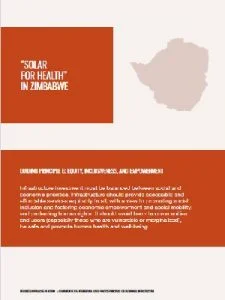
ICT infrastructure and connectivity were improved countrywide for the effective functioning of electronic data systems and central storage of databases, including the development of a state-of-the-art data centre and server in MoHCC, provision of laptops at all levels, payment of internet and phone subscriptions, and installation of solar energy at health facilities through the Solar for Health initiative.
Human resources
Coherent strategies for ICT-skills building were operationalized, including through support to develop a comprehensive ICT capacity development plan (2017–2018).
Over 6,000 health-care practitioners, data clerks and policymakers were trained in various health management information systems at the facility, district, provincial and central levels, contributing to improvements in basic data literacy as well as the accuracy and completeness of reporting.
Sustainability on the implementation and use of data systems was enhanced through capacity-building and skills transfer activities provided through UNDP-managed projects.
UNDP Djibouti: the use of new technologies for data collection and management
UNDP has amassed a wealth of experience in providing technical assistance to national entities supporting national capacities for monitoring and leveraging emerging data sources for real-time monitoring in countries where UNDP is an interim Principal Recipient of grants from the Global Fund to Fight AIDS, Tuberculosis and Malaria (The Global Fund).
In Djibouti, UNDP supported the Ministry of Health (MoH) to introduce a mobile data collection and management tool in 2020 to address data collection and activity monitoring challenges faced under the Global Fund to Fight AIDS, Tuberculosis and Malaria (The Global Fund) malaria programme. Specifically, within the context of Djibouti’s indoor residual spray campaign and adjustments made amid the COVID-19 pandemic, the programme faced challenges linked to delayed data availability, manual transcription errors and data duplication across activities. These issues meant a lack of complete and reliable data to guide decision-making and ensure quality control.
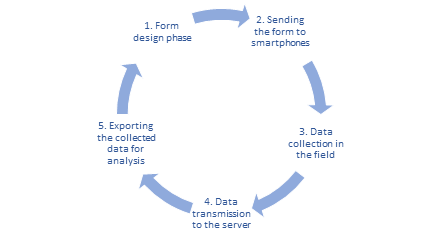
UNDP sought out technological solutions that could help to resolve some of these gaps. Among the solutions identified was the KoBo Toolbox and UNDP supported MoH to adopt this free, open-source suite of tools for data collection and analysis, and specifically designed for use in challenging environments. Through the KoBo Collect application, the tool offers a series of features to facilitate the data manipulation process from collection to analysis and visualization. Health authorities download the application to mobile phones or tablets to collect data from the field and upload it to a server for analysis. UNDP helped to train teams in charge of data collection on how to use the form, and conducted a pre-test exercise and debriefing. The graphic below outlines the implementation process used to launch the Kobo system for tracking indoor residual spray under the MoH 2020 malaria campaign.
The KoBo Toolbox has allowed MoH and UNDP to proactively monitor indoor residual spray activities through online applications that produce timely data, to troubleshoot implementation challenges and to inform or share decision-making with communities, without physically being present at the project sites. The real-time monitoring has improved the exchange and sharing of data by health authorities, supporting more regular problem identification, analysis and responses. The system also offers an online analytics module for conducting basic data analysis, which has helped to motivate staff to reach set targets.
UNDP is taking a lead globally to support countries in the most challenging operating environments to procure health products and strengthen national supply chain systems, in close collaboration with other partners.
Overview
UNDP is taking a lead globally to support countries in the most challenging operating environments to procure health products and strengthen national supply chain systems, in close collaboration with other partners. UNDP’s expertise built through more than 15 years of implementing procurement and supply chain (PSM) support services under donor grants is being used to support ongoing reforms of national procurement strategies and operational policies, and to optimize national supply chain systems for health products.
UNDP supports countries in some of the most challenging operating environments to procure health products and strengthen national supply chain systems, working in close collaboration with other partners. UNDP’s expertise, built through more than 15 years of implementing procurement and supply chain management (PSM) support services under donor grants, is being used to support ongoing reforms of national procurement strategies and operational policies, and to optimize national supply chain systems for health products.
UNDP builds on its support to governments’ procurement of health products as an entry point to improve and build resilience in PSM systems in countries. While supporting the timely procurement of quality-assured medicines and other health products, UNDP works with governments, in coordination with the World Health Organization and other partners, to help enhance national capacities and systems for the adequate PSM through transparent and accountable mechanisms.
It helps countries to achieve value-for-money in procurement and supply chain activities, it guarantees the quality of the products and services provided, and it sustainably improves the performance of national procurement and supply chain systems using both donors and domestic funds.
UNDP’s approach
UNDP’s approach to procurement and supply chain management capacity development is built on a participatory and inclusive process. It seeks to address capacity gaps at all levels of the supply chain, including selection, quantification, procurement, storage, distribution, logistics management and the use of health products, with a cross-cutting emphasis on meeting quality assurance standards, fostering enabling legal and regulatory environments, and promoting environmental sustainability in PSM.
UNDP supports situation analyses and national supply chain maturity assessments to enable the development of national PSM strategies and improvement plans. The approach engages the contributions of technical partners to define the national priorities and develop integrated solutions for national supply chains.
UNDP strongly encourages the establishment of national coordination platforms under the leadership of national authorities (e.g. the ministry of health or supply chain entities) to steer the implementation of supply chain transformation projects and monitor progress and performance. All national and international stakeholders should be part of the coordination mechanism. As a member of the coordination platform, UNDP will support the implementation of prioritized activities in close collaboration with national counterparts to strengthen national leadership and management. It likewise provides project management support to ministry of health counterparts to lead the capacity development projects, measure progress, identify risks and propose mitigation measures.
Potential activities through which UNDP might assist national and subnational actors across the supply chain include technical assistance to:
define the relevant specifications and appropriate quality standard requirements for selected products
quantify needs based on reliable programmatic and logistic information
carry out sourcing and supply planning and conduct procurement processes
store and distribute health products while monitoring their quality
establish logistic information systems with analytic capabilities for stock visibility and security and logistic data reliability, for informed supply planning decisions
design solutions for “last-mile” delivery up to the most hard-to-reach populations
strengthen policies and regulatory frameworks, including on intellectual property, to remove potential barriers to equitable access to affordable medicines and other health products.
UNDP has also been able to leverage its global procurement architecture and expertise to support health procurement efforts within national COVID-19 response plans, in coordination with other agencies. It has helped countries to procure quality-assured products, including personal protective equipment, medical equipment, test kits and ventilators, including through funding from the Global Fund to Fight AIDS, Tuberculosis and Malaria (The Global Fund) COVID-19 Response Mechanism.
Cross-cutting tools, processes and frameworks for strengthening procurement and supply chain management systems
This section provides guidance and tools to build capacities at all stages of the procurement and supply chain management (PSM) cycle. Some examples of tools, approaches and resources in cross-cutting areas of PSM strengthening, such as human resources, innovation and sustainability, can be found below.
Human resources for procurement and supply chain management
UNDP recognizes that a knowledgeable, skilled, motivated workforce is crucial for implementing procurement and supply chain management (PSM) strategies and plans. Human resources for health strategies are a fundamental part of developing resilient PSM systems and should encompass sustainable solutions for the education, recruitment and retention of human resources for PSM.
In several countries, UNDP has strengthened human resources through a scaling-up of on-the-job and formal training sessions, including through professional certification programmes for health workers in PSM-related areas, such as accreditation from the internationally recognized Chartered Institute of Purchasing and Supply (CIPS) and supply chain leadership programmes with partner organizations.
UNDP has also developed online introductory training courses on PSM, accessible in four United Nations languages. The training sessions are intended to support the capacity development of health system personnel and partners by increasing understanding of the importance of PSM to ensure the uninterrupted supply of life-saving medicines and other health products.
UNDP can additionally support countries to mobilize expertise and technical assistance to reinforce human resources through international consultants where relevant. To strengthen its capacity to effectively support partners worldwide, UNDP has established a pre-approved health PSM roster of experts and senior experts, who are ready to provide consultancy services for sustainable development in PSM, specifically pertaining to the health sector. The health PSM roster contains qualified individual consultants based on competencies and value-for-money principles that may be called upon to be contracted and deployed to provide specific technical advice and short-term consultancies for periods of time, normally not exceeding 12 months.
Innovations in procurement and supply chain management
UNDP seeks out and uses the latest innovation and technology for health, which is central to supporting resilient and sustainable systems for health. UNDP is involved in piloting and implementing several innovations in the supply chain. These include:
Upstream innovation for sustainable procurement, such as engaging manufacturers through its long-term agreements, optimizes medicine packaging to reduce waste and freight costs.
Supporting mobile phone-based or other electronic logistic management information systems (eLMIS) allows the tracking of inventory, the consumption of data and the monitoring of cold chain temperature for vaccines at the most peripheral storage level. Read more
The Solar for Health initiative leverages solar energy to ensure the sustainable provision of electricity to pharmaceutical warehouses and health facilities. This guarantees not only the functioning of cold chain equipment but also the storage of health products at controlled temperature and electricity for computer-based warehouse management systems and LMIS, among other things.
Promoting the adoption of the Global Data Standards (GS1) improves the traceability of health products along national supply chains, through joint efforts with other agencies of the Interagency Supply Chain Group (ISG). This also improves supply chain security and reduces the risk of falsified health products being introduced into the national supply chain.
Global partnerships to facilitate coordination and learning on the latest technologies for procurement and supply chain management (PSM). UNDP is participating with other agencies in global coordination mechanisms, such as the Interagency Supply Chain Group (ISG) and Sustainable Procurement in the Health Sector (SPHS), to introduce innovations and the use of technologies in PSM.
Additional initiatives can be found in the ‘Innovation and digital technologies’ section, include the application of Smart Facilities to strengthen the sustainability of physical infrastructure in supply chains.
A procurement architecture to create value for money
UNDP’s principles for guiding health procurement are:
provide the best value for money;
embody fairness, integrity, and transparency;
engage in effective international competition.
UNDP has developed and continues to manage a procurement architecture designed to facilitate the timely supply of affordable quality assured pharmaceutical and other health products to meet the needs of national programmes using donor grants and domestic funds for health procurement supported by UNDP through a value-for-money service proposition. The UNDP health procurement architecture comprises several partnerships and sourcing agreements with other United Nations agencies, manufacturers and other commercial entities to provide the most cost-efficient procurement system for each health product category.
As a result, UNDP health procurement has achieved competitive prices for health products. These savings are reinvested to support increased health service coverage or strengthen national supply chain systems. Similarly, UNDP’s capacity-building for in-country procurement processes and operations aims to achieve efficiencies to be reinvested to strengthen other areas of the procurement and supply chain management cycle.
UNDP is also working to reduce monetary and environmental costs related to transport, health care waste, and packaging. This likewise promotes value for money in health procurement for recipient countries. Increasingly, this type of approach is meant to be transferred and applied in country-led procurement processes supported by UNDP.
The Global Fund investments to strengthen global and in-country procurement and supply chain management systems
UNDP works closely with the Global Fund in a number of countries to implement capacity development interventions for procurement and supply chain management (PSM). Improved access to essential medicines and health products is critical to fighting HIV, tuberculosis and malaria and is recognized as a key building block of a strong system for health. Weak procurement and ineffective supply chains reduce the overall health system’s ability to respond to the health-care needs of the population. As part of its strategy, “The Global Fund Strategy 2023–2028: Fighting Pandemics and Building a Healthier and More Equitable World”, the Global Fund prioritizes investments in building Resilient and Sustainable Systems for Health including capacity development for PSM systems
Selection
Health product selection refers to the process by which health programmes select and ultimately procure the ‘right’ health products that will be used at different levels of the health care system. To ensure value for money, the selection of health products should be in accordance with national treatment guidelines or national diagnostics algorithms or national essential list of medicines, that are revised periodically and/or in accordance to WHO prevention and treatment guidelines.
Essential medicines are those that satisfy the priority health-care needs of the population. Essential medicines are selected with due regard to disease prevalence and public health relevance, evidence of clinical efficacy and safety, and comparative costs and cost-effectiveness. Essential medicines are intended to be available within the context of functioning health systems at all times in adequate amounts, in the appropriate dosage forms, with assured quality and at a price the individual and the community can afford.
Source: World Health Organization
Policy considerations for the selection of essential medicines:
“Access to essential medicines depends on four factors: rational selection, affordable prices, sustainable financing and reliable health systems.
The selection of essential medicines, preferably linked to standard clinical guidelines, is a crucial step in ensuring access to health care and promoting rational use by health professionals and consumers.
Official adoption of the essential medicines concept identifies priorities for government involvement in the pharmaceutical sector in general, and for medicine supply in the public sector and medicine benefits as part of health insurance in particular.
Systematic and transparent procedures for defining the national list(s) of essential medicines, on the basis of evidence-based treatment guidelines should be established”
Source: World Health Organization (2002). The Selection of Essential Medicines.
UNDP’s approach
When UNDP acts as interim Principal Recipient of grants from the Global Fund to Fight AIDS, Tuberculosis and Malaria (The Global Fund), UNDP supports ministries of health in the selection of quality-assured medicines and diagnostic products, recommended in the current national guidelines, the World Health Organization (WHO) Standard Treatment Guidelines and/or the WHO Essential Medicines List.
Similarly, for other health products such as bednets, insecticides and condoms, the selection is based on the WHO recommendations for use and the national guidelines. In collaboration with other partners, UNDP also supports the selection of diagnostic technologies and equipment for the improvement of central and peripheral laboratories towards optimization of diagnostic services and according to the national laboratory strategy.
Countries with low and lower–middle income may engage UNDP’s support through financing agreements for the procurement of anti-cancer medicines and other medicines for non-communicable diseases using state funds. This includes support to clarify clinical needs and specifications for health products, including to determine the most appropriate strengths and formulation. Financing agreements between UNDP and countries for health procurement entails consultations with the country counterparts to define detailed specifications of required health products and to select the most appropriate technologies. UNDP advises countries on product selection based on the scientific evaluation of health products done by the WHO relevant committees.
Among the United Nations agencies, WHO is also mandated to support countries in the development of evidence-based guidelines and the review of national essential medicines lists.
The Global Fund’s selection of medicines, diagnostics and other health products for supported countries is based on principles outlined in the “Guide to Global Fund Policies on Procurement and Supply...
AUTHOR:The Global FundLANGUAGE:EnglishFILE FORMAT:Web Link
WHO Standard Treatment Guidelines as well as WHO recommendations on diagnostics are developed using the GRADE (Grading of Recommendations Assessment, Development and Evaluation) methodology. This method, which has been adopted...
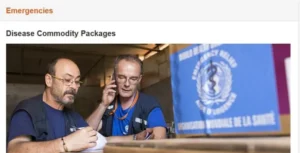
The Disease Commodity Packages are a series of disease-specific datasheets that list the critical commodities and the technical specifications for each commodity per disease.
WHO has developed several evidence-based recommendations for the selection and use of diagnostic tools outlining conditions for use at the different level of the health system. In May 2018, the...
WHO has established the WHO Model Lists of Essential Medicines for adults and children, which are updated every two years and act as tools for the selection of medicines, jointly...
AUTHOR:WHOLANGUAGE:EnglishFILE FORMAT:Web Link
Quantification
Purpose
Quantification is the process of estimating the quantities of health products and the financial means required for a health programme or service for a given period. It refers to the step that determine the ‘right’quantities of health products to be procured for ensuring uninterrupted supply.
The results of a quantification exercise help programme managers to:
identify the funding needs and gaps for procurement of the required commodities;
leverage the sources, amounts, and timing of funding commitments to maximize the use of available resources;
advocate for additional resources, when needed;
develop a supply plan to coordinate procurements and shipment delivery schedules to ensure a continuous supply of commodities.
Source: John Snow, Inc. (2017). The Supply Chain Manager’s Handbook.
UNDP’s approach
UNDP has supported quantification activities for malaria, tuberculosis and HIV health products for national quantification committees in all countries funded by the Global Fund to Fight AIDS, Tuberculosis and Malaria (The Global Fund) since 2002. UNDP encourages the use of standardized quantification tools developed by partners. UNDP also provides expertise during national quantification committee meetings and the training of personnel responsible for forecasting the needs for medicines, diagnostics and laboratory items for the three diseases.
For countries receiving the Global Fund grant funds, strengthening quantification processes is a key element to ensure that the right quantities of health products are procured to prevent overstock or products being out of stock. Support may include the review of the quantification process and the terms of references of national quantification committees.
UNDP offers technical assistance on quantification to countries beyond those receiving the Global Fund funds as well, by mobilizing partners with quantification expertise or directly by including this need in service level agreements with UNDP.
A practical manual by WHO for the quantification of medicines.
AUTHOR:WHOLANGUAGE:EnglishFILE FORMAT:PDF
Procurement
Purpose
An effective procurement process seeks to ensure the availability of the right health products in the right quantities, at the most affordable prices while ensuring recognized standards of quality.
Strategic objectives for good pharmaceutical procurement include:
selection of reliable suppliers of high-quality products
procurement of the most cost-effective pharmaceutical products in the right quantities and that meet quality standards
mitigation of possible risks
timely delivery
achievement of the lowest possible total cost (which includes the price, cost of analysis and transport).
Source: World Health Organization (2014) Model Quality Assurance System for Procurement Agencies (MQAS)
To be effective, a procurement agency should ensure that the following principles are applied:
Prequalified products are purchased from approved manufacturers or suppliers. Procurement and purchasing procedures are transparent.
Activities follow formal written procedures throughout the process, including explicit criteria for awarding contracts. Procurement includes an independent contract review.
Purchasing is based on the defined procurement policy of the procurement agency.
Purchasing and tender documents list all pharmaceutical products by their international non-proprietary name or national generic name.
Suppliers are selected and monitored through a process that takes into account product quality, service reliability and performance, delivery time, ethics, legal status, financial viability and minimum order quantities.
Intellectual property rights are respected in accordance with best practice and national law.
Source: World Health Organization (2014) Model Quality Assurance System for Procurement Agencies (MQAS)
UNDP’s approach
Support to countries for health procurement can be provided by UNDP for several categories of medicines for infectious diseases such as HIV, tuberculosis (first-line drugs) and for non-communicable diseases, such as cancer and cardiovascular diseases, and other related medicines. All the procurement of pharmaceuticals and other health products is performed in full compliance with the UNDP Quality Assurance Policy for Health Products. Furthermore, UNDP’s offer can include procurement for a broad range of laboratory and hospital equipment as well as solar panels and related equipment. In 2020, UNDP supported procurement in the context of national responses to the COVID-19 pandemic, including securing and supplying live-saving personal protective equipment, diagnostics and hospital equipment to countries globally. UNDP has delivered COVID-19 related products valued at over $213 million to 140 country offices.
UNDP has two decades of experience procuring and managing health products for large-scale HIV, tuberculosis and malaria programmes funded by the Global Fund to Fight AIDS, Tuberculosis and Malaria (The Global Fund). In many countries, UNDP also receives requests from governments to procure health products using state funds. Service-level agreements between UNDP and countries can either relate exclusively to procurement operations or include capacity development in selected procurement and supply chain management (PSM) areas, such as the strengthening of quantification processes, the establishment of a national procurement agency and the infrastructural and functional improvement of central and peripheral warehouses. Training and certification curricula for the staff of procurement units from ministries of health and governmental agencies are also included in the offer.
UNDP uses its health procurement support as an entry point for developing capacity in different areas of the PSM cycle, including on the procurement function. As an example, in Sudan, UNDP provided capacity-building on procurement through the formal training of staff from the national procurement department and through on-the-job training by posting out UNDP staff to the Ministry of Health. In countries such as Angola and Bolivia, UNDP has provided technical assistance on procurement planning processes. UNDP has also provided support for strengthening national procurement systems to countries in Eastern Europe and Central Asia, which have signed service-level agreements for health procurement with UNDP. In Ukraine, procurement operations with state funds have been linked to a four-year plan to establish and develop the capacity of the national procurement agency within the Ministry of Health. The ultimate objective is to reform and build a cost-efficient, transparent procurement system, build the structural and human resource capacity and progressively hand over procurement activities.
Prioritizing sustainability in procurement
In close collaboration with governments, United Nations agencies, manufacturers, freight forwarders and partners, UNDP is adopting incremental measures and models in its health procurement practices to minimize the environmental impact and to incorporate economic and social sustainability. Learn more on the Sustainable procurement page.
Tools and support mechanisms
UNDP jointly with the Chartered Institute of Purchasing and Supply (CIPS)has established a training and certification curriculum tailored to UNDP staff and staff from the procurement units of ministries of health, national medical stores and non-governmental organizations.
Building on its experience managing procurement operations to support Global Fund to Fight AIDS, Tuberculosis and Malaria (Global Fund) recipient countries, UNDP has set up a consolidated international procurement architecture comprising several partnerships and sourcing agreements with other United Nations agencies, manufacturers and other commercial entities. In recent years, UNDP has used this architecture to procure on average around $350 million a year in pharmaceuticals and other health products for countries. This includes both direct procurement by UNDP and procurement by partners for specific categories of products, such as for drug-resistant tuberculosis and reproductive health.
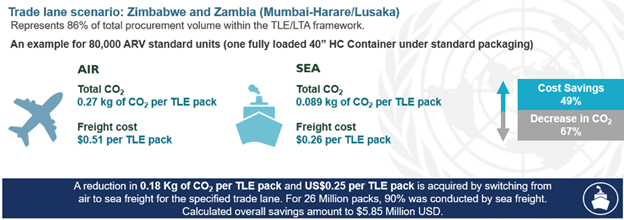
UNDP’s long-term agreements with suppliers of medicines for HIV and tuberculosis have resulted in significant economies of scale. For example, in 2017, UNDP achieved a landmark cost for first-line antiretroviral drugs – the fixed-dose combination of Tenofovir, Lamivudine and Efavirenz (TLE) – of $75 per patient per year (Free Carrier (FCA) incoterm or International Commercial Terms price). The savings from pooled procurement for the antiretroviral fixed-dose combination of TLE, which accounted for $55 million in 2017, allowed UNDP to pilot measures for environmentally sustainable procurement.
In 2016, UNDP started procuring other health products including medicines for non-communicable diseases (NCDs), such as for cancer, cardiovascular diseases, diabetes, chronic respiratory diseases, and other non-infectious diseases. In many countries, UNDP receives requests from governments to procure these products using state funds.
UNDP’s Solar for Health initiative has also resulted in the establishment of health sector long-term agreements with suppliers to provide solar technologies and equipment for PSM infrastructure.
UNDP is procuring medicines to combat HIV, TB and Malaria diseases by implementing Global FundGrants. In addition, UNDP has a financing agreement with the governments for implementing healthprogrammes for non-communicable...
AUTHOR:UNDP Office of ProcurementLANGUAGE:EnglishFILE FORMAT:PDF
UNDP staff managing health procurement for the Global Fund supported countries can find more in-depth instructions and procedures in the UNDP-Global Fund/Health Implementation Guidance Manual.
World Health Organization – Interagency Guidelines
AUTHOR:WHOLANGUAGE:EnglishFILE FORMAT:Web Link
Storage
Purpose
Storage facilities should be compliant with the pharmaceutical good storage practices to ensure stock security and to preserve the quality, efficacy and safety of medicines and other health products throughout the supply chain until it reaches the end users. In addition, storage includes a set of activities performed by qualified personnel, from products reception, inventory management to dispatch for distribution to subsequent service delivery points.
Requirements for good storage from central to peripheral level include:
a facility with adequate storage and working space for its intended use as well as infrastructure components that will protect commodities from harmful environmental conditions and diversions.
application of adequate inventory management procedures so that commodities are always available, accessible, in good condition, and pose no risk of injury to workers;
availability of timely and accurate inventory data for informed decision-making;
qualified human resources in sufficient quantity to meet operational needs.
Source: John Snow, Inc. (2017). The Supply Chain Manager’s Handbook.
UNDP’s approach
UNDP has expertise in the assessment of national supply chains with the identification of needs and their prioritization. UNDP can offer support in the development of supply chain strategies and in infrastructure projects to address storage and supply chain needs from the central to peripheral levels.
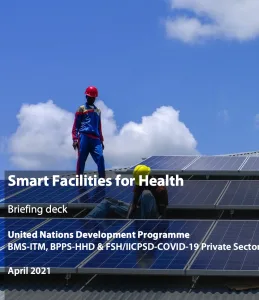
UNDP’s Solar for Health Initiative is used to build additional resilience and connectivity in the supply chain, equipping warehouses and health facilities with solar panels and therefore ensuring electricity for cold chain, controlled temperature storage and computer-based electronic warehouse management systems and logistics management information systems. As part of its Smart Facilities initiative, UNDP also offers a range of other digital solutions to strengthen the sustainability and efficiency of infrastructure. It likewise draws on technical solutions implemented in other sectors, including those identified through the UNDP-Singapore Global Centre for Technology, Innovation and Sustainable Development
Overall support is provided through expert advice in areas such as:
the development of quality assurance and good storage practices training programmes;
the procurement and calibration of temperature recording loggers;
the procurement and installation of cooling units;
the development of self-inspection programme;
the support to outsource storage and distribution to a service provider for storage and distribution.
Examples
Over the years, UNDP has participated in various projects devoted to improving inventory management and storage conditions of health products.
Supply chain assessments
Sustainable and resilient health systems require a functional supply chain system, including the adequate management of central-, regional- or district-level stores. UNDP has been involved in supporting the assessment of national supply chains systems, including in Chad, Equatorial Guinea, Sudan, Tajikistan, Zambia and Zimbabwe.
Supply chain strategies
In some countries, UNDP has also taken an active role in the development of supply chain strategies under the leadership of the national authorities and in facilitating the collaboration of supply chain partners, such as in South Sudan, Sudan and Burundi. Such strategies are critical to defining priorities among the identified needs, establishing work plans and related budgets, coordinating inputs from different partners and optimizing available resources to strengthen the national supply chain.
Health infrastrcture works
UNDP has a track record of experience in managing infrastructure projects to improve storage capacity and conditions. In particular, UNDP has conducted extension of storage capacity projects at different levels of the supply chain (central, regional, peripheral) in numerous countries.
These projects have included support to build a new national warehouse Guinea-Bissau and renovate a malaria products warehouse in Bolivia. In Sudan, Kyrgyzstan and Turkmenistan, UNDP has provided support to strengthen national warehousing and to equip and renovate storage facilities at different levels of the supply chain for pharmaceutical and other health products. All infrastructural/warehousing projects are considered holistically and are often coupled with the provision of equipment (e.g. shelves, pallets, forklifts, ventilation/air-conditioning systems, warehouse management information systems) to ensure good storage conditions in terms of temperature, humidity, cleanliness, pest control and light exposure and stock security.
As a part of this comprehensive offer, UNDP has also installed solar panels on medical warehouses in Angola, Sudan, Zambia and Zimbabwe, among other countries, to ensure continued power supply for cold chain equipment and controlled temperature storage conditions.
Infrastructure projects are combined with capacity development in the implementation of good storage practices, related to personnel, premises and facilities, storage requirements, returned goods, dispatch and transport, and product recall. For example, technical assistance on storage and inventory management at the central level has been provided in Guinea-Bissau and South Sudan. As an interim Principal Recipient of the Global Fund to Fight AIDS, Tuberculosis and Malaria grants in some countries, UNDP country office specialist(s) systematically participate in national technical procurement and supply chain management working groups involved in the monitoring of health product stock levels and supply chain strengthening.
Case Study: Resilience and Sustainable Infrastructure for Stronger Supply Chains in Mozambique
In 2019, UNDP began supporting Mozambique’s Ministry of Health (MoH) with health infrastructure development to improve the storage of medicines and health products and the disposal of medical waste, under the National Logistics Pharmaceutical Plan. Through a financing agreement under the Global Fund HIV and tuberculosis grant, UNDP and the MoH established and renovated central and regional medical warehouses.
The Chimoio regional warehouse was inaugurated in July 2021 to provide a secure storage and distribution point and consistently supply quality medicines and health products in Manica province, including at the last mile. The warehouse serves 139 Health Facilities covering a population of about 2,298,753 in the Manica province (Source: Centre for Medicines and Medical Products, CMAM). This fully equipped, 2,278 m2 warehouse was also the first in Mozambique to install a containerized incinerator to manage biomedical waste. In June 2023, UNDP and the MoH reopened the Beira Central Warehouse in Sofala province, which was damaged by Cyclone Idai in 2019. This warehouse can withstand winds of up to 200 km/h. The initiative increases access to quality health products in remote areas affected by disasters, as part of UNDP’s broader work to promote inclusion, resilience and sustainability.
Photo: Beira Central Warehouse, after renovation in March 2023
Operated by CMAM, the Beira Central Warehouse supplies 4 provinces in the Central Region of the country: Sofala, Manica, Tete and Zambezia. This includes supplying the Central Hospitals of Beira and Quelimane cities, serving 187 Health Facilities and covering a population of approximately 2,674,787 in these provinces (Source: CMAM). The warehouse includes:
A maximized and optimized racking system with more than 5,000 pallets
Flexi stackers for improved product handling and storage management
Enhanced security systems with up-to-date computer, data, and security systems
An 800% increase in electricity production, up to 1000 kVA, providing a reliable source of power.
Storage capacity of 42 m3 of clean water and 36 m3 of rainwater for the operation and maintenance of the facility’s safety.
In recent years, UNDP Mozambique has established new partnerships with the Islamic Development Bank to expand health centres in response to COVID-19. UNDP Mozambique is also working alongside the MoH and Gavi, the Vaccine Alliance to strengthen waste management policies. Discussions have started to provide options for the establishment of Smart Facilities for Health at various points of the supply chain in the coming years, which would improve the sustainability and reliability of health services.
Case study: Transforming NatPharm Warehouse to Strengthen Healthcare in Zimbabwe
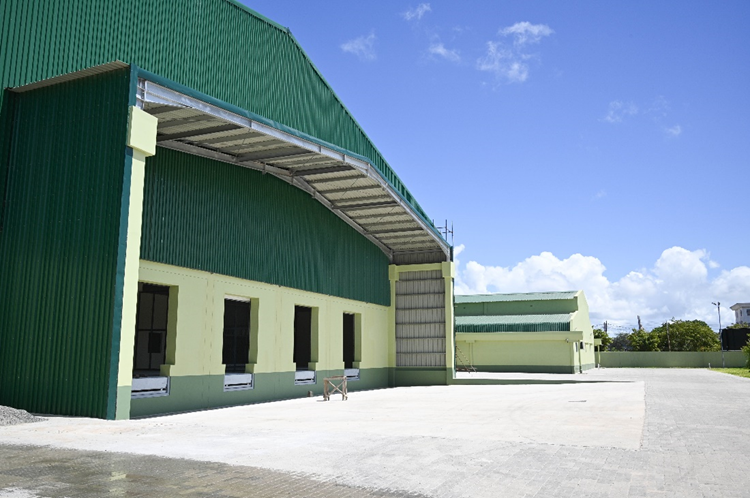
The newly commissioned NatPharm warehouse in Masvingo, Zimbabwe, funded by the Global Fund and supported by UNDP, marks a significant improvement in healthcare delivery. The US$3.66 million facility will enhance the storage and distribution of medicines to over 250 health institutions across the province. Equipped with solar power and modern handling systems, the warehouse will help address supply chain inefficiencies and improve access to life-saving treatments for HIV, TB, and malaria. This project is part of the ongoing Resilient Systems Strengthening for Health (RSSH) initiative, which has seen $30 million invested in improving Zimbabwe’s health infrastructure.
World Health OrganizationEstablished standards for the storage of pharmaceuticals. The standards are known as good storage practices.
AUTHOR:WHOLANGUAGE:EnglishFILE FORMAT:PDF
Distribution
Purpose
In-country distribution systems are designed to move health products down the pipeline from central warehouses the final service delivery point (last mile) or until they reach end-users. They are key to maintaining an uninterrupted supply of health products.
A in-country health product distribution system should achieve the following objectives:
maintain an uninterrupted supply of health products to the end users;
keep medicines and other health products in good conditions throughout the distribution chain;
ensure secured transport conditions to prevent diversion, losses of health products due to spoilage and expiry;
contribute to stock visibility across the supply chain and facilitate tracking and traceability of products with accurate inventory records;
optimize storage points according to public health objectives;
use available transportation resources as efficiently as possible, including considering opportunities for public private partnerships with third party logistics;
provide regular operational information for forecasting health products needs.
UNDP’s approach
UNDP offers expertise to countries to conduct assessments of existing national supply chains’ maturity and to identify interventions for capacity-strengthening related to distribution chains. Within its broader support for the formulation of supply chain strategies, UNDP helps to design and operationalize distribution systems. This support is also complemented by infrastructure and pilot projects to improve logistic management information systems, which are essential to plan, monitor and review distribution cycles at different levels of the supply chain.
As part of the development of supply chain strategies, UNDP helps to address distribution needs, support national counterparts to design the optimal distribution system according to the country context and convene players to agree on comprehensive work plans. This helps to strengthen national distribution supply systems that are either managed by the central medical store or outsourced. UNDP also supports the selection of key performance indicators to track the optimization and performance of distribution and transport systems.
UNDP has also promoted the use of digital data loggers and other innovative tools in the distribution chain of several countries to ensure the effective monitoring of temperatures and product tracking during transport.
Reaching hard-to-reach areas with essential health products in Sudan amidst COVID-19
Navigating sanctions, using its procurement experience and strengthening Ministry of Health capacity, UNDP has a history of supporting health ministries with grants from the Global Fund to Fight AIDS, Tuberculosis and Malaria in complex environments. While procuring and delivering essential medicines, UNDP aims to transfer full responsibility to national agencies.
Working with Sudan’s Federal Ministry of Health and NSMF, a solution was developed: providing a five-month supply of medication and laboratory supplies to in-need areas of Sudan and deploying an inter-state fleet of permitted World Food Programme trucks for distribution.
Use of medicines entails the concept of ‘rational use’, pharmacovigilance, and waste management. Similarly, the appropriate use of diagnostics and laboratory devices is linked to the respect of the international guidance on condition of use, and other aspects such as installation, calibration, training and maintenance plans for more complex diagnostics.
The rational use of drugs requires that patients receive medications appropriate to their clinical needs, in doses that meet their own individual requirements, for an adequate period of time, and at the lowest cost to them and their community.
World Health Organization
The World Health Organization advocates the following key interventions to promote more rational use:
establishment of a multidisciplinary national body to coordinate policies on medicine use;
use of clinical treatment guidelines;
development, regular update and use of national essential medicines list, in line with clinal guidelines;
regular availability of timely and accurate inventory data for informed decision-making;
establishment of drug and therapeutics committees in districts and hospitals;
inclusion of problem-based pharmacotherapy training in undergraduate curricula;
continuing in-service medical education as a licensure requirement
supervision, audit and feedback;
use of independent information on medicines to health care providers;
public education about use of medicines;
avoidance of perverse financial incentives;
use of appropriate and enforced regulation;
sufficient government expenditure to ensure continued availability of essential medicines and staff.
Source: World Health Organization (2002). Promoting Rational Use of Medicines: Core Components – WHO Policy Perspectives on Medicines. No. 005.
UNDP’s approach
While the World Health Organization (WHO) is the lead agency mandated to provide technical assistance in the area of rational use of medicines and pharmacovigilance, UNDP’s service level agreements with governments to strengthen pharmaceutical management can include aspects related to rational use and pharmacovigilance. UNDP can also support the strengthening of the regulatory agencies and systems in regulating, controlling and monitoring the use of authorized medicines in the countries. As part of national strategic laboratory plans, UNDP has solid experience in contracting for installation, calibration and maintenance services of complex diagnostics for tuberculosis and HIV.
For countries funded by the Global Fund to Fight AIDS, Tuberculosis and Malaria (Global Fund), and according to the Global Fund policies for procurement and supply chain management, UNDP supports the rational use of medicines by ensuring that countries follow WHO evidence-based treatment guidelines. The WHO guidelines recommend the use of the most appropriate and evidence-based medicines, including the indication of formulation, dosage, administration route and treatment duration.
Pharmaceutical management support includes the prescribing and dispensation of medicines and checking patient adherence to treatment measures and resistance surveillance. Patient adherence to treatment is normally assessed routinely within health programmes and during external national programme reviews. Notification of adverse drug reactions is promoted within national pharmacovigilance systems.
Similarly, for diagnostics and other health products, the correct use is ensured by adopting WHO guidance and recommendations for use at different levels of the health system. UNDP can support the development of strategies for improving adherence to treatment. For diagnostics technologies, UNDP supports countries to install, calibrate and set up a maintenance plan for equipment and train staff on this. In Zimbabwe, for example, UNDP provided technical assistance to the National Regulatory Agency to upgrade the national pharmacovigilance system from a paper-based to an electronic system for reporting adverse drug reaction.
UNDP’s approach to the optimal use of health products includes upfront reduction of waste by engaging with manufacturers to optimize packaging, e.g. carton-less bottles, and working on waste management including for specific pharmaceutical categories.
Management Science for HealthAdditional information on the irrational use of medicine, its adverse impact and underlying factors, as well as strategies to improve rational use, can be found in this...
AUTHOR:Management Science for HealthLANGUAGE:EnglishFILE FORMAT:PDF
WHO has defined core components for the rational use of medicines, which shall be applied across all medicine categories.
AUTHOR:WHOLANGUAGE:EnglishFILE FORMAT:PDF
Quality assurance of health products
Purpose
The quality of health products has to be ensured from manufacturing up to the point of use. Quality assurance (QA) is an overarching element to the whole PSM cycle, beyond the prequalification of health products, to ensure compliance with WHO and national standards. Transportation, storage, distribution and use conditions impact the quality of health products.
“Quality assurance is a wide-ranging concept covering all matters that individually or collectively influence the quality of a product. It is the totality of the arrangements made with the object of ensuring that pharmaceutical products are of the quality required for their intended use.” – World Health Organization
Prequalification
“The activities undertaken in defining a product or service need, seeking expressions of interest from enterprises to supply the product or service, and examining the product or service offered against the specification and the facility where the product or service is prepared against common standards of good manufacturing practice (GMP). Prequalification is required for all pharmaceutical products regardless of their composition and place of manufacture/registration.” – World Health Organization
Quality control
“Quality control covers all measures taken, including the setting of specifications, sampling, testing and analytical clearance, to ensure that starting materials, intermediates, packaging materials and finished pharmaceutical products conform with established specifications for identity, strength, purity and other characteristics.” – World Health Organization
Pharmaceutical waste management
Pharmaceutical waste management is regarded to be an integral part of quality assurance within supply chain management and the product lifecycle, as a result of the use and/or expiry of health products. Inadequate and inappropriate handling of healthcare waste can have serious public and global health consequences and a significant impact on the environment. Refer to the Health care waste management page for further information.
UNDP’s approach
Upon governments’ requests, UNDP can provide support for identifying and assessing health products in accordance with World Health Organization (WHO) and international standards. It can also mobilize a pool of international experts to assist the regulatory authorities in the identification, assessment and prequalification of health products, in accordance with WHO and international standards. The same experts can be mobilized to provide training sessions in quality assurance to counterparts (regulatory authorities or central medical stores) in countries based on specific requests submitted by the authorities.
UNDP also provides support to the development of infrastructure and capacities in national quality control laboratories in several countries, in close collaboration with the WHO prequalification programme for quality control laboratories. In order to ensure that the quality of health products is maintained in the supply chain, UNDP also promotes the use of appropriate vehicles and containers for the transport of health products and the use of data loggers for controlling the storage and distribution of medicines. This implies the training of staff on the use, collection and analysis of data.
UNDP has also developed a quality assurance planning tool, to help to carry out assessments at the country level throughout the supply chain cycle. This includes looking at all the aspects in the procurement and supply chain management (PSM) cycle that relate to ensuring the quality of the medicines and health products, from selection to use and waste management. The application of this tool is designed to be carried out in coordination with the national regulatory authority, WHO and other partners involved in health PSM in the country. The end result is the identification of gaps and the definition of activities to address and prioritize the identified needs, coordination of financial resources, and elaboration of an operational plan to strengthen the quality assurance in the national supply chain.
UNDP support to quality assurance: country examples
Zimbabwe obtained prequalification status from the World Health Organization (WHO) for its chemical laboratory to perform quality control (QC) in 2014 and it is in the process of getting its microbiology laboratory WHO-prequalified. UNDP is also supporting Sudan and Afghanistan to upgrade their QC laboratories to meet the WHO prequalification status.
In Kyrgyzstan and Uzbekistan, UNDP supported the national regulatory authority laboratories in assessment of their readiness to be included on the list of QC laboratories meeting requirements from the Global Fund to Fight AIDS, Tuberculosis and Malaria (Global Fund) (ISO/IEC 17025) as well as in submission of questionnaires on the technical proficiency of QC drug testing laboratories for the Global Fund attestation. Both laboratories have been included in the list of ISO 17025 QC laboratories compliant with the Global Fund quality assurance requirements.
In Zimbabwe, UNDP is also providing support to the national regulatory authority to address the priorities identified in the institutional development plan developed jointly with WHO. UNDP plans to provide further support on the development of quality assurance systems in national procurement agencies.
WHO Prequalification Programme for Medicines, WHO Prequalification Programme for In-Vitro Diagnostics, WHO Prequalification of Vaccines, WHO Prequalification of Vector Control Products, WHO/UNFPA Prequalification Programme for Male Latex Condoms, WHO/UNFPA Prequalification...
World Health OrganizationA quality control laboratory prequalification has been established by WHO to enhance in-country capacities for the quality control of medicines.
WHO has also established general requirements for quality assurance systems for procurement agencies to ensure that transactions with partners ultimately result in procuring health products of the best possible quality:
Relevant sections include:Annex 9: Guidelines on the implementation of the WHO certification scheme on the quality of pharmaceutical products moving in international commerceAnnex 10: Good reliance practices in the regulation...
Countries can benefit from WHO guidance and tools for strengthening national regulatory authority functions, as well as for enabling and speeding up registration of WHO-prequalified and stringent national regulatory authority-registered...
Policies and regulations enabling innovation and access to essential health technologies
Purpose
Policies, laws and regulations have a direct impact on innovation and access to essential health technologies. National, regional and global policies, laws and regulations can be designed and implemented to promote policy coherence and enhance both research and development and access to essential vaccines, medicines, diagnostics and other health technologies.
Governments should strengthen national level policy and institutional coherence between trade and intellectual property, the right to health and public health objectives by establishing national interministerial bodies to coordinate laws, policies and practices that may impact on health technology innovation and access.
United Nations (2016). Report of the United Nations Secretary-General’s High-Level Panel on Access To Medicines
The COVID-19 pandemic has further revealed the significance of enabling policies and regulations for equitable health access. It has seen a vast increase in urgent legislative action to control and reduce the pandemic. Well-designed laws can help build strong health systems, evaluate and approve safe and effective drugs and vaccines, advance human rights and enforce actions to create healthier and safer public spaces and workplaces.
UNDP’s approach
UNDP provides support in low- and middle-income countries to conduct assessments and create enabling policy, legal and regulatory environments to influence access to essential medicines and other health technologies. This includes by convening comprehensive and multisectoral reviews of policies, laws and regulations that affect health technologies, disseminating best practices and providing advisory services and technical assistance as needed. UNDP draws on networks of expertise, including for health policies, laws and regulations relevant for ministers of health and regulators of medicine and other health technologies, competition and intellectual property authorities and other relevant authorities and stakeholders.
Through partnerships such as the Access and Delivery Partnership and the Global Health Innovative Technology (GHIT) Fund, UNDP supports both research and development and access to new health technologies for malaria, tuberculosis and other neglected diseases in developing countries. UNDP specifically supports the building of national capacities for enabling legal, policy and regulatory frameworks for the introduction of new health products for these diseases.
Access and Delivery Partnership: ensuring the safety of the new malaria vaccine in Ghana and Malawi
A powerful new tool in the global fight against malaria has the potential to save millions of children’s lives. After decades of development, malaria vaccines offer huge promise in combating one of the world’s oldest diseases. RTS,S is the first malaria vaccine to demonstrate significant reductions in malaria deaths among young children in a large-scale trial. Through an ongoing pilot roll-out programme assessing the vaccine’s efficacy and evaluating its safety, the global health community is one step closer to controlling malaria in sub-Saharan Africa and around the globe. Read more
UNDP works closely with the World Health Organization and other United Nations agencies on the development of knowledge products and guidance to increase innovation and access to health technologies. Several publications have been developed to guide countries to adopt and develop national policies, laws and regulations to increase access to affordable quality-assured health products. See more under key resources below. Collaboration has also included joint efforts to inform the establishment of strong legal frameworks that promote health equity in countries’ management of the COVID-19 pandemic, including through the creation of the COVID-19 Law Lab.
The work performed by UNDP in policies and regulations is integrated into the national strategic plans for the pharmaceutical sector and the laboratory networks established by the countries’ ministries of health. Procurement of medicines and other health technologies is performed by UNDP in compliance with national laws and regulations.
Examples
Case study: developing enabling laws for access to medicines
UNDP has supported countries in the Asia-Pacific region and in Eastern Europe and Central Asia to develop national medicines policies and bring together government officials and stakeholders from different sectors around a common approach. In Myanmar, important legal provisions were added to a new draft intellectual property law to ensure access to affordable essential medicines and greater public participation. In Cambodia, technical support was provided for the drafting of a law to enable the government to secure affordable life-saving medicines. In Eastern Europe and Central Asia, UNDP has provided advisory services on access to essential medicines. In Kyrgyzstan, UNDP supported a patent law reform to include an agreement on trade-related aspects of intellectual property rights-related public health flexibilities. UNDP has also advised on access issues in Kazakhstan, Moldova, Tajikistan and Ukraine. UNDP released a comprehensive analysis of the regulatory framework of 11 countries in the region, including registration and licensing of HIV medicines to promote sustainable financing of national HIV responses.
Reforms to promote access to health technologies in South Africa
UNDP helped countries build the necessary capacities to drive the reforms needed to improve access to health technologies. In South Africa, UNDP has supported work included in the country national strategic plan on the pursuit of the law reform recommendations to enable the right to essential and life-saving medicines. Among other activities, UNDP has supported a study on policy options available to South Africa through the reform of three interrelated areas of law affecting access to essential medicines: patent, competition and medicines law.
Information related to WHO’s work on intellectual property, including that related to commissions and intergovernmental working groups established within the WHO governance system.
The Medicines Patent Pool has established a database on patents for selected categories of medicines (HIV, tuberculosis, hepatitis, and other patented medicines included on the WHO essential medicines list).
AUTHOR:The Medicines Patents and Licences Database (MedsPaL)LANGUAGE:EnglishFILE FORMAT:Web Link
Case study: strengthening health procurement and supply chain management systems in Zimbabwe
UNDP is working in close collaboration with partners and national authorities to strengthen the national supply chain management system for health products in Zimbabwe, including with the national medicines regulatory authorities on quality monitoring and control. This support has formed part of UNDP’s broader health systems strengthening interventions implemented through its partnership with the Global Fund to Fight AIDS, Tuberculosis and Malaria (Global Fund).
Initially, UNDP’s support to the government on procurement and supply chain management (PSM) entailed a range of interconnected activities including:
carrying out a comprehensive assessment of the national pharmaceutical supply chain system in 2013 and using the findings to develop a costed action plan;
working with the the Ministry of Health and Child Care, the Global Fund Country Coordination Mechanism and key partners to mobilize funding to implement the endorsed costed action plan regularly reviewed;
working with the the Ministry of Health and Child Care and partners in developing strong quantification processes for health products through a robust and inclusive quantification working group using well established quantification tools;
strengthening health products quality assurance processes and capabilities of the Medicines Control Authority of Zimbabwe (MCAZ);
working with the National Pharmaceutical Company (NatPharm)—the central medical store—and in coordination with other development partners to develop their capacity and enhance stock management and optimize their services to the health care system since 2011;
carrying out a comprehensive assessment of the medical laboratory supply chain system in 2016 and developing a costed action plan for implementation during 2018-2020;
developing a viral load reagent rental agreement strategy for HIV viral load testing with key suppliers of in-vitro diagnostics equipment
Together, this support has promoted the population’s increased access to quality assured essential medicines and other health products for malaria, HIV and tuberculosis, and beyond, and improved the quality of health services.
Additional examples of the support provided for different aspects of the supply chain are described below.
Inventory and distribution: The capacity of both NatPharm and the Ministry of Health and Child Care to store and manage inventory and distribute essential medicines has been developed through:
the renovation and building of new NatPharm regional storage warehouses in key provinces such as the regional store in Masvingo;
the renovation or construction of new pharmacy stores to improve storage conditions at the Ministry of Health and Child Care service delivery points;
the provision, installation and end-users training for two pharmaceutical grade incinerators for waste disposal located in NatPharm stores;
the development of a national waste management plan and standard operating procedures
collaboration with the Ministry of Health and Child Care and partners to build an eLMIS to ensure supply chain real-time data visibility
improvements to cold chain storage and distribution systems through the provision of cold room compressors in the central warehouse, refrigerated trucks and data loggers;
the provision of new trucks to NatPharm to imporve the health products distribution services to health facilities;
equipment of health facilities with solar power systems ensuring sustainable sources of electricity for cold chain and controlled temperature to store vaccines, medicines and diagnostic tests, and to provide back-up power to the electronic health information system at the health facility level
the provision and maintenance of laboratory equipment.
Procedures and systems for inventory management. The infrastructural support has been complemented by improvement of warehouse organizational and operational processes and the development of standard operating procedures for inventory management with the support of a supply chain expert embedded in the NatPharm management team, for technical assistance. Together with other health partners, UNDP is supporting the Zimbabwe Assisted Push System (ZAPS). The system standardizes processes for primary health-care facilities in terms of ordering and receiving the products. The ZAPS support makes essential medicines more evenly available to facilities and hospitals and improves accuracy of supply chain information. The ordering team leaders from the district travel to each health facility should agree on the ordering interval, support the counting of all stock, record losses and adjustments, record days out of stock, calculate quantities required for each product and place orders with NatPharm. The completed orders for all health facilities in the catchment area are sent to the nearest NatPharm branch for processing and the subsequent delivery of orders to individual facilities.
Human resources for PSM. Staff from NatPharm and the Ministry of Health and Child Care have engaged in online postgraduate PSM training, which led to international qualifications. In addition, staff from NatPharm and the Ministry of Health and Child Care have completed training and assessment to obtain accreditation from the Chartered Institute of Purchasing & Supply.
Quality assurance. UNDP has been working with the Medicines Control Authority of Zimbabwe (MCAZ) since 2010 to develop capacity to provide quality assurance of all health products being procured. Through financial support from the Global Fund, UNDP, with partners, has supported MCAZ to improve the infrastructure, equip and develop the capacity of its chemistry laboratory, and obtain the status of a quality control (QC) testing laboratory prequalified by the World Health Organization (WHO) in 2014. MCAZ now acts as a QC laboratory for nationally procured and distributed medicines, and also for other countries in the region that do not yet have a WHO-prequalified laboratory. Since the WHO prequalification of chemistry laboratory, UNDP has been using MCAZ QC testing services to test and monitor the quality of the pharmaceutical products procured with Global Fund grants, in line with the Global Fund quality assurance policy for pharmaceutical products. Consequently, acknowledging the demonstrated competency of MCAZ, UNDP has established a long-term agreement with MCAZ to conduct the QC of medicines for other countries where UNDP acts as interim Principal Recipient for Global Fund grants and/or provides health procurement support.
Pharmacovigilance system strengthening. The pharmacovigilance system was also upgraded for the reporting of adverse drug reactions, from a paper-based to an electronic system through international technical assistance in 2017.
Continued support for the management of health products through UNDP’s long-term partnership with national institutions, the provision of technical assistance and mobilization of donor investments to complement domestic funding for PSM activities has enabled Zimbabwe to demonstrate capacity and leadership towards achieving good-quality pharmaceutical services to the population.
This self-guided assessment adapts the public expenditure and financial Accountability assessment methodology – developed and implemented by a multi-donor partnership – to focus specifically on the health sector.
AUTHOR:USAID, Health Finance and GovernanceLANGUAGE:EnglishFILE FORMAT:Web Link
Lenus – The Irish Health Repository, Dr. Stevens Library, Health Service Executive A detailed examination and review of the financial management and control systems in the Irish health service.
AUTHOR:Lenus: Research Repository / DOHCLANGUAGE:EnglishFILE FORMAT:Web Link
United Nations Development ProgrammeThis ERM space hosts the latest information on the ERM Policy, risk governance mechanisms, relevant guidance/tools
AUTHOR:UNDPLANGUAGE:EnglishFILE FORMAT:Web Link
Financial management for sustainable health policies and programmes
Overview
Robust financial management systems and capacities are required to plan, direct and control financial resources so that the objectives of national health programmes can be effectively and efficiently achieved. In addition to managing the short-term cashflow needs, financial management includes budgeting, systems, procedures and controls to protect financial assets, and ensuring there is sufficient relevant and reliable information for good decision-making.
Financial management must be prioritized within the overall programme management responsibilities of an entity implementing a health programme, with close coordination between financial planning and budgeting, and between the planning and delivery of programmatic results. Likewise, systems for financial management and reporting of donor-funded health programmes must be integrated into national public financial management systems to ensure their sustainability.
UNDP takes a multifaceted approach to strengthen the financial building blocks of the health system that make it possible to deliver services of high quality. At the national level, UNDP works with governments to strengthen national public financial management systems for health and develop the capacities of national entities to sustainably manage and generate domestic and international health financing. This includes support to generate and evaluate accurate financial information, including from the private sector, to inform health policies and identify sustainable models to scale health services.
At the programmatic level, UNDP provides technical assistance to national institutions and civil society organizations to strengthen financial management capacities for effective implementation of large-scale health programmes, including those funded by the Global Fund to Fight AIDS, Tuberculosis and Malaria (Global Fund). UNDP provides end-to-end technical support for financial management to implementing entities on issues including planning, budgeting and forecasting, revenue generation, expenditure, monitoring and controls, reporting, and audit and assurance.
The pages in this section provide guidance and further details of UNDP’s support to governments and other health partners across each of these dimensions of financial management for national health systems and programmes, including HIV, tuberculosis and malaria programmes funded by the Global Fund. For further guidance on UNDP’s technical support to sustainable health financing, refer to the “Sustainable Finance” section. Additional tools and more detailed guidance on financial management processes for UNDP-managed Global Fund programmes can be found in the UNDP-Global Fund and Health Implementation Guidance Manual.
UNDP’s approach
UNDP provides end-to-end capacity development support to help government and civil society organizations (CSOs) manage all aspects of the financial management process in the implementation of large-scale health programmes. Financial management involves much more than accounting for income and expenditure. It includes all aspects of planning, organizing, directing and controlling financial activities.
Through its interconnected support to promote sustainable financing models and improve institutions, policies and processes that govern the use of public funds for health at the national level, alongside work to enhance financial management capacities and processes in the implementation of national disease programmes, UNDP’s capacity-building approach provides mutually reinforcing entry points to help countries progress towards universal health coverage. Strong financial management in programmes ensures that existing resources for health are efficiently used to maximize health outcomes, while enhanced public financial management and sustainable financing ensures that these outcomes can be scaled and sustained in the long term. Financial management involves much more than accounting for income and expenditure. It includes all aspects of planning, organizing, directing and controlling financial activities. UNDP therefore works in close partnership with health system actors to ensure accurate and timely financial data contribute to making critical and evidence-based decisions for health-related goals.
UNDP’s entry points for support include processes and capacities for financial management, financial data for accountability and decision-making and financial risk management.
1. Processes and capacities for financial management
As part of its financial capacity-building activities for government and civil society organization partners, including as interim Principal Recipient of grants from the Global Fund to Fight AIDS, Tuberculosis and Malaria (Global Fund) in countries facing challenging operating environments, UNDP does the following:
It takes into account existing assessments and findings for financial management: UNDP has developed comprehensive capacity assessment tools to help governments identify how closely existing financial management policies and procedures meet current and expected financial management needs. Using these tools helps to establish a baseline and a clear understanding of what financial management systems can achieve.
It supports selection of performance indicators and measurable milestones on financial management to support sustainable transitions of health programmes from donors to national entities and systems.
It supports the development and implementation of a capacity development plan to facilitate short, medium, and long-term interventions with a focus on building sustainable financial systems for health.
It provides technical assistance, mentoring and training on financial management for public health actors at all levels of the health system.
Case study : Mentoring to strengthen financial systems in Zambia
In 2016, the Ministry of Health in Zambia decentralized the implementation of HIV, tuberculosis and malaria programmes by appointing all 10 provincial health offices to directly implement programme activities in their respective catchment areas. Based on the new Ministry of Health financial management system, UNDP and the Ministry of Health conducted a joint assessment and designed the decentralized roll-out to support the financial system in all provinces. The support included the installation of enterprise resource planning software and risk management, training and development of procedures to ensure compliance with both financial and programmatic reporting. UNDP also worked with the Ministry of Health to introduce on-site mentorship to the provincial health offices. In 2018, UNDP partnered with Gavi, the Vaccine Alliance (Gavi) to further support the Ministry of Health to augment financial and programme management capacities at the district level.
2. Financial data for accountability and decision making
Good decision-making to achieve health programme objectives requires timely, relevant and reliable financial data. In both government and non-government sectors, it is critical to set clear goals and establish systems and controls to report on them. Beyond optimizing programme performance, the ability to demonstrate financial results of key interventions within the health sector facilitates the prioritization and scaling- up of effective measures. UNDP’s support to enhance financial accountability recognizes that financial information requirements need to reflect the fundamental accountability structures of the health system. In a highly centralized system, the information system should track expenditure over the whole of the health system, and feed information into the centre.
Fiscal transparency in the public sector strengthens governance and accountability and should also result in improvements in programme performance to support better health outcomes. To strengthen the linkage between financial reporting and improved health programme performance, UNDP:
supports national entities to assess the current financial management system and consider the options to meet national and international reporting requirements;
assists national entities to strengthen their financial systems and consolidate financial data, including real-time data to improve monitoring and decision-making;
leverages customized digital technology and commercial software to help national partners, including ministries of finance, strengthen public financial management systems for the health sector.
Case study : Support to the financial management system in Zimbabwe
The Government of Zimbabwe Public Financial Management System (PFMS) had been in limited use by government ministries and did not have the capability to manage donor funding. With UNDP’s support, through funding from the Global Fund to Fight AIDS, Tuberculosis and Malaria (Global Fund), the Ministry of Health and Child Care became the first ministry to roll out a grant management module for the PFMS in 2015–2016, starting with the configuration of Global Fund grants. The grant management module allows for data capture in near real-time for reporting to the Ministry of Health and Child Care and donors. Since 2016, more than 90 grants have been configured into the module, enabling improved timeliness and completeness of financial data for the delivery of health services.
Financial control and risk management are central to the effective management of a health system. UNDP helps countries to assess risk factors and ensure risk management is embedded in strategic planning for health programmes as well as in routine daily practices for health implementation activities. Through its partnership with the Global Fund and role as interim Principal Recipient of grants in challenging operating environments, UNDP has also helped to reduce the risk of corruption and fraud by strengthening financial management, working together with national entities to better manage grants, set up web-based accounting systems, and introduce robust control frameworks.
Applying a coherent focus on strategic, operational and financial risk factors, UNDP does the following:
It works with the management of health programmes to focus on identifying actual and potential threats and opportunities, assessing the impact of those risks and prioritising them;
It selects appropriate financial tools to mitigate risk, including different payment modalities such as direct payments on behalf of implementing partners and reimbursement to implementing partners to enable their implementation in high-risk environments. The direct cash transfer modality can be used for institutions with adequate capacity to manage and report on the utilization of advances. This modality also plays a role in the strengthening of national financial accounting and reporting systems.
It supports national entities to make informed decisions about the level of risk that they want to take in order to effectively pursue their objectives;
It helps to set up appropriate risk management frameworks and internal controls, including financial management systems, to counter threats and take advantage of opportunities.
This self-guided assessment adapts the public expenditure and financial Accountability assessment methodology – developed and implemented by a multi-donor partnership – to focus specifically on the health sector.
AUTHOR:USAID, Health Finance and GovernanceLANGUAGE:EnglishFILE FORMAT:Web Link
Lenus – The Irish Health Repository, Dr. Stevens Library, Health Service Executive A detailed examination and review of the financial management and control systems in the Irish health service.
AUTHOR:Lenus: Research Repository / DOHCLANGUAGE:EnglishFILE FORMAT:Web Link
United Nations Development ProgrammeThis ERM space hosts the latest information on the ERM Policy, risk governance mechanisms, relevant guidance/tools
AUTHOR:UNDPLANGUAGE:EnglishFILE FORMAT:Web Link
Planning
Purpose
Effective planning is key to ensuring clear, relevant organizational goals are established and achieved in the process of building resilient financial management systems.
Planning involves understanding and documenting the expected role of the finance function in contributing to the achievement of a government’s or organization’s goals. This includes appreciating the strategic role that the finance function can play in achieving broader health and development goals, as well as ensuring the recording and reporting of day-to-day transactions.
Having recognized the role of the finance function, planning involves ensuring that the expected outputs are reflected in the structure of the finance department and identifying the number of people and the skills needed to perform this function.
UNDP’s approach
Through a good understanding of countries’ national priorities, UNDP is able to work closely with governments and stakeholders to document clear goals that contribute to implementing and monitoring improvements in financial systems for health.
To facilitate the planning process, UNDP assists stakeholders of health programmes to conduct financial analyses. This process has helped to identify the optimal financial management structure for health programmes in Africa, Asia and the Caribbean.
Within this approach, UNDP:
leverages its experiences assisting countries and projects to plan health programmes and systems. It provides access to experiential knowledge, technical guidance and innovative tools/methodologies for financial management
utilizes existing capacity assessment tools that help to identify areas for capacity development in planning for health systems, in addition to the United Nations Harmonized Approach to Cash Transfers (HACT) framework described below.
works with government health systems as well as civil society organizations to establish development milestones and indicators, including training needs to measure improvements in financial planning.
Harmonized Approach to Cash Transfers
United Nations agencies have developed the risk-based, harmonized approach to cash transfers (HACT). This framework identifies implementing partner capacity needs and develops capacity with assistance from UNDP and other development partners, as core to managing risk.
Identification of and planning to address implementing partner capacity gaps is an important element of the HACT. The results of a HACT assessment help focus future capacity development activities on key thematic and mandated areas of development, and on developing the financial management capacity necessary for any implementing partner. The capacity development initiatives identified during the implementing partners microassessment process can be incorporated into the existing standard UNDP capacity development framework.
Suggested capacity development indicators
Suggested indicators to monitor improvements in financial planning include:
The approved organogram reflects the current and expected human resource needs of the finance department.
An approved strategic plan is available, and all staff are aware of its contents.
The percentage of staff required is in place.
There is a certain percentage of increase or decrease in financial management staff turnover per year.
AUTHOR:Certified Institute of Public Finance and AccountancyLANGUAGE:EnglishFILE FORMAT:Web Link
Budgeting
Purpose
Budgeting and forecasting enable resources to be allocated and tracked so as to achieve programmatic and financial objectives.
Budgeting is a process usually undertaken before the beginning of the financial year, to create a plan or estimate of the expected incomes and expenditures in the upcoming financial year. The budgeting process is usually collaborative, enabling budget assumptions to be agreed on and stated.
Budgeting processes can also provide an opportunity for stakeholders to agree on resource allocations, identify efficiencies and determine practical methods to manage and prioritize the strategic goals of the organization based on available resources.
Forecasting can assist in preparing forecasts of cash inflows and outflows as well as a “sensitivity analysis”, understanding the areas in which a small percentage change can have significant overall impact.
UNDP’s approach
UNDP has worked with several ministries of health to develop detailed operation and finance manuals and standard operating procedures, which detail the budgeting process and include the processes for approval and subsequent budget monitoring and modification.
UNDP has assisted health programmes to improve budgeting and forecasting systems in Africa, Asia and the Caribbean. In particular, UNDP:
works with ministries of health to improve national budget systems and procedures and support preparation of budgets for health programmes.
provides technical support to budget and cost national strategic plans, including identifying available resources and critical gaps.
supports countries to demonstrate a clear linkage between national health strategies, disease programmes and financial resources, budgets and forecasts.
works with civil society organizations and governments to design and implement robust budgeting systems supported by a systematic approach for cost allocation and cost recoveries.
develops manuals, guidelines and standard operating procedures to conduct a meaningful variance analysis and where appropriate, feed into remedial actions.
establishes clear policies for project-specific costs, including: salary scales and entitlements suitable for attracting and retaining critical project staff; travel and subsistence; standardized training costs; vehicle usage and costings; consulting fees and scale rates; and apportionment of overhead costs.
promotes innovative approaches to tailor existing information technology systems and technologies that interface with existing financial management systems for easy-to-use budget input and forecasting.
helps to identify areas for strengthening in budgeting and forecasting for health systems, using an established capacity assessment tool.
works with government health systems and projects and civil society organizations to establish development milestones and indicators, including training needs to measure improvements in effective budgeting and forecasting.
Budgeting considerations for programmes funded by the Global Fund
The Global Fund to Fight AIDS, Tuberculosis and Malaria (Global Fund) requires each grant to have a detailed budget in a prescribed format. UNDP has a core team with strong familiarity with the templates and which is fully conversant with the Global Fund budgeting guidelines. UNDP is able to mobilize a team of strong finance professionals to support the development of detailed grant budgets with the linkage to the performance framework and health product management template.
Suggested capacity development indicators
Suggested indicators to monitor improvements in budgeting include:
An approved budget is in place.
Adequate system controls are in place to prevent budget overruns.
Planning and budgeting processes are integrated.
Budgets are integrated with programmatic and financial results.
Budgeting guidelines and procedures are available in all head offices and in a certain percentage of regional finance departments.
A percentage of budgets are developed on an activity basis and adopt a bottom-up approach. Operational procedures for budget revisions are adhered to.
The budgeting cycle for the health system is aligned with wider government or institutional timelines.
Disbursement requests supported by cash forecasts are completed correctly and submitted timely.
This toolkit brings together standards and guidelines on budget transparency developed by a broad range of international bodies and networks.
AUTHOR:Organisation for Economic Co-operation and DevelopmentLANGUAGE:EnglishFILE FORMAT:PDF
Revenue generation
Purpose
Revenue generation strategies identify resources to be mobilized to enhance sustainability. These approaches also help to build resilience.
Revenue generation in health systems focuses on developing detailed investment cases to advocate for additional funding, providing a detailed analysis of the imposition of a particular charge or tax. Funding could be from within countries’ own available funding or from external sources.
When a country is experiencing an economic downturn, a strong case may need to be made that budget cuts within other government departments are not applied with the same vigour in the health system. Revenue generation should also ensure that patients payments for medicines and other services are captured completely within the existing finance systems.
UNDP’s approach
To support revenue generation for health programmes, UNDP does the following:
It supports ministries of health to build political commitment to improve financial revenue generation for health programmes.
It works closely with the World Health Organization (WHO) and the Joint United Nations Programme on HIV/AIDS (UNAIDS) to support the development of investment for increased funding to the health sector, and specific disease programmes. This includes through the development of investment cases for non-communicable diseases and expanding innovative financing for HIV and health.
It works with in-country partners to consider the best “blend” of financing to deliver services and consider the options for government financing and partners, to make the optimal investment in national programmes.
It looks at existing and future sourcing for health finance, and together with partners, prepares detailed analyses of the impact of: health insurance; a disease-specific payroll tax; sugar and/or tobacco consumption taxes; and/or out of pocket charges as a deterrent to accessing services.
It works with governments and civil society organizations to develop systems and processes that increase the accountability and transparency within a health system or project. This can directly result in enhancing the ability to attract and work with donors and partners, to build the confidence of decision makers and parliamentarians and increase accountability to the general public and end users.
It develops capacities of national entities in fragile settings to sustainably manage domestic and international health financing and to deliver health programmes.
Suggested capacity development indicators
Suggested indicators to monitor activities to enhance revenue generation include:
A resource mobilization plan has been developed
Policies for new revenue streams have been developed and approved
A plan to ensure the sustainable funding of health reform is approved
Domestic financing for health increases by a certain percentage.
Examples
Health Investment Cases
Health investment cases empower governments with data-driven insights on the economic and social impact of diseases, while illustrating the financial and health benefits of investing in prevention and control measures. Developed through collaborative, country-led processes, these cases equip policymakers with the tools to implement cost-effective policies that enhance governance, financing, and health service delivery. By providing evidence-based data, they support policies that reduce inequalities, foster inclusive governance, and strengthen sustainable health systems.
Since 2015, UNDP, WHO, and partners have worked with national governments to develop 85 investment cases across 56 countries, driving 130 government actions as of 2024. These actions include Ghana’s 2023 tobacco tax reform, which increased taxes on tobacco, alcohol, and sugar-sweetened beverages; Uganda’s 2022 expansion of diabetic retinopathy treatment, ensuring access in all regional hospitals; and Colombia’s 2020 enhancement of tobacco warning policies, introducing stronger graphic health warnings on tobacco products. With 50 additional cases underway, these initiatives continue to mobilize multi-sectoral partnerships, shape health policies, and improve health outcomes, positioning health as a cornerstone of sustainable development. Learn more here.
Case Study: Mental Health Investment as a Key to Zimbabwe’s Well-Being and Economic Growth
Zimbabwe’s Mental Health Investment Case highlights the urgent need for increased investment in mental health services, demonstrating significant economic and social returns. The country faces a high burden of mental health conditions, with an annual economic loss of USD 163.6 million, 95% of which stems from lost productivity. By scaling up evidence-based, cost-effective mental health interventions, Zimbabwe could save over 11,000 lives, gain 500,000 healthy life years, and generate USD 689 million in economic benefits over 20 years. The case, developed with support from UNDP and WHO, underscores the cost-effectiveness of targeted investments in clinical services, policy reforms, and prevention initiatives such as school-based mental health programs and a pesticide ban to reduce suicides. Mental health investments offer high economic returns, with epilepsy treatment yielding USD 11.6 and depression care USD 3.3 for every dollar spent, underscoring the urgency of expanding access. These gains reduce productivity losses from absenteeism and premature death while strengthening long-term financial sustainability and national development. As Zimbabwe moves forward, aligning mental health funding with national health priorities will be essential to achieving universal health coverage and sustainable development goals (SDGs).
This checklist can guide when earmarking might be useful and how to structure an earmarking policy to ensure positive results and minimize distortions.
AUTHOR:World Health OrganizationLANGUAGE:EnglishFILE FORMAT:PDF
Expenditure
Purpose
Financial management systems should ensure expenditures are incurred in a transparent manner and promptly recorded.
Expenditure systems and processes are an important part of budget execution. It is important to have policies, procedures and internal control systems for incurring expenditures that comply with approved work plans and budgets and optimize value for money. These systems should likewise enable the timely recording and safeguarding of records and supporting documents.
There should also be an internal control system that covers segregation of duties, so that the requisitioner is separate from the purchaser and the person who makes the payments.
UNDP’s approach
UNDP has assisted health programmes to improve expenditure systems by working with ministries of health to improve national systems and procedures to initiate, approve and report expenditure for health programmes. It uses a capacity assessment tool to help identify needs and measures to strengthen policies and procedures for expenditure management in health systems.
In particular, UNDP provides technical support to civil society organizations and governments to:
design and implement robust expenditure systems, including transparent recording of shared costs.
develop manuals, guidelines and standard operating procedures to authorize and approve expenditures.
develop codes of conduct to avoid occurrence or perceptions of conflicts of interest; methods for procurement and document thresholds; standard operating procedures for requests for tenders and procedures for bid evaluation; procedures that are transparent and competitive, and; mechanisms for accountability and tracking of contracts and commitments and ensuring specified goods and services are received.
ensure adherence to established policies for project specific costs
develop milestones and indicators, including training needs to measure improvements in the timely and accurate recording of expenditure.
Suggested capacity development indicators
Suggested indicators to monitor improvements in expenditure systems include:
A financial management system that accurately records and tracks expenditures is in place
Policies and procedures manuals are approved and available
Finance staff have been trained in standard operating procedures and use of the financial management system
Annual signed conflict of interest statements are available
There is a certain level of compliance with relevant accounting standards
Standardized bidding documents and templates are available and are used
Standardized contracting templates are available and are used
Expenditures are recorded on a timely basis and properly supported
Goods received are inspected in a timely manner (within specified timelines e.g. within three working days of arrival)
A list of goods and services ordered and not yet received is available
Monitoring and routine controls
Purpose
Monitoring and routine controls reduce the risk of losses through fraud and suboptimal decision-making. The controls also create an environment which discourages corruption and enables instances of fraud and the to be detected.
Routine controls are the detailed internal controls that are embedded within the operations of the organization. They consist of prevention and detection/monitoring controls. Prevention controls restrict an unintended activity from occurring. Detection controls aim to identify activities that have occurred but were not planned.
Controls can also be considered as organizational, physical and personnel based. Organization controls set the structure of the entity and ensure the adequate segregation of duties to minimize fraud and collusion. Physical controls ensure the safeguarding of assets, the authorization and approval of transactions and the presence of accounting controls. Personnel controls include ensuring the recruitment of suitably qualified personal, adequate supervision and management oversight.
UNDP’s approach
UNDP has assisted health programmes, including those funded by the Global Fund to Fight AIDS, Tuberculosis and Malaria (Global Fund), to improve monitoring and routine controls. This includes by:
sensitizing health personnel on the importance of monitoring and routine controls to reduce the risk of losses through fraud and bad decision-making
developing specific tools, methodologies and good practices in response to high corruption risks within the health sector (refer to the section on anti-corruption for health to learn more about UNDP’s approach to corruption prevention).
working with ministries of health to improve existing national systems and procedures with robust systems of monitoring and routine controls within health programmes
where weak controls are identified, working with national partners to develop an action plan and propose interim alternative arrangements, alongside the implementation of measures to support the long-term goal of strengthening overall financial controls
providing technical support to civil society organizations and governments to 1) design and implement cost-effective monitoring and controls systems ensuring compliance with national legislation as well as international best practice; and 2) develop manuals, guidelines and standard operating procedures to establish routine internal controls for inducting new staff and training existing staff members using a capacity-assessment tool to help identify areas for strengthening monitoring and internal controls within health systems
identifying capacity-development milestones and indicators, including training needs, to measure improvements in the internal control environment facilitating training sessions and workshops for finance and non-finance staff working within health programmes, including on donor requirements, systems and routine controls.
Guidance
Typical controls for financial management should include:
Controls over cash and bank
dedicated bank accounts (or sub-activities) where appropriate
physical controls over petty cash, including restricting the amount of petty cash held
at least two signatories required for payments
preparation of monthly bank reconciliations
review of bank reconciliations
regular petty cash counts
Controls over fixed assets
system for identifying fixed asset needs
systems to ensure physical security of assets
procedures to monitor use of assets, particular vehicles and computers and highly sensitive diagnostic equipment
insurance of assets in case of theft or damage
maintenance of fixed assets register
procedures for asset acquisition, transfer and disposal
periodic asset verification and reconciliation to fixed assets register
Segregation of duties
Segregation of duties should ensure that no single individual has sole responsibility for any single transaction from authorisation to completion and review.
While acknowledging that this may be challenging in small or rural settings, segregation of duties is an important tool for the deterrence and the detection of misuse of funds or assets.
Suggested capacity-development indicators
Suggested indicators to monitor improvements in monitoring and routine controls include:
Policies and procedures manuals are approved and available.
The policies and procedures are reviewed and updated every three to five years.
A certain percentage of staff confirm that they are aware of the whistle-blowing policy
The financial systems and procedures are reviewed by the external audits and assessed as good or satisfactory
A certain percentage of finance staff have been trained in standard operating procedures.
All bank accounts (including inactive accounts) are reconciled regularly and monthly bank reconciliations are available with evidence of review
A surprise petty cash count reveals no errors
Regular monitoring visits/spot checks are conducted
A certain percentage of fixed assets are insured
An inventory of fixed assets is available, and a physical verification has been undertaken in the last 12 months
New staff members are inducted within two weeks of arrival
The purpose of this toolkit is to provide guidance and checklists to facilitate the self-assessment of internal control systems and practices in the health sector.
This study presents tools and good practices to map corruption risks, develop strategies and sustain partnerships to address challenges and tackle corruption in the health sector.
For additional resources on anti-corruption, transparency, and accountability in the health sector, visit the Anti-corruption for health page of the UNDP Health Implementation Guidance Manual.
AUTHOR:UNDPLANGUAGE:EnglishFILE FORMAT:Web Link
Reporting
Purpose
Timely, regular and accurate reporting results in better decision-making and improved regulatory compliance.
Reporting allows management to make good decisions based on up-to-date and relevant information. Reporting of expenditure against budget allows remedial action to be taken to address delays, budget overruns and reprogramming of activities.
Reporting to other government entities or donors not only ensures compliance with legal and regulatory obligations, but also provides accurate data that may attract additional funding.
UNDP’s approach
UNDP has assisted health programmes to improve reporting systems by working with ministries of health and civil society organizations to improve existing national systems and procedures and establish a system of timely and accurate reporting within health programmes. In particular, UNDP’s support includes:
assisting organizations to realize the benefits of timely and accurate reporting, not just to result in increased compliance with reporting deadlines, but to facilitate better decision-making.
leveraging innovative IT systems and technologies, which interface with existing systems, to provide easy-to-read financial reports.
Automating financial reporting in Sudan
In Sudan, UNDP worked with the Federal Ministry of Health to ensure that the newly implemented financial management system automated the production of reports for internal ministry use and produced quarterly reports for Gavi, the Vaccine Alliance (Gavi) and the Global Fund to Fight AIDS, Tuberculosis and Malaria (Global Fund). The soft ware was procured and installed at key Ministry of Health directorates and configured to pre-set parameters for standard reports. UNDP held a series of training sessions for federal and state finance staff on how to use the soft ware, and this was complemented by further medium-term technical support (six months) for UNDP to work closely with the Ministry of Health to assist with financial reporting, while providing on-the-job support and training to financial staff.
enhancing systems for real-time reporting to support accountability and transparency, as well as faster and more accurate decision-making.
working with finance and other senior management to design a chart of accounts (used for data users to better understand and articulate their data needs), as one of the essential pre-requisites for financial accounting and reporting to facilitate fast, flexible data analysis.
helping to design reports that are readily understood by all, including non-financial managers, exception reports, and detailed financial reports for use mainly by finance managers, as poorly designed financial reports often remain underused, with finance departments investing time in reports that do not fully meet the internal (management) and external (donors) needs.
assessing the main challenges to timely and accurate reporting, to identify practical solutions and measures to overcome bottlenecks.
Reporting in Global Fund programmes
The Global Fund to Fight AIDS, Tuberculosis and Malaria (Global Fund) requires each grant to report financial information on income, cash outflow, cash balance and commitments, and to provide information on expenditures, split by module and intervention, cost category/cost input and implementer. UNDP has developed reporting tools that expedite the reporting process and ensure data integrity is maintained. UNDP is able to mobilize a team of strong finance professionals to support development of financial reports meeting the requirements of the Global Fund.
Suggested capacity-development indicators
Suggested indicators to monitor improvements in financial reporting include:
Policies and procedures manuals are approved and available.
The Chart of Accounts is available and facilitates fast and flexible data analysis.
Financial transactions and reporting data are accurate and timely.
A certain percentage of departments/regions are using accounting and financial software systems.
A certain percentage of reports are submitted on time.
A certain percentage of reports are used for decision-making.
Submitted reports do not contain misstatements.
Audit
Purpose
Robust internal audit systems increase the reliability of financial systems and reports.
Internal auditing is an independent, objective assurance and consulting activity designed to add value and improve an organization’s operations. It helps an organization accomplish its objectives by bringing a systematic, disciplined approach to evaluate and improve the effectiveness of risk management, control and governance processes. An internal audit department considers systems and processes within and outside the finance department. In addition to compliance with established policies and procedures, they consider wider issues such as organization reputation, opportunities for growth and risk management.
An external audit adds credibility and reliability to financial reports by giving stakeholders an independent opinion of the financial statements for a given period.
An audit may be defined as an opinion by the auditor on whether the financial statements are prepared, in all material respects, in accordance with the relevant applicable financial reporting framework. Ideally, an audit should be conducted in line with International Standards on Auditing to enable the auditor to give their audit opinion. An unmodified audit opinion is often referred to as an unqualified opinion or clean opinion. This is where the audit report states that the financial statements present fairly in all material respects or give a true and fair view. A qualified opinion in the audit report is given when the auditor believes there is a material misstatement or is unable to obtain sufficient evidence on a particular matter or matters in a specific area.
UNDP’s approach
UNDP assists health programmes to improve audit and assurance processes by:
developing internal audit tools and terms of reference and strengthening audit committees to improve the transparency of audit and assurance systems
developing and implementing terms of reference for both external and internal audit work within health systems
drawing on global experience, tailored to the country context, to provide advice and good practices on internal audit processes (e.g. an internal audit person or department should report direct to a senior government official or chief executive officer of a civil society organization, to be sufficiently independent of the health system)
working with management to establish a plan to address the weaknesses and support successful implementation of audit recommendations.
Technical assistance in Indonesia
In Indonesia, UNDP was asked to provide finance management technical assistance to the Ministry of Health and a civil society organization. Included in the support provided was assistance to the entities to expedite the preparation of information for the external audit and ensure the prior year audit recommendations were thoroughly addressed.
Suggested capacity-development indicators
Suggested indicators to monitor improvements in internal audit systems include:
An internal audit person / department is in place
The internal audit department reports to a senior authority outside the finance function.
The internal audit department regularly issues internal audit reports.
The internal audit department reviews management responses and actions taken.
Terms of reference for the external auditors are available
Terms of reference for the external auditors are available.
An external audit report is available for the last financial year.
An approved plan is in place for management actions to address audit recommendations.
Senior management staff monitor the implementation of the external audit recommendations.
A certain percentage of recommendations is implemented.
AUTHOR:The Global FundLANGUAGE:EnglishFILE FORMAT:Web Link
Case studies: support to financial management
Mentoring to strengthen financial systems in Zambia
In Zambia, UNDP assumed the role of interim Principal Recipient of grants of the Global Fund to Fight AIDS, Tuberculosis and Malaria (Global Fund) in 2010, with the aim of strengthening national capacity in key functional areas. This integrated capacity-development approach of resilient and sustainable systems for health included working closely with the Ministry of Health to strengthen programme management, health information systems and supply chain management and establish a new financial management system. It resulted in the Ministry of Health reassuming the Principal Recipient role again in 2015.
In 2016, the Ministry of Health decentralized the implementation of HIV, tuberculosis and malaria programmes by appointing all 10 provincial health offices to implement programme activities in their respective catchment areas directly. Based on the new Ministry of Health financial management system, UNDP and the Ministry of Health conducted a joint assessment and designed the decentralized roll-out to support the financial system in all provinces. The support included the installation of enterprise resource-planning software and risk management, training and development of procedures to ensure compliance with both financial and programmatic reporting. UNDP also worked with the Ministry of Health to introduce on-site mentorship to the provincial health offices, with a focus on addressing challenges experienced in finance, programmatic and operational issues. The multifaceted support helped to improve access to and sharing of health and financial data and manage risks, and ensures that the programmes continued to receive funds and were compliant with financial and programmatic reporting requirements.
In 2018, UNDP partnered with Gavi, the Vaccine Alliance (Gavi) to support the Ministry of Health to augment financial management capacities at the district level. In 2017–2018, several partners supported the Ministry of Health to roll out an automated accounting tool, Navision, in the districts, but did not provide further training on the use of the system, including donor reporting and asset management. As part of a Gavi health systems strengthening grant, UNDP therefore worked with the United Nations Children’s Fund (UNICEF) and the Ministry of Health to run a financial and programme mentorship programme for district health offices in seven districts supported by the grant. The programme resulted in improvements across all key functional areas of financial and programme management, contributing to better planned immunization programme activities and reduced delays in disbursement due to reporting gaps. UNDP is now working with the Ministry of Health and UNICEF to expand the mentorship programme to 11 district health offices.
Improving health sector financial management as a technical assistance partner of the Ministry of Health in Indonesia
The Global Fund to Fight AIDS, Tuberculosis and Malaria (Global Fund) has provided support to the national HIV, tuberculosis and malaria programmes in Indonesia since 2003. The Ministry of Health, through the Directorate-General of Disease Control, manages the programmes as the Principal Recipient of the grants. As a country consisting of 17,000 islands, Indonesia has unique implementation challenges, including issues of connectivity and linkages across islands. The Ministry of Health, as Principal Recipient, has oversight over 110 sub-recipients and over 200 sub-subrecipients, which includes district health officers and implementers at the grassroots level. It also must coordinate the activities of different functional units, including finance, programme, logistics and information and communications technology (ICT). Within this unique operating environment, grant management challenges arise from a number of risks associated with the highly decentralized health system, presence of many implementing partners and requirements for strict grant compliance and complex reporting. Risks pertaining to financial management in particular have wide-ranging consequences for the sustainability of the programmes and impact of investments.
Following on from its role as technical support partner of the Global Fund Country Coordinating Mechanism under the 2015–2017 Global Fund grant cycle, UNDP has continued to build its relationship with the Ministry of Health since 2017. Based on UNDP’s status as a trusted health and development partner, with expertise in strengthening financial management systems for health and managing Global Fund grants in similar country contexts, the Ministry of Health established an agreement with UNDP in July 2019 for it to provide technical assistance on financial management.
UNDP identified several key areas for support through close engagement with the Ministry of Health to jointly assess and determine good practices to address capacity gaps in financial processes. Currently, UNDP’s capacity-building support to the Ministry of Health focuses on strengthening financial reporting, establishing financial management policy implementation manuals that align government and donor requirements, and developing risk assessment tools to aid the Ministry of Health in subrecipient monitoring and oversight. UNDP is also supporting the implementation of a new financial management information system, helping to improve practices for records management and strengthening human resource capacities, including through on-the-job training.
UNDP continues to work closely with the Ministry of Health to expand the scope of support based on Ministry of Health priorities, including interventions to strengthen the internal audit and oversight functions of the Ministry of Health and institute public financial management reforms in support of the decentralized health units. Based on the effectiveness of UNDP’s support and the recognition of further capacity gaps, the Ministry of Health requested an extension of the initial three-month partnership agreement and has contributed more than $3 million for UNDP’s technical assistance.
Financial management technologies and risk management for health in Zimbabwe
The Government of Zimbabwe Public Financial Management System (PFMS) had been in limited use by government ministries and did not have the capability to manage donor funding. A new module for PFMS to track donor funding was critical for the resources to be channelled and tracked through the national financial system rather than parallel financial management and accounting systems.
With UNDP’s support, through funding from the Global Fund to Fight AIDS, Tuberculosis and Malaria (Global Fund), the Ministry of Health and Child Care (MoHCC) became the first ministry to roll out a grant management module for the PFMS in 2015–2016, starting with the configuration of Global Fund grants. When fully operational, the grant management module allows for data capture in near real-time for reporting to MoHCC and donors. MoHCC coordinated closely with the Ministry of Information and Communications Technology (ICT) and the Ministry of Finance and Economic Development. UNDP supported MoHCC to contract the required support from external parties related to ICT assessments, software configuration and procurement of hardware. It also supported the Ministry of Health to undertake training of trainers, resulting in a cumulative total of 800 health workers trained in the use of the module across eight provinces, along with district-level staff responsible for financial accounting and management.
Since the roll-out in 2016, some 90 grants have been configured into the PFMS grant management module, building on the example set forth by the Global Fund grant configuration. While implementation is ongoing, the introduction of the module and accompanying capacity-building activities have already yielded some initial enhancements in the financial management of health activities. These include improved timeliness and completeness of financial data to inform decision-making, reduced workload on staff responsible for data entry and reporting, and improved security and transparency. Further investment and support to fully operationalize the PFMS grant management module within the MoHCC down to the district level will help to ensure that it meets national and international requirements. Continuous improvement, effective leadership, greater integration and prioritized investments, including bandwidth, are needed to leverage and sustain the gains.
Effective financial management is inseparable from good governance. A robust internal audit system is key to enhancing governance, accountability and transparency in the management of health programmes, including public finances for health. Over the last decade, UNDP has supported MoHCC to strengthen its internal audit systems and processes, including the:
development of a comprehensive audit framework and sector-wide approach to risk management, including a revised internal audit charter, internal audit operating policy, and risk management policy, strategy and audit programme
set-up of MoHCC internal audit committees in provinces to provide oversight to risk management, internal audit and controls, and financial reporting
capacity-building for audit committees, risk officers and district health executives on risk management and follow-up to audit issues.
Health systems can only function with health workers; improving health service coverage and realizing the right to the enjoyment of the highest attainable standard of health is dependent on their availability, accessibility, acceptability and quality.”
World Health Organization (2016), Global Strategy on Human Resources for Health
Overview
Human resources are an integral part of the health system, providing the link between the theoretical health services provision and the actual performance of the health service. The health workforce includes those who provide direct health services such as doctors and nurses and those who support the health services such as hospital managers, provincial and district managers, and accountants reporting on health budgets.
The health sector is not only labour-intensive, but it also depends on a precise application of the knowledge and skills of its workforce to ensure patient security and health. The mere availability of health workers is not sufficient; only when they are evenly distributed and accessible to the population, when they possess the required competencies, are motivated and empowered to deliver good-quality care, and when they are adequately supported by the health system does this translate into effective service coverage.
Many countries face difficulties in the education, deployment, retention and performance of their health workforce. In particular, many experience a high turnover of skilled health personnel because they migrate to countries offering better remuneration, better working conditions, opportunities for postgraduate education and training, and better standards of living. Ad hoc interventions consistently fail to correct workforce imbalances in health care. It takes years to educate and train health professionals and thus a long-term approach needs to be taken. Human resource decisions have long-lasting effects and are often difficult to reverse. This means that, rather than respond reactively, a strategic approach is needed that supports the development of a more resilient health system.
Improvements in community systems for health should likewise be considered alongside strategies to build capacities of the national health workforce. Community health workers are a critical channel for health service delivery to vulnerable and marginalized groups and for reaching communities disproportionately impacted by public health threats, including the COVID-19 pandemic. Learn more in the “Community systems strengthening” section.
UNDP’s approach
UNDP works closely with the World Health Organization (WHO) and the Global Fund to Fight AIDS, Tuberculosis and Malaria (Global Fund) to build national capacity to aim for sufficient staffing and skill levels; adequate structures, roles and responsibilities; plans for addressing human resource gaps; and effective staff retention and staff development strategies. This includes supporting ministries of health to:
strengthen capacity for effective policymaking governing human resources
strengthen workforce planning for both the short and long term, through support to developing retention strategies and human resources for health strategies
increase the supply and competencies of human resources through education and training in multiple areas such as programme implementation, monitoring and evaluation, and finance
improve motivation and retention through monetary or non-monetary incentives, such as staff development programmes, for example by enabling staff within national procurement agencies to be certified by the Chartered Institute of Procurement & Supply
strengthen communications, leadership and mentoring through leadership programmes for ministry of health staff.
UNDP also helps to leverage digital solutions and build capacities of ministries of health in the use of information and communications technology (ICT) as one way to improve the impact on human resources for health interventions. ICT investments can focus on software and systems to contribute to issues such as workforce planning, professional development and improving the working environment. Most notably, ICT can support the analysis of where health workers are most required, the development of e-learning modules to motivate and improve on-the-job learning, electronic health records improving links between health workers and patients, and improving morale, payroll management and performance management.
Guidance and examples
Strong policy frameworks are key to ensuring effective health workforces, by providing the political and strategic basis to plan, finance and implement priorities in the short, medium and long term. A strong national human resources for health policy can help to promote the availability of health workers in sufficient quantity and quality, at all levels and at the right place at the right time and ensure that they are well motivated to perform their functions. The goals of the human resources for health policy should be consistent with the broader national health objectives.
A human resources strategic plan should elaborate on what the policy will achieve and how it will be implemented and financed. It should follow from a comprehensive analysis of the human resources situation and challenges affecting the recruitment, development and retention of the health workforce. It is also important to consider that skilled health workers are unable to deliver services effectively without appropriate support personnel (accountants, information technology support officers, etc.) as well as physical capital such as adequate facilities, equipment and consumables such as medicines. Thus, health systems and the supporting human resources for health strategies need to balance these three vital demands – human resources, physical capital and consumables.
The World Health Organization (WHO) offers guidance and tools to support the situation analysis, planning, and policy-making processes to strengthen the planning and governance of human resources in the health sector.
Up-skilling procurement staff in Sudan and Zimbabwe
UNDP has supported staff within national procurement agencies in both Sudan and Zimbabwe to gain international accredited qualifications to support their personal staff development and to lead to better procurement practices and systems. The Chartered Institute of Procurement & Supply (CIPS) accreditation is available at different levels, which allows staff to gain higher level qualifications as their careers progress. Staff development programmes such as these act as non-financial incentives to reduce staff turnover and increase retention, which is crucial for building national capacity.
Strengthening health worker capacity to implement tuberculosis guidelines in the Western Pacific
Considerable progress has been made on tuberculosis (TB) in the Western Pacific region over the past few decades, but more work is needed to meet targets set out in global strategies aimed at bringing an end to the epidemic. The Nauru National Guidelines were developed by the Ministry of Health in partnership with the World Health Organization (WHO) and UNDP as an important tool for the national TB response. UNDP supported a refresher course on the guidelines through a national workshop for health workers, including medical doctors, nurses, clinicians and directly observed treatment workers, as part of the UNDP-managed Global Fund Multi-Country Western Pacific Integrated HIV/TB Programme. “Health workers play a central role in TB elimination – they are our frontline soldiers against this infectious disease,” said Dr Subhash Yadav, a technical expert at the WHO Pacific Office, who led the training. Dr Yadav further states that “Increasing our efforts to strengthen their capacity is essential if we are to achieve the targets of the End TB Strategy, including 90 percent reduction in TB deaths and an 80 percent reduction in TB incidence by 2030.” Read more
Harnessing the power of volunteers to tackle tuberculosis in Tuvalu
Local communities and volunteers play a vital role in supporting patients to stay on treatment. UNDP and the Global Fund to Fight AIDS, Tuberculosis and Malaria (Global Fund), through the Ministry of Health, are partnering with volunteers from the Tuvalu Red Cross to ensure people are supported during the often gruelling, but life-saving, treatment regime. UNDP also supported the recruitment of international United Nations volunteers to support the capacity-building of local volunteers, such as Dr Ronald Achidri from Uganda. “I support the Ministry of Health in the control of TB and HIV by working with and training community health workers, initiating and implementing preventive approaches, and treating patients,” explained Dr. Achidri. Read more
Investing in human resources to fight HIV, tuberculosis, and malaria
The Global Fund to fight AIDS, Tuberculosis and Malaria (Global Fund) recognizes human resources as one of the key elements to creating resilient and sustainable health systems and that it can be a critical bottleneck to the scale-up and delivery of high quality health services. Most countries supported by the Global Fund face human resources challenges, including shortages and poor distribution, high turnover, inadequate skills, poor working conditions and a lack of appropriate health workforce information. In addition, human resources manage and make decisions about the use of all the other inputs to the health system. The Global Fund therefore prioritizes investments in human resources in funding applications, particularly when health workforce challenges represent a barrier to the availability, accessibility, acceptability or quality of services, most notably in countries with high disease burden and low economic status.
Find more guidance on the Global Fund’s support to human resources in this technical brief.
Suggested capacity-development indicators
Human resource strategy is in place.
A staff development plan exists.
There is a certain percentage of health staff with appropriate certification levels.
There is a certain amount of staff turnover per year
A number of senior staff at primary health-care facilities have received in-service training (using nationally approved curriculum) in the past 12 months.
Global Action Plan for Healthy Lives and Well-being for All
AUTHOR:WHOLANGUAGE:EnglishFILE FORMAT:PDF
Community systems strengthening for improved health outcomes
Overview
What do we mean by community systems strengthening?
Community systems strengthening is an approach that promotes the development of informed, capable and coordinated communities and community-based organizations, groups and structures. It involves a broad range of community stakeholders and enables them to contribute to the long-term sustainability of health and other interventions at the community level, including by creating an enabling and responsive environment in which these contributions can be effective. Learn more
Community systems strengthening has a strong focus on capacity-building and on strengthening human and financial resources, with the aim of enabling communities and community actors to play a full and effective role alongside government health and social welfare systems. Community groups and networks often face a range of barriers that limit their effectiveness and their ability to take a systems approach. This includes a lack of resources, capacity and support, and challenging legal, social and policy environments.
The goal of community systems strengthening is to achieve improved health outcomes by strengthening the capacity of individuals and civil society to advocate for, participate in and influence health governance and delivery at global, national and regional levels. This includes sharing tools, innovative approaches, insights and good practice across a broad range of organizations and networks.
The contribution made by communities to health has not always been recognized or supported and there is now renewed interest in strengthening capacity and linkages to develop community health systems as a valuable resource in their own right. This is particularly the case in the response to AIDS, tuberculosis and malaria, for which community models have been shown to improve outcomes related to access, coverage, adherence, viral suppression, retention in care and survival.
The Global Fund to Fight AIDS, Tuberculosis and Malaria (Global Fund) Strategy 2023-2028 acknowledges community responses and systems as crucial, diverse, dynamic and highly adaptable. The Global Fund has pioneered work in community systems by strengthening and investing in strategies that maximize the participation of key populations, community organizations and networks in the design, delivery, monitoring and evaluation of services and activities aimed at improving health. The Global Fund’s approach to nature of interactions that exist between disease control programmes, primary health care and communities.
Community systems strengthening and COVID-19
The COVID-19 pandemic has highlighted both the fragility and the resilience of community systems, underscoring the importance of community systems strengthening in the context of health responses. An analysis of COVID-19 Task Force compositions in 24 countries published in The BMJ in 2020 showed that women are in the minority on these Task Forces, that civil society is not generally included, and that communities are not consulted before decisions are made that affect the whole of society. Decisions about which interventions to implement, how they are implemented and who makes these decisions have an impact on the country’s priorities and eventually determine how many lives are lost as a result of secondary impacts caused by the response to COVID-19. It is likely we will see more deaths from diseases such as HIV and tuberculosis in countries where civil society capacity to advocate for access to services remains low or impaired.
UNDP’s approach
UNDP’s expertise in institutional development and, in planning, financial management, monitoring and evaluation and its wide-ranging technical expertise in health and human rights, make it the ideal partner for community systems strengthening. In addition, and importantly, UNDP is well positioned to facilitate civil society’s participation in policymaking and decision-making at regional, national and sub-national levels.
UNDP is often called upon to support development coordination mechanisms at the country level, assist countries to formulate their national development strategies and align them with the Sustainable Development Goals. This is facilitated by long-standing UNDP partnerships at the highest levels of government, with law-making bodies such as parliaments and with civil society organizations.
UNDP, with its breadth of expertise and country presence, is unique within the United Nations Development System to help countries to connect the dots on the most complex sustainable development issues. The organization also has very strong organizational capacity, demonstrated over many years, and mechanisms in place to rapidly amplify messages across countries and regions. Given this and its reputation as an impartial partner, UNDP helps governments to convene across line ministries and development partners to promote whole-of-government and whole-of-society responses vital for transformational change. This includes ensuring that civil society is able to participate in a meaningful way in policy-making and decision-making mechanisms and forums.
UNDP has extensive experience in community systems strengthening for health, building on its early focus on enhancing community conversations for HIV. UNDP draws on strong technical expertise at global and regional levels and has the capacity to convene a wide range of stakeholders, including from the United Nations family. UNDP’s strategic plan (2022–2025) speaks to how development challenges are increasingly complex, requiring ever greater collaboration across sectors and partners to deliver impacts at scale and to utilize limited resources efficiently. This makes UNDP uniquely positioned to facilitate community engagement and representation with government.
UNDP’s entry points
Ensuring that programming is based on gender and human rights, including the right to health and to freedom from discrimination.
Facilitating commitments to increase accessibility, uptake and effective use of services to improve the health and well-being of communities
Ensuring that programming is informed by evidence and responsive to community experience and knowledge
Facilitating a significant and equitable role in all aspects of programme planning, design, implementation and monitoring for community-based and community-led organizations, key populations and communities.
Ensuring accountability to communities, for example, accountability of networks to their members, of governments to their citizens, and of donors to the communities they aim to serve.
The following page provides further details on key programme areas and opportunities to strengthen community systems.
Tools and guidance
The following UNDP information notes offer additional background and considerations to inform community systems strengthening:
Defining key concepts. This offers guidance on: What do we mean by community? What is the difference between a community-led and a community-based organization? What is civic space? What do we mean by community systems for health?
The role of community systems. This describes the unique added value of communities in national health responses and how community systems fit within the priorities of global health frameworks.
Much of UNDP’s work to strengthen community systems builds on its partnership with the Global Fund, including through its role as interim Principal Recipient of grants from the Global Fund to Fights HIV, Tuberculosis and Malaria (Global Fund). The Global Fund has developed a set of four measurement frameworks that cover HIV/AIDS, tuberculosis, malaria and health system strengthening. Each of the measurement frameworks include a community systems strengthening module and each of these contains four interventions aimed at strengthening community systems. The community systems strengthening interventions provide the opportunity and funding to enable communities and community-based organizations to maximize their contributions to the AIDS, tuberculosis and malaria responses and address any gaps that may impede this.
Additional tools and guidance from partners can be found in the key resources below.
Examples
Case study: How a community-based strategy helped reduce malaria in Afghanistan
Started in 2013, Afghanistan’s community-based malaria management strategy was scaled-up in 2016 by UNDP and the Global Fund, expanding rapid diagnostic testing to all health facilities nationwide. The initiative introduced malaria screening to community health posts, provided anti-malarial medicines and health products to all health posts and facilities, and trained 30,000 community health workers on rapid testing and case management. The expansion helped reduce malaria incidence from 15.4 to 5.5 cases per 1,000 people annually, reaching zero malaria deaths, from 2012-2019.
Case study: Boma Health Initiative: Integrated community health services in South Sudan
Launched in 2017 by South Sudan’s Ministry of Health, the Boma Health Initiative is training and equipping 2,500 community health workers and 135 supervisors to deliver an integrated package of health services in remote areas, bridging the gap between communities and health facilities. Supported by UNDP and the Global Fund, the community health workers conduct HIV and TB contact tracing and treatment enrolment and monitoring, treat common childhood illnesses such as malaria, diarrhoea and pneumonia, screen for malnutrition and provide health education to encourage immunization, disease prevention and access to antenatal and postnatal care. Through the District Health Information System (DHIS2), these activities strengthen the community health components of South Sudan’s national health system, improving access to quality care across the country.
Global Action Plan for Healthy Lives and Well-being for All
AUTHOR:WHOLANGUAGE:EnglishFILE FORMAT:PDF
Interventions for community systems strengthening
Purpose
Community system strengthening is about strengthening systems. It is about investing in the system pillars that enable community organizations and key population networks and groups to maximize their contribution to all aspects of health programming. Strengthening community systems also means investing in an environment that is enabling for communities and community organizations and ensuring that there is a place at the table for civil society organizations to be consulted on health-related decisions at every step.
Intervention areas
There are five main interventions that UNDP deploys for community systems strengthening: 1) strengthening an enabling environment for health; 2) strengthening institutional capacity, planning and leadership; 3) strengthening community-led monitoring and research; 4) strengthening community-led advocacy; and 5) strengthening community linkages, collaboration and coordination.
Building an enabling environment for community systems
This intervention involves work with other stakeholders to create and reinforce a legal, policy, regulatory and strategy environment that is conducive and responsive to health for all sectors of the community and that reinforces the work of community-led organizations. It is important to involve community-led and key population organizations in the design, implementation and monitoring of activities in this intervention.
It includes:
Providing financial and/or technical support for capacity strengthening of key duty bearers such as parliamentarians, national human rights institutions, health service providers, policymakers, law enforcement officials, lawyers and the judiciary to create an awareness of the importance of community systems and of the barriers to health and access to services that particular communities or groups face. Duty bearers need to be able to understand and address legal, policy, regulatory and strategy barriers to access to health services and have the capacity to avert and respond to human rights violations.
Providing financial and/or technical support for capacity strengthening of key duty bearers to understand the important role played by policy dialogue and community-led advocacy in access to health, to ensure the provision of necessary space for community-led advocacy and to protect the safety of activists.
Providing technical support and advocate for the inclusion of community systems and activities in health and other relevant strategies, budgets, indicators and targets at national and sub-national levels.
Providing technical support and advocating for the registration of community groups by the government.
Advocating with donors and the government for stable and predictable financial resources and core funding for community systems, as lack of core funding is often a barrier to effective institutional development for community-led organizations.
Advocating for or providing technical support to strengthen the capacity of health systems to generate accurate data that can be used by community systems to track quality and coverage of health services, health policy, targets and financing. Lack of good data are a common barrier to community-led monitoring of health services.
Strengthening institutional capacity, planning and leadership
This intervention involves strengthening the capacity of individuals, community groups, organizations and networks in a range of areas necessary for them to fulfil their roles in service provision, social mobilization, monitoring and advocacy.
It includes:
Providing financial and/or technical support and mentoring for planning, financial management, institutional and organizational development, systems development, human resources and leadership development, transparency, equity and community sector organizing.
Providing financial and/or technical support (including training and tools) to the community sector as required to enable them to fulfil roles in service provision, social mobilization, monitoring and advocacy. Community members should not be asked to work without proper remuneration. It is necessary to find or provide support for both core funding for community-based organizations and networks, including organizational overheads and staff salaries and stipends, and targeted funding for implementing programmes and interventions.
Providing financial and/or technical support (including training, tools and equipment) for strengthening e-governance of community systems and to build social media capital and capacity to ensure data security and confidentiality. This involves support to develop and roll out digital community platforms and other mechanisms that enable flexible communication in situations where in-person contact is unsafe, unfeasible or undesirable (for example in contexts where surveillance and criminalization make face-to-face advocacy challenging). These platforms should facilitate key population and other community groups to share information, communicate with their constituents, contribute to national and subnational planning, and participate in other consultations and decision-making processes.
Strengthening community-led monitoring and research
This intervention involves strengthening the capacity of community-based organizations and other community groups to monitor, document and analyse the performance of health services as a basis for accountability, advocacy and policy activities. Key population groups often have their own long-established ways of collecting and acting on information. Community-based monitoring simply formalises and builds on these systems, linking them to services provided by the government and non-governmental organizations. Refer to the Health Information Systems section for more information.
It includes:
Providing financial and/or technical support (including training and tools) to establish and implement community-led mechanisms for ongoing monitoring of health policies and strategies, of performance against targets and of the quality of health services and related activities.
Providing financial and/or technical support for community-led monitoring and tracking of other factors that are part of an enabling environment for health and well-being, such as financing of programmes, discrimination, gender-based inequalities and other social, economic and environmental determinants of health. Again, this is dependent on having good national and subnational information.
Providing financial and/or technical support (including training and tools) for operational research and the generation of research-based and experiential evidence for results-based programming. Good practice dictates that research is community-led, meaning that community members take a lead in the design of research protocols and methods, the collection and analysis of data and the dissemination and validation of findings. How to effectively maintain confidentiality is usually an important issue to consider in community-led research. Experts involved should be there to facilitate communities to decide what is important to research, how research is carried out and what happens to research findings.
Strengthening community-led advocacy
This intervention involves strengthening the capacity of community-led organizations and key population groups to hold service providers, national programmes, policy-makers, and local and national leaders accountable for the effective delivery of services and other health-related activities.
It includes:
Providing financial and/or technical support (including training and tools) and mentoring for community-led organizations and key population groups to design and conduct advocacy activities at local and national levels aimed at holding to account those responsible for health policy and service provision, including disease-specific programmes. Advocacy activities aimed at broader issues that affect health and access to services are also important, such as activities that highlight discrimination, gender inequality, sustainable financing and the protection and promotion of human rights.
Providing financial and/or technical support to develop and adapt policy engagement scans and other tools that can be used to highlight the process by which civil society organizations can engage with policy and law reform, in a particular country or region, to influence health responses.
Providing financial and/or technical support (including training and tools) to enable community-led organizations and key population groups to effectively use data and findings from monitoring and research activities for advocacy with key duty bearers, such as parliamentarians, national human rights institutions, service providers, policymakers, law enforcement officials, lawyers and the judiciary. This would include developing materials in support of strategic litigation, developing and disseminating policy and media briefs, and developing material for social media, webinars and other online events. It would also include support to conduct training and to develop training materials.
Strengthening community linkages, collaboration and coordination
This intervention involves strengthening the capacity of community organizations and networks to work within a community systems framework.
It includes:
Providing financial and/or technical support and mentoring to develop platforms and mechanisms for networking and for developing effective linkages within and between community groups and networks working on different aspects of improving health and well-being. Mechanisms for coordinating and collaborating with broader movements should also be developed, to mainstream health issues in, for example, human rights, environmental and women’s movements.
Providing financial and/or technical support and mentoring to develop strong informal and formal relationships between communities, community stakeholders and other stakeholders to enable them to work in complementary and mutually reinforcing ways, maximizing the use of resources and avoiding unnecessary duplication and competition. This might involve the use of memoranda of understanding to cement partnerships between community organizations, developing consortia for joint access to funding, onward referral of clients, sharing training opportunities and materials, sharing technical expertise, seconding staff between community organizations and mentoring new community organizations or key population groups. It might also involve creating space for community dialogues so that key issues can be discussed and priorities agreed on.
Anti-corruption, transparency and accountability in the health sector
Overview
Anti-corruption, transparency and accountability measures are central components of health systems strengthening for universal health coverage.
Corruption in the health sector diverts resources, leads to negative health outcomes, threatens people’s lives and undermines citizen trust in public institutions. It also reduces the quality of health services and products, increases their costs, limits access to them, causes waste of financial and non-financial resources, leads to poorer staffing, and human rights violations and aggravates inequities. According to Transparency International, corruption in the health sector causes losses of over $500 billion every year, more than the amount of resources needed for universal health coverage. In 2018, the World Bank estimated that in some countries, as much as 80 per cent of non-salary health funds do not reach health facilities because of corruption. The poorest and most vulnerable populations in society are ultimately the ones to suffer the consequences.
Corruption in the health sector can take several forms. Transparency International defines six in particular. 1) Informal payments from patients; 2) embezzlement and theft; 3) absenteeism; 4) corrupt service provision activities, such as overcharging and false treatment reimbursement claims; 5) favouritism; and 6) manipulation of data. Among the key corruption risks in the sector are weak or non-existent rules and regulations, over-regulation, lack of accountability, low salaries and limited offer of services ( i.e., more demand than supply). The large amounts of funds exchanging hands and the multiplicity of stakeholders involved in decision points during each transaction lead to ample opportunity for corruption to thrive.
Crisis such as the COVID-19 pandemic further exacerbate the risk of corruption, particularly when country systems are fragile and there are limited or no effective oversight, audit and accountability mechanisms. In particular, conditions such as flexibility in responses, the simplification of procurement controls, the rapid flow of large funds, and the need for urgent responses instigated by the crisis create increased opportunities for corruption and fraud in the health sector.
Understanding the concepts
Corruption: The United Nations refrains from using a conclusive definition because of the complexity of the phenomenon and the different nuances that it takes in different contexts. Nevertheless, there is the most commonly accepted definition that is proposed by Transparency International as “the abuse of entrusted authority for private gain.”
Accountability: Accountability can be understood as those mechanisms that make institutions responsive to their particular publics. It requires institutions or organizations to be accountable to those who will be impacted by their decisions. Accountability can reduce corruption and other abuses, assure compliance with standards and procedures, and improve performance and organizational learning
Transparency: Accountability and transparency are essentially coupled. Accountability requires transparency and vice versa. Transparency can be understood as when citizens are informed about how and why public policy decisions are taken. It means shedding light on formal and informal rules, plans, processes and actions so that the public can hold power to account.
Through its Global Anti-Corruption Initiative (GAIN) and regional anti-corruption programmes, UNDP provides policy and programme support on anti-corruption, transparency, and accountability across sectors in more than 80 countries annually, working with a broad range of partners. Building on its governance expertise and health systems strengthening portfolio, UNDP is well positioned to advance integrated work in health, development and good governance.
For more than a decade, UNDP has harnessed these experiences to develop and support countries to apply methods and good practices to map corruption risks, develop strategies to address them, and sustain partnerships to tackle corruption in the health sector.
This work is done in partnership with a broad range of stakeholders at the global, national and regional levels, including international financing institutes, civil society organizations, the United Nations Office on Drugs and Crime UNODC, the Global Fund to Fight AIDS, Tuberculosis and Malaria (Global Fund), the World Health Organization (WHO) and the World Bank.
UNDP’s particular emphasis as a partner includes supporting the implementation of risk-based frameworks for corruption prevention, strengthening fiduciary control and internal audit systems in national institutions, and promoting social accountability, including through the use of digital technology.
UNDP’s entry points and Examples
Supporting the implementation of risk-based frameworks for corruption prevention
Building on lessons that emerged through the UNDP Anti-Corruption and Integrity in the Arab Countries (ACIAC) programme and regional expert group consultations in 2015-2016, UNDP developed the Conceptual Framework for Corruption Risk Assessment at Sectoral Level. Through the framework, UNDP has supported several countries to customize and apply a targeted approach to corruption prevention based on an understanding of risk, equipping partners with the conceptual underpinnings to focus on corruption as a starting point for more comprehensive governance reforms.
Case Study: Capacity building workshop on Corruption Risk Management in the Health Sector
In Guinea-Bissau, UNDP, with support from the Government of Japan and in partnership with Health Governance International (HGI), has worked to strengthen the health sector’s ability to identify, manage and prevent corruption. Through a three-day capacity-building workshop, government officials were introduced to a step-by-step, risk-based approach to corruption prevention, engaging in practical exercises to apply these methodologies to their local context. The training focused on evaluating and mitigating vulnerabilities at various levels of health service delivery. By empowering stakeholders—from senior officials at regional hospitals to frontline health workers—this initiative fosters a network of allies committed to promoting transparency and accountability. This training not only expanded technical skills in corruption risk management, but also supported the formation of a community dedicated to ensuring more effective and equitable health outcomes for people in Guinea-Bissau.
Case Study: Piloting the corruption risk assessment in Tunisia
In Tunisia, the first country where UNDP introduced its approach to sectoral corruption risk assessment, the framework supported the health sector to identify and mitigate the risk of corruption at multiple levels of health service delivery, improving transparency and efficiency of services in several public hospitals. A key aspect of the implementation was its multi-stakeholder participation, bringing together health personnel and members of the anti-corruption body to collaborate on risk mapping and the development of comprehensive strategies aimed at enhancing transparency and accountability. The initiative delivered quantitative and qualitative results, including increased patient access to services, higher patient satisfaction, reduced expenditures and shortened wait times for surgeries, making a positive impact on both healthcare delivery and the broader health system.
For more information and guidance on UNDP’s corruption risk management methodology, visit the following page.
Strengthening fiduciary controls and internal audit systems in national institutions
As part of its work to strengthen systems for health, UNDP’s technical assistance to ministries of health entails capacity development of systems and processes for financial management, oversight, audit, and accountability. Building institutional capacities in these areas plays a key role in reducing opportunities for corruption risks to emerge within health programmes and service delivery. It moreover enables the maximization of health benefits from public resources and builds public trust in the system. More broadly, UNDP proactively supports national institutions to integrate anti-corruption, transparency and accountability measures into national development plans and processes, including strategies specific to the health sector.
Case Study: Promoting anti-corruption, transparency and accountability through internal audit in Zimbabwe
In Zimbabwe, over the past decade, UNDP, in partnership with the Global Fund to Fight AIDS, Tuberculosis and Malaria (Global Fund), has supported the Ministry of Health and Child Care to strengthen its internal audit function through the adoption of a risk-based approach. Key milestones included the development of a revised internal audit charter, an internal audit operating policy and a memorandum of understanding between internal audit and management. A risk management policy, strategy and audit programme was also launched, which provided a framework for the sector-wide approach to risk. UNDP also supported the Ministry of Health and Child Care to improve the utility of the public financial management system for managing donor funding and to ensure linkages with the internal audit function.
Promoting social accountability, including through the use of digital technology
UNDP works to strengthen social accountability in service delivery, oversight in health policymaking, and the monitoring and evaluation of services. This includes through the use of innovation and technology platforms that enable citizen monitoring and strengthen access to public information, to help expose and reduce corruption. More broadly, UNDP works to empower civil society organizations to independently engage with government, including through participation in multi-stakeholder anti-corruption and health fora and the design of national strategies for good governance in health.
Case Study: Leveraging digital technology to fight corruption in health procurement in Ukraine
Likewise, UNDP supports the use of technology to enhance the availability and transparency of data for decision making, including through public procurement systems and logistics management information systems for health. In Ukraine, for instance, UNDP supported the development of the national e-procurement platform Prozorro, which was launched to allow government bodies to conduct procurement deals electronically and transparently and give citizens open access to the contracts. DoZorro is a tool to identify corruption risks, as part of which citizens can submit feedback and report violations across the procurement cycle.
Resources and partnership platforms
Guidance based on experiences at the global, national and regional levels
Promoting risk management within health programmes
Proactive risk management is a cornerstone of UNDP’s programme management approach in supporting countries to implement large-scale national health programmes, including through its role as interim Principal Recipient of Global Fund grants from the Global Fund to Fight AIDS, Tuberculosis and Malaria (Global Fund) in countries facing significant capacity constraints. UNDP has developed robust systems and tools to help countries identify and manage potential risks, and ensure ethics and integrity are in place in processes for programme management. Further guidance and tools on UNDP’s approach to risk management in the context of Global Fund grants can be found in the UNDP-Global Fund and Health Implementation Guidance Manual.
Global partnership to fight corruption in health
In 2019, UNDP, the Global Fund to Fight AIDS, Tuberculosis and Malaria (Global Fund) and the World Health Organization (WHO) – and subsequently the World Bank as well – formed the steering committee of the Coalition for Accountability, Transparency and Anti-Corruption in Health (CATCH), a dynamic network that brings together a multiplicity of partners (e.g. health, development and humanitarian agencies; governments; civil society and, private sector organizations; people from academia and citizens) to tackle corruption in the health sector. CATCH aims to build the evidence base on how to tackle corruption, enhance collaboration and coordination among stakeholders, foster partnerships across and between countries and support countries to mobilize resources for anti-corruption efforts, hence reducing countries’ vulnerability to corruption. UNDP plays a lead role in the workstream to implement corruption risk assessments at the country level, to help generate bespoke corruption prevention solutions.
Some joint knowledge products to date CATCH has collaborated on a number of activities. In September 2019, CATCH hosted a high-level side-event at the UN General Assembly, where the need for safe spaces to host open and honest conversations on the difficult realities that surround corruption was discussed. The WHO Special Bulletin on ACTA highlights outcomes from research. CATCH published a joint blog on COVID-19 and ACTA, hosted two webinars in Nov-Dec 2020 to train UNDP Country Offices on the corruption risk management methodology (see the “Corruption risk methodology” page for recordings), and continues to prioritize fundraising efforts to advance its workstreams
Some joint knowledge products of CATCH to date include a WHO special bulletin on anti-corruption, transparency and accountability (ACTA) for health, a joint blog on COVID-19 and anti-corruption, transparency and accountability, and two webinars hosted by UNDP on its corruption risk management methodology (see the “” page for recordings).
CATCH: Key Workstreams
Video: Why a global network for anti-corruption, transparency, and accountability for health?
The coalition helps to unify multisectoral approaches to corruption and identify shared problems that demand collective action and can drive outputs that are implemented at the country level, supported by the research and policy communities. Among the priority areas that have emerged from multi-stakeholder consultations is the need for risk-based approaches to anti-corruption for health. UNDP plays a lead role within this workstream, helping to inform implementation approaches and provide technical assistance to support countries to leverage risk assessments tailored to health systems.
To date, CATCH has collaborated on a number of activities. In September 2019, CATCH hosted a high-level side-event at the UN General Assembly, where the need for safe spaces to host open and honest conversations on the difficult realities that surround corruption was discussed. The WHO Special Bulletin on ACTA highlights outcomes from research. CATCH published a joint blog on COVID-19 and ACTA, hosted two webinars in Nov-Dec 2020 to train UNDP Country Offices on the corruption risk management methodology, and continues to prioritize fundraising efforts to advance its workstreams.
Voices from the coalition
What kind of approaches are most effective in reducing corruption at the country level?
Are our current ACTA approaches fit for purpose?
Video: Are our current ACTA approaches fit for purpose?
How can increased transparency and accountability pave the way for UHC?
Video: How can increased transparency and accountability pave the way for UHC?
Framework for managing corruption risks in the health sector
Purpose
Challenges that have hindered the effectiveness of anti-corruption efforts in past decades have included the following:
Good governance and public sector reforms are too broad and avoid tackling corruption directly.
Anti-corruption interventions in health programmes are often disconnected from national health systems and the country context.
Anti-corruption communities are disconnected from public health communities, with no common language between them.
Anti-corruption communities focus mainly on punitive approaches and post-event detection, and preventive approaches are focused on awareness and implementing excessive controls.
Sectorial and preventive strategies to fight corruption need to be further strengthened to enhance the overall effectiveness of anti-corruption. A well-established approach to engage in prevention in a specific context is to conduct risk assessments, as addressing risks is one of the key components of prevention. In the field of anti-corruption, risk assessment can broadly be defined as the analysis and study of the likelihood and impact of specific corrupt acts for the purpose of mitigating them. It distinguishes itself from other corruption assessment approaches in that it focuses on the potential for – rather than the perception, existence or extent of – corruption.
UNDP’s approach
Based on gaps in traditional anti-corruption approaches and building on its longstanding engagement with governments, civil society organizations and other partners on corruption prevention initiatives over the years, UNDP developed a comprehensive risk-based methodology to help advance countries’ corruption prevention efforts: the UNDP methodology for corruption risk management. Starting in 2016, it first piloted the approach in six countries and territories in the Middle East and North Africa. It continues to share lessons, develop tools and guidance, and train countries to implement risk-based approaches to corruption in other regions, in partnership with the Global Fund to Fight AIDS, Tuberculosis and Malaria (Global Fund), the World Health Organization (WHO) and the World Bank.
The framework uses a corruption risk assessment to help countries identify vulnerable “decision points” in the health system, or other sectors, based on the likelihood and impact of corruption at each point. The assessment is conducted through national multi-stakeholder teams. Following training on the methodology, country stakeholders are able to map decision points and identify respective stakeholders and action points through a function-based approach combined with process mapping. The resulting risk heat maps allow for prioritization of corruption risk mitigation measures and the development of a sectoral implementation plan.
The experiences implementing this approach to date have underscored that:
The integrated corruption risk methodology helps to align and coordinate efforts of donor agencies and different health system functions to address corruption along the entire continuum of health service delivery, which is a key factor for sustainability.
Preventive approaches minimize the sensitivity of countries to the topic, as it addresses risks of potential acts rather than focusing on punitive measures.
Application through multi-stakeholder teams creates country ownership, ensures response to national priorities and improves access to information without jeopardizing confidentiality and sovereignty. It also builds national capacities and offers a platform for continuity of the process.
A flexible two-pronged approach that entails direct interventions for immediate response combined with long-term strategic engagement on corruption helps country teams to respond to pressing needs while not losing strategic focus.
Additional benefits include the creation of a common language among stakeholders between and within sectors, the integration of health system strengthening efforts with specific programme needs and the promotion of country ownership.
Guidance and resources
This section provides a high-level overview of key steps in the process of applying UNDP’s corruption risk management approach, which can be adapted to different contexts and objectives. Full details on the activities, tools and concepts entailed in each step can be found in a forthcoming guide. A case study on the experience and lessons from Tunisia, the first country to roll out this approach and achieve results in the health sector in particular, can be found here. Additional guidance can be found in the webinar recordings in the key resources below. If you are a government partner or another stakeholder engaged in implementing a UNDP-supported health programme and would like to initiate this process in your country, please contact support.healthimplementation@undp.org for further information and guidance.
Step 1: scope and context
The scope can be developed through surveys, consultations, desk research, analyzing historical data and review of previous reports, national policies and/or prior corruption cases. During the scoping exercise, the context needs to be thoroughly understood and the criteria for risk evaluation have to be defined. The final stage of scoping is to identify the ‘decision/action points’ and generate a list, followed by defining the potential deviated decisions associated with each of them. To identify decision points, process mapping is used to follow the steps, decisions and actions in a routine workflow illustrated in a visual form. It can be used to simplify a process and facilitate breaking it down to reach the units of analysis that are decision/action points.
Step 2: risk assessment
A prospective analysis is conducted to identify all potential corrupt acts and deviations that might take place around each decision/action point. A risk analysis is then conducted to assess the impact (significance) and likelihood (probability) of the corruption risks identified. After having determined ‘impact’ and ‘likelihood’, respective outcomes can be used to define the risk level (profile) of the decisions/action point. Decision/action points are assessed one by one to categorize each as low, medium, high or critical risk. The risk evaluation is based on pre-set criteria agreed during the scoping phase. Based on this assessment, the decision/action points are illustrated on a ‘risk heat map’ according to their risk profiles. The visual representation helps to facilitate further evaluation, prioritization and monitoring.
Step 3: exploring risk treatment options
After the plotting of the different points on the heat map and the evaluation of the risks, the next step is to explore the different treatment options for the selected corruption risks. The trade-offs between the potential negative impact of a corruption risk and any potential damage that might happen because of the measures designed to control the risk should be carefully weighed. It is advisable to focus on controls that can mitigate risks of corruption while advancing performance and the achievement of health outcomes, minimizing waste and mitigating other governance related risks such as negligence and theft. Likewise, it is good to prioritize controls that can mitigate several corruption risks at several decision points, such as a software that can improve control over the whole supply chain.
Step 4: prioritization
Given resource limitations, a systematic prioritization process for risk treatment measures should be established based on evidence and preset criteria. The prioritization process should enable stakeholders to reach consensus on what decision/action points are the most important (politically, socially and/or economically), what response is the most feasible and what interventions will have the strongest positive impact. This paves the way for an actionable plan that is applicable within the country context and with the available resources.
Step 5: planning and implementation
Based on the results of the prioritization, a plan should be put in place to tackle the selected corruption risks and resources should be allocated and mobilized to implement the plan. This should be followed by implementation of interventions to address the risks. Certain baseline assessments need to be carried out as well.
Ongoing activities during implementation
Communication and consultation: An important factor for the success of risk management is that relevant stakeholders are updated about the risks, treatment plans and any changes in risk levels, interventions or emergent risks through clear communication. Consultation is another important activity, as this gives stakeholders the opportunity to give their inputs and, stay engaged and it creates constructive feedback loops.
Monitoring and review: The key indicator in risk monitoring is the change of risk level of a decision/action point. In addition to monitoring the risk, it is important to monitor some performance indicators for risk treatment interventions. This could be generated through determining the impact of the intervention for example on financial performance, health outcomes and other outcomes. Other sets of indicators can address issues regarding change of behavior, awareness levels and capacities developed. It is advisable to use qualitative methods to allow the collective assessment of risk. Corruption risks might be difficult to quantify and it might be useful to use a mixture of qualitative methods to ensure credible assessments.
Recording and reporting: The recording and reporting should start from the process of scope and context and should continue all through the risk management cycle. Recording and reporting set the basis for communication and consultation for risk management
Webinar recording (Video) UNDP conducted two webinars in November and December 2020 – an introductory session and a more comprehensive training session – on the corruption on the methodology for...
World Health OrganizationThis framework provides guidance on how the health sector and its operational basis in health systems can systematically and effectively address the challenges increasingly presented by climate variability...
AUTHOR:World Health OrganizationLANGUAGE:EnglishFILE FORMAT:Web Link
United Nations Development Programme, Bridge Collaborative.This joint report by UNDP and Bridge Collaborative highlights opportunities to accelerate multi-sectoral solutions in 1) clean air and energy; 2) global food system for...
United Nations Development Programme, SPHS, SidaThe main goal of this guidance note is to facilitate the implementation of sustainable procurement of health-care commodities and services by providing criteria that may...
United Nations Development ProgrammeThis issue brief explores what is meant by planetary health, and how it can inform UNDP’s work at the nexus of environmental sustainability and climate change, disaster...
AUTHOR:UNDPLANGUAGE:EnglishFILE FORMAT:PDF
Strengthening systems for the health of people and planet
Overview
Climate change is the greatest health threat of the 21st century, with environmental factors accounting for a quarter of the global burden of disease (The Lancet 2018; World Health Organization 2016). At the same time, the health sector is a major contributor to the global climate crisis and environmental degradation. If the global health sector were a country, it would be the fifth largest emitter of greenhouse gases in the world (Health Care Without Harm 2020). These multi-directional linkages between health and planet underscore the need for integrated action that simultaneously safeguards human health and the natural environment, a focus called for by the trans-disciplinary field of ‘planetary health.’
With its large policy and programmatic portfolios on health, environment, climate change mitigation and adaptation, governance, and other connected areas, UNDP is uniquely placed to support multi-sectoral policies and programmes on planetary health to respond to the complex and growing health burden caused by climate change, pollution, environmental degradation and threats to biodiversity, in partnership with the Global Fund to Fight AIDS, Tuberculosis and Malaria (Global Fund), the World Health Organization (WHO), the United Nations Environment Programme (UNEP), Global Environment Facility (GEF) and others.
UNDP’s approach
UNDP’s framing on planetary health is operationalized through two primary areas:
supporting multi-sectoral policies to respond to the growing burden of environmental threats including pollution and climate change, with a particular focus on the most vulnerable.
building resilience in the health sector, including through integration of measures for sustainability in health programmes.
UNDP’s approach to environmental sustainability in the health sector is aligned with the priorities of key partners, including the Global Fund to Fight AIDS, Tuberculosis and Malaria (Global Fund), Gavi, the Vaccine Alliance (Gavi) and the World Health Organization (WHO). The Global Fund encourages partner countries to develop and strengthen comprehensive, sustainable, climate-smart procurement, supply and waste management systems that support the avoidance, reduction and management of health-care waste, including health-care waste that is generated under Global Fund grants (GF RSSH Information). Gavi is committed to scaling up its investments in proven interventions for climate-resilient health systems, including by helping countries to reduce their footprint related to health care, as underlined in its 2021–2025 Strategy.
UNDP works closely with WHO, particularly drawing on its expertise in building climate-resilient health systems and helping countries to track national progress in protecting health from climate change. This includes joint efforts to integrate health into the implementation of nationally determined contributions to the Paris Agreement. It likewise partners with civil society organizations, research institutes and foundations to expand research and multi-stakeholder participation, including youth, in movements linking health and climate. UNDP also helps to connect investments and expertise from environmental funding mechanisms such as the Global Environment Facility and Green Climate Fund with those of health-specific financing partners.
Along with the World Bank and the United Nations Department of Economic and Social Affairs (DESA), UNDP is a co-convener of the WHO-led Health and Energy Platform of Action, which mobilizes political commitment, support and resources to ensure universal access to clean and sustainable energy to protect health.
Resources and examples
Building resilience and reducing negative environmental impact through health programmes
Scaling renewable energy in the health sector
UNDP has supported 14 countries to increase access to high-quality health services through the installation of solar energy photovoltaic systems in some 1,150 health centres and storage facilities, primarily through its Solar for Health Initiative (S4H). Solar power systems are facilitating more reliable and sustainable health services, while mitigating the impact of climate change and reducing energy costs, even in some of the most challenging contexts. In many countries, UNDP’s S4H interventions are funded by the Global Fund to Fight AIDS, Tuberculosis, and Malaria (Global Fund) as part of joint efforts to build more resilient health systems. UNDP is also developing a new business model to maintain financial sustainability of the S4H initiative in the project countries. Learn more.
Greening health sector procurement
UNDP hosts the Inter-agency Task Team on Sustainable Procurement in the Health Sector, which aims to contribute to greener health systems and reduce greenhouse gases. It has influenced members’ procurement practices and developed tools to monitor performance of suppliers and manufacturers. In partnership with Health Care Without Harm, UNDP is also working with 10 countries through a Sustainable Health in Procurement Project (SHiPP) (2018-2021), supported by the Government of Sweden, to strengthen sustainability in health sector policies and practices. UNDP brings these approaches and expertise to its capacity development activities in countries where it is an interim Principal Recipient of Global Fund programmes or providing technical assistance to ministries of health to support the procurement of medicines and other health products.
Health-care waste management
Proper waste management reduces both environmental damage and health risk factors. UNDP’s capacity development to governments and partners for procurement and supply chain management includes support to strengthen processes and infrastructure, including installation of incinerators, for the management of pharmaceutical and other health care waste. In 2020 amidst the COVID-19 crisis, UNDP and Engineers Without Borders supported numerous countries to conduct rapid assessments of health-care waste systems and related legal and policy frameworks. This was done in close collaboration with national and local government ministries, environmental management agencies, healthcare facilities, civil society organizations and organizations from the private sector. The results are being used to develop national roadmaps and support broader programming, in line with grants from the Global Fund to Fight AIDS, Tuberculosis and Malaria (Global Fund) and sustainable health in procurement programmes. Read more here.
Resilient and sustainable COVID-19 response
To support equity, resilience and sustainability in the COVID-19 response and recovery, UNDP is working with governments, and the United Nations, and other partners under the framework on national deployment and vaccination plans to minimize the environmental and climate impacts of COVID-19 vaccination. Learn more here.
Technical assistance to support multi-sectoral policies
Embedding climate change adaptation strategies into health systems
Through a five-year project “Building Resilience of Health Systems in Pacific Island Least Developed Countries to Climate Change” (2021-2026), UNDP is providing technical assistance to the Ministries of Health in Kiribati, Tuvalu, Vanuatu and the Solomon Islands to strengthen the capacity of national health systems and institutions, and sub-level stakeholders, to manage long-term climate-sensitive health risks. The project is co-funded by the Global Environment Facility, the World Health Organization (WHO), and the respective Ministries of Health. Details of key project activities and outcomes are available on the project website. UNDP implements a similar regional project in Asia (Bangladesh, Cambodia, Lao People’s Democratic Republic, Myanmar, Nepal and Timor-Leste) to integrate climate risks into health sector planning, improve surveillance and early warning systems and integrate health into the national adaptation planning processes.
Addressing pollution as an environmental determinant of noncommunicable diseases
Through a three-year project “Advancing Health and Environmental Sustainability Through Action on Pollution” (2020-2023), UNDP and the European Commission support three governments – India, Mongolia and Ethiopia – to address pollution as a key environmental determinant of non-communicable diseases (NCDs), and as part of broader efforts to respond to environmental degradation and the changing climate. The objectives of the project are to: 1) develop and pilot a methodology to calculate NCD-related health costs of inaction on air pollution, and the return on investment in selected cost-effective and nationally-prioritised interventions (investment case); 2) enhance governance structures and coordination mechanisms across relevant ministries to enable joint analysis, planning and financing to target main sources of pollution; 3) advance effective laws, policies, standards and regulations around pollution and health through conducting legal environment assessments, and build capacities for oversight and enforcement where gaps exist, and 4) facilitate a global scale-up of action on pollution and health through dissemination of the methods, approaches, and lessons learnt.
Linking health and environment in impact assessments
UNDP has supported a number of countries in Africa to integrate HIV and key health- and gender-related priorities into national assessments of environmental impact, to inform development policy planning.
Scaling impact on health, climate, and environment through co-financing
UNDP supports the application of co-financing methodologies in countries’ implementation of the Sustainable Development Goals (SDGs). As part of its policy support, UNDP helps governments to prioritize high-value interventions that deliver impact across multiple SDGs, including health and environment, to combine financing streams from multiple ministries and better leverage existing resources. “Integrated policies that capture triple wins for health, growth and climate could reduce by 40 percent the required total investment to achieve the Sustainable Development Goals and the Paris Agreement, ” says– Yannick Glemarec, Executive Director, Green Climate Fund.
World Health OrganizationThis framework provides guidance on how the health sector and its operational basis in health systems can systematically and effectively address the challenges increasingly presented by climate variability...
AUTHOR:World Health OrganizationLANGUAGE:EnglishFILE FORMAT:Web Link
United Nations Development Programme, Bridge Collaborative.This joint report by UNDP and Bridge Collaborative highlights opportunities to accelerate multi-sectoral solutions in 1) clean air and energy; 2) global food system for...
United Nations Development Programme, SPHS, SidaThe main goal of this guidance note is to facilitate the implementation of sustainable procurement of health-care commodities and services by providing criteria that may...
United Nations Development ProgrammeThis issue brief explores what is meant by planetary health, and how it can inform UNDP’s work at the nexus of environmental sustainability and climate change, disaster...
AUTHOR:UNDPLANGUAGE:EnglishFILE FORMAT:PDF
UNDP’s approach to sustainable procurement for health products
In close collaboration with governments, United Nations agencies, international organizations, manufacturers, freight forwarders and partners, UNDP is adopting incremental measures and models in its health procurement practices to minimize environmental impact and to incorporate economic and social sustainability. Key partnerships and priority programme areas are outlined below.
UNDP sustainable procurement in the health sector programme
UNDP hosts the secretariat and participates in the United Nations Informal Interagency Task Team on Sustainable Procurement in the Health Sector (SPHS).The taskforce brings together seven United Nations agencies (UNDP, United Nations Environment Programme – UNEP, United Nations Children’s Fund – UNICEF, United Nations Population Fund – UNFPA, United Nations High Commissioner for Refugees – UNHCR, United Nations Office for Project Services – UNOPS, World Health Organization – WHO) and three multilateral health financing institutions (Gavi, the Vaccine Alliance – Gavi, Global Fund to Fight AIDS, Tuberculosis and Malaria – Global Fund, Unitaid). The annual cumulative purchasing power of the taskforce for health products is around $5 billion, which gives opportunities to influence and pilot business models for improving environmental, social and economic sustainability. With increased health spending during the pandemic, this figure has risen two-fold in the last 2 years.
UNDP’s Sustainable Health Procurement programme strives to promote sustainable production and consumption practices by ensuring products and services purchased have the lowest environmental impact and contribute towards positive social results. The UNDP approach to sustainable health procurement also leads towards considerable cost benefits and resource efficiencies in health procurement.
UNDP is committed to sustainable procurement as a gradual approach through working in partnership with manufacturers and other partners and by strategically leveraging the health procurement architecture as a market mechanism for change. This will foster a market transition towards more sustainable production, procurement and consumption practices for health products. Among many others, UNDP has organized five Global manufacturers fora in five different regions (Philippines 2018, Tanzania 2019, Saud Arabia 2020, Colombia 2021 and United Kingdom 2022). The Global manufacturers forum has become a popular event for policy makers, manufacturers, academia, CSOs and suppliers of health commodities and equipment to gather and share expectations, lessons and feedback.
In 2020, UNDP launched the Sustainable Health Procurement Guidance Note, as part of the Sustainable Health in Procurement Project, and has been developing different approaches to include sustainability in its health procurement practices. The main strategy comprise: optimizing medicines packaging; reducing CO2 emissions by optimizing health product procurement transport scenarios; and influencing suppliers in long-term agreements with UNDP to introduce sustainability in their business models through the monitoring and review of sustainability criteria. These sustainability approaches to procurement are carried out closely with national counterparts; the work at the country level serves as a basis for countries to start embedding sustainable practices in their own procurement activities.
Additionally, UNDP worked with Healthcare Without Harm to develop and launch the chemicals of concern to health and environment guidance document. This document includes a list of chemicals of concern to human health and the environment. The list is based on systematic evidence reviews from authoritative sources, which identify chemical and material hazards of concern that are carcinogenic, mutagenic, endocrine disrupting and reproductive hazards (health hazards) and bio- accumulative and persistent to the environment and/or listed in International Environmental instruments (Conventions)
Pharmaceutical packaging optimization
Rethinking the necessities of packaging helps to reduce waste, optimize shipments and save costs which can be reinvested in health activities and in strengthening national supply chains.
UNDP is engaged in packaging optimization of health products and further investigating areas for innovation of product waste management. The packaging reduction project is conducted in partnership with manufacturers and freight forwarders to identify areas of opportunity, redesign packaging specifications and to calculate metrics to measure the impacts through capacity enhancement, reduced emissions and cost savings achieved.
UNDP has worked extensively with antiretroviral manufacturers and national regulatory authorities on packaging optimization to reduce product waste and increase cost-effectiveness. In 2016-2017, it piloted a Reduced Packaging Initiative piloted in Zimbabwe, South Sudan, and Equatorial Guinea. The new packaging resulted in a 55 per cent increase in shipping capacity per container and an additional reduction of 57 per cent of CO2 per unit for the Zimbabwe trade lane. Up to US$1.20 million in savings have been generated for 2.5 million packs delivered under the UNDP Reduced Packaging Initiative. Work is ongoing to extend this approach to other countries and to a wider range of antiretrovirals procured through UNDP. This entails substantive work with national regulatory authorities to ensure compliance with labelling requirements.
With increased experience and lessons learned on medicines packaging optimization, UNDP’s approach can be adapted and replicated by national procurement systems and by other players involved in health procurement.
CO2 emissions reporting and reduction
Monitoring, measuring, reporting health product transport’s CO2 footprints and rethinking procurement planning and transport help reduce environmental impact and gain cost efficiencies.
UNDP is committed to reducing its CO2 footprint, including the CO2 footprint of health procurement to reduce the impact of climate change. Since 2015, UNDP has been collecting CO2 data as part of long-term agreements with specified antiretrovirals first line suppliers to measure, monitor and reduce CO2 impacts in partnership with freight forwarders. All collected data is captured as business intelligence analytics and visualized through a dashboard that is monitored on a quarterly basis. The UNDP procurement planning capacity engagement and data provided by UNDP country offices is also used to switch to more efficient freight options that provide reduced emissions per shipment, resulting in significant CO2 reductions and freight cost savings.
Environmental and social sustainability scorecard initiative and call-off criteria for tendering
Leveraging its global health procurement architecture, UNDP’s environmental and social sustainability initiative incrementally builds a dialogue and a demand for sustainable pharmaceutical production and procurement.
UNDP is committed to working in partnership with manufacturers to meet demand for better social and environmental due diligence in pharmaceutical manufacturing and procurement. The UNDP environmental and social sustainability scorecard initiative leverages the UNDP health procurement architecture within its signed long-term agreements and contract management process. By strategically selecting health products of high volumes, this approach encourages manufacturers to follow sustainability manufacturing criteria under the UNDP Sustainable Health Procurement Programme, as part of the ongoing procurement contracts.
UNDP has designed an environmental and social sustainability scorecard initiative, which, as specified within the suppliers’ contract, requires manufacturers to provide comprehensive information, data and supporting documentation about manufacturing facilities.
The information is compiled in a UNDP sustainability scorecard and is regularly reviewed to identify opportunities to include environmental sustainability within pharmaceutical manufacturing facilities and processes. Through the collection of relevant data on suppliers’ environmental practices, it is possible to establish and monitor the baseline of adopted environmental criteria. A continuous two-way dialogue is opened with manufacturers to discuss challenges and potential for improvements in pharmaceuticals manufacturing, therefore setting incremental industry best practices.
Sustainable Health in Procurement Project (SHiPP)
UNDP together with Health Care Without Harm (HCWH) implemented the Sustainable Health in Procurement Project (SHiPP). The first phase of the project addressed the intersection between health, human rights and the environment in 10 countries (Argentina, Brazil, China, India, Moldova, South Africa, Tanzania, Ukraine, Vietnam and Zambia). SHiPP was designed to promote procurement practices that consider environmental and social impacts, as well as cost-efficiency and affordability when defining how processes can be sustainable, and to mainstream gender and human rights including anti-corruption, transparency and accountability.
Through the SHiPP, countries have adopted new standards and guidelines to promote sustainability in the health sector. For instance, Brazil has developed a plan to ban mercury medical devices; India has established guidelines and criteria for Bio-Medical Waste and Infection Control Management; and South Africa approved an acquisition plan for biogases and air quality monitoring.
Impact Stories that Inspire
SHiPP amplifies the voices of incredible and extraordinary women and men passionate about introducing health sector practices that improve their working conditions, the lives of their communities and help protect the environment.
Nearly 60 million health workers worldwide deliver care and services to patients either directly as doctors and nurses or indirectly as aides, helpers, laboratory technicians and medical waste handlers. These individuals are our most valuable resource for health, and many of them are now leading the way to a more sustainable future by taking care of people in their communities and the environment.
In this unique collection of stories, you will hear directly from inspiring individuals who work in the eld and push the limits of their societies and systems to move health care to a more sustainable development trajectory.
You will read a story about two Zambian women who challenged societal stereotypes and prejudices by training to become autoclave operators. These women contribute to safer waste management practices in a job traditionally perceived as a male domain.
You will hear from a nurse in Brazil whose charisma and leadership were catalytic to the adoption of new, environmentally friendly cleaning products. Initially reluctant to make those changes, the Minas Gerais state has found that the introduction of more sustainable products has dramatically improved their citizens’ health.
You also will read about an Indonesian team that cultivated a small-scale organic farm during the COVID-19 together with the support of rehabilitating mental health patients and the local community.
Impact Stories that Inspire features voices from all over the world. Stories show that no matter our role in society, we all have a vital part in creating a better, safer, and more resilient world.
Health Care Without Harm This is the second in a series of research and policy papers that Health Care Without Harm and Arup have produced together to identify a set...
AUTHOR:Health Care Without HarmLANGUAGE:EnglishFILE FORMAT:Web Link
United Nations Development Programme, Green Procurement Index Health UNDP has developed a guide for procurement practitioners to monitor and evaluate compliance with international conventions for environmental safeguarding.
AUTHOR:United Nations Development Programme, Green Procurement Index Health LANGUAGE:EnglishFILE FORMAT:Web Link
United Nations Development Programme, Health Care Without Harm, Green Procurement Index HealthAs part of the engagement on sustainable health procurement, UNDP has developed a questionnaire on environmental practices of suppliers....
AUTHOR:United Nations Development Programme, Health Care Without Harm, Green Procurement Index HealthFILE FORMAT:PDF
Health-care waste management
Purpose
Pharmaceutical waste management is regarded to be an integral part of supply chain management and the product life cycle, as a result of the use and/or expiry of health products. Inadequate and inappropriate handling of health-care waste can have serious public and global health consequences and a significant impact on the environment. Governments can better protect public and planetary health by reducing the volume and toxicity of the wastes produced and by implementing a range of environmentally and socially sound waste management and disposal options. Solutions exist to develop and popularise technologies, products and concepts that will help drive countries to a zero waste, low-carbon, toxics-free, circular economy.
Pharmaceutical waste includes expired, unused, spilt and contaminated pharmaceutical products, prescribed and proprietary drugs, vaccines and sera that are no longer required, and, due to their chemical or biological nature, need to be disposed of carefully. The category also includes discarded items heavily contaminated during the handling of pharmaceuticals, such as bottles, vials and boxes containing pharmaceutical residues, gloves, masks and connecting tubing.“
Source: World Health Organization, 2014. Safe Management of Wastes from Health-care Activities, 2nd edition.
While there is currently no international convention that directly covers medical waste management, several environmental conventions have important implications for health-care waste. These include 1) the Basel Convention, which aims to protect human health and the environment against the adverse effects from the generation, management, transboundary movement and disposal of hazardous and other wastes; 2) the Stockholm Convention, a global treaty to protect human health and the environment from highly dangerous, long-lasting chemicals; 3) the Rotterdam Convention, which promotes shared responsibilities and cooperation among parties in international trade of certain hazardous chemicals to protect human health and the environment from potential harm; and 4) the Minamata Convention, which addresses measures to reduce the human environmental impact of mercury. Countries’ legislation and regulations for health care waste should be aligned with these conventions to ensure compliance with international environmental and health standards. The UNDP Health Care Without Harm questionnaire (2017) is available to support health procurement stakeholders’ compliance with environmental conventions.
UNDP’s approach
As part of support from the Global Fund to Fight AIDS, Tuberculosis and Malaria (Global Fund), UNDP helped to conduct rapid assessments of national set-ups for managing health-care waste, with a view to understand the environmental impacts and safety concerns, in Belarus, Bosnia and Herzegovina, Kyrgyzstan, Tajikistan, Uzbekistan and Zimbabwe. These assessments resulted in the development of the Healthcare Waste Management Toolkit Package for practitioners and policy makers.
The assessments also recommended the development of national strategies for waste management, to strengthen and improve existing systems to coordinate the financial sustainability of routine and new activities for waste management. Some of the assessments led to the development of country-level guidelines, tools and infrastructural projects to improve health-waste management.
In Zimbabwe, UNDP provided infrastructural support to the country’s health procurement and supply chain management system which included the installation of two pharmaceutical-grade incinerators at the central and regional levels to facilitate the disposal of pharmaceutical waste. Prior to this, it helped to put in place equipment, standard operating procedures and training of staff related to the deconditioning and disposal/recycling of plastic and cardboard packaging. On the normative side, UNDP provided technical assistance to the Ministry of Health and Child Care to develop the Pharmaceutical Waste Management Plan for Pharmaceuticals and Health Products.
UNDP has also provided support for the installation of incinerators for pharmaceutical waste in Afghanistan, Chad, São Tomé and Principe, Sudan, and Zambia, and for training on their use.
In Eastern Europe and Central Asia, where UNDP supports several governments with the procurement of medicines, UNDP’s technical assistance includes support to assess and provide lessons on waste management practices at the dispensation level.
In 2020, amid the COVID-19 pandemic, UNDP commissioned Engineers Without Borders to conduct a rapid assessment of the prevailing health care-waste systems and legal frameworks, to inform the development of a generic strategy to improve health-care waste management in consultation with relevant stakeholders across the globe. As part of inter-agency support to COVID-19 vaccine readiness and deployment plans, UNDP is working with the World Health Organization and the United Nations Children’s Fund (UNICEF) to help countries scale environmentally and socially sustainable disposal of immunization waste.
Upstream reduction of health product waste
UNDP undertakes two main axes of work to reduce waste production upstream. One is to strengthen areas of the procurement and supply chain cycle, such as quantification, inventory control, logistics management information systems, and procurement and distribution planning in supported countries. Building capacity in procurement and supply chain management helps reduce overstocking and product expiry, which result in the waste of financial resources and an increased need for pharmaceutical waste management.
UNDP also engages with antiretroviral manufacturers to optimize medicine packaging and reduce resulting waste. This practice, which has been piloted in a few countries, will be incrementally applied to other categories of medicines for which UNDP pools demand and procures on behalf of supported countries. The optimization of packaging to reduce upstream waste, requires coordination with manufacturers and national regulatory authorities to comply with international and national standards for medicine labelling. With increased experience and lessons learned, UNDP’s piloted approach for optimizing medicine packaging could be adapted and replicated by national procurement systems.
Tools and guidance
UNDP has developed the Health-care Waste Management Toolkit, based on several rapid country assessments of health-care waste management set-ups in 2015, to support the Global Fund to Fight AIDS, Tuberculosis and Malaria (Global Fund), UNDP and other practitioners and policymakers. The toolkit consists of:
The UNDP/SPHS Sustainable Procurement Guidance Note (2020) is a useful resource for integrating sustainability strategies in health procurement processes. It details steps of the sustainable health procurement approach, creation of an action plan and integration of the action plan into procurement planning, solicitation design, contract management and responsible supplier engagement.
UNDP’s partner Health Care Without Harm offers a range of health-care waste management resources, including guidelines and assessment tools, on its website. Additional guidance, including from the Global Fund and the World Health Organization (WHO), are available below.
AUTHOR:World Health OrganizationLANGUAGE:EnglishFILE FORMAT:Web Link
Solar for health
Overview
Health facilities need power. Clinics, maternity wards, operating rooms, medical warehouses, and laboratories rely on electricity to power the lights, refrigerate vaccines, and operate life-saving medical devices. An inability to carry out these essential services puts lives at risk. All too often, particularly in remote areas, health facilities face significant power shortages. A World Health Organization(WHO) review revealed that 25 per cent of health facilities in sub-Saharan Africa had no access to electricity, while only 28 per cent of health facilities and 34 per cent of hospitals had what could be called “reliable” access to electricity (without prolonged interruptions in the past week).
In 2017, UNDP spearheaded the Solar for Health (S4H) initiative as a means of connecting two vital sectors – energy and health – to help countries advance universal health coverage while protecting the environment. Through the initiative, UNDP supports countries to install solar photovoltaic systems at health centers and storage facilities located in poor and hard-to-reach areas.
This helps to ensure constant and cost-effective access to electricity for uninterrupted health services, while also mitigating the impact of climate change and advancing multiple Sustainable Development Goals (SDGs). Broader development benefits of solar energy can also include the creation of green jobs and the development of local manufacturing and markets for solar power. By training women as solar technicians to install and maintain solar panels, the initiative also helps countries advance SDG 5 on gender equality and women’s empowerment.
S4H builds on the much larger investment and knowledge generated by UNDP’s robust energy portfolio focused on expanding access to clean energy, including the promotion of renewable energy and energy efficiency, in more than 82 countries. The lack of access to clean energy has significant and wide-ranging impacts on people’s health across the world. UNDP focuses on three key pillars of the health-energy nexus: electrification of rural health centres, clean cooking, and enabling cities to switch to sustainable transport. These have been further elaborated under the Energy for Health work areas.
UNDP’s approach
To date, and largely funded through the Global Fund to fight AIDS, Tuberculosis and Malaria (Global Fund), as well as Innovation Norway and the European Union humanitarian fund, UNDP has supported the solar electrification of some 1,000+ health centres and storage facilities in 15 countries (Zimbabwe, Sudan, Zambia, South Sudan, Namibia, Liberia, Libya, Malawi, Yemen, Angola, Nepal, Uganda, Chad, Lebanon and Eswatini). UNDP has also supported research on the ground to assess which innovative finance mechanisms can help scale these activities in Malawi, Zimbabwe, Liberia, Namibia and Zambia.
The objectives of S4H are to promote high-quality health services; contribute to climate-resilient health systems; and reduce health sector carbon emissions. Key elements of UNDP’s support to countries through S4H include:
supply of solar equipment and support for installation
maintenance, technology transfer, and institutional capacity development
solar energy promotion and awareness raising
regulatory and policy framework setting for solar energy provision
understanding of the climate change – energy – health interlinks
developing innovative finance mechanisms
UNDP continues to build on the lessons and results from implementation of S4H in these countries to help others conceive, plan and implement solar energy photovoltaic systems based on the needs arising from unreliable or unavailable electricity to health system facilities. The energy needs of the health sector are often exponential. Thus, S4H is designed to ensure flexibility, meaning that it can be initiated with relatively small contributions and scaled up as funding becomes available and additional needs are identified.
In addition, as part of national COVID-19 vaccine readiness and deployment plans led by the World Health Organization (WHO) and the United Nations Children’s Fund (UNICEF), UNDP is working with government and United Nations partners to scale reliable energy solutions for vaccination across the COVID-19 cold chain. This includes building on S4H experiences to deploy solar technologies to support the transport and last mile distribution of vaccines and green the underlying infrastructure for vaccination.
Resources and examples
Additional details on the objectives and support that UNDP provides to countries under Solar for Health (S4H) can be found in this Information Note.
Sustainable financing for S4H
In 2019-2020, UNDP commissioned KOIS and Diff-er to conduct a feasibility study to design a sustainable financing mechanism to accelerate the Solar for Health (S4H) programme in prioritized countries, and to provide UNDP and the local governments with information to determine further financing and implementation options of the proposed S4H financing model. The study looked at a demand-side analysis, supply-side analysis, and the design of the S4H financing structure in five countries: Namibia, Liberia, Malawi, Zimbabwe, and Zambia.
Insights from the S4H feasibility study are available in the documents below:
Through the S4H initiative, solar power systems are facilitating strong, reliable and resilient health services, even in some of the most challenging contexts.
In Yemen, 72 Health facilities, powered by solar, are providing vaccines and other medicines, schools are able to continue, and small businesses can run late into the night.
In Chad, in 2020 solar power systems were installed in 150 health facilities with a focus on pre- and antenatal care for women, childbirth and medication storage, and also to help them respond adequately to public health issues such as malaria, and now, COVID-19.
Supporting HIV clinics in Zimbabwe
Starting in 2017, with the financial support of the Global Fund to Fight AIDS, Tuberculosis and Malaria (Global Fund), UNDP installed solar photovoltaic systems in 1044 health facilities across Zimbabwe. Installation at an additional 19 health facilities is ongoing. Before the Solar for Health (S4H) project, many health facilities in Zimbabwe had access to electricity for only four hours a day. With solar installations in place, they now have power 24/7 and patients are receiving the care they need, when they need it. As a consequence, S4H has enhanced access to good-quality health services, notably for children aged under five years (e.g., for vaccinations) and pregnant mothers who attend the health facilities for delivery. In addition, the solar energy generated is used to maintain the cold chain and ensures that the quality of medicines and laboratory reagents remains constant. Solar panels will also facilitate water pumping and water purification – a pivotal achievement in a country in which water-borne diseases are the major killers of children.
In Zambia, UNDP has been working in close partnership with Medical Stores Limited (MSL), an autonomous government agency mandated to receive, store and distribute pharmaceutical health products across the country. MSL has faced regular power interruptions in the past, affecting the effective running of warehouses, including the refrigeration of medicines and vaccines. With funding received from the Norwegian Emergency Preparedness System (NOREPS) and the Global Fund to Fight AIDS, Tuberculosis and Malaria (Global Fund), UNDP has supported the MSL to install a solar powered energy system, combined with an energy efficient temperature control system, covering its 7,000 m2 national medical warehouse space. With the solar panels in place, MSL can ensure the effective running of its operations, even when there is no power from the national hydro-powered grid. This is vital to providing good-quality health services to the Zambian population, as interruptions in power supply had previously led to delays in the processing of requests from health facilities across the country. Furthermore, the solar power system has also ensured cold chain pharmaceutical items remain stored at the required temperatures.
Supporting countries to harness innovation is central to UNDP’s approach to strengthening resilient and sustainable systems for health. UNDP views innovation as a critical driver to do development differently and better. Innovation for development is about identifying more effective solutions that add value for the people affected by development challenges. UNDP’s approach embraces an expansive definition of innovation as a break from previous practice that has significant positive impact, shifting the focus away from the introduction of specific technologies, to helping partners identify, test, and scale new ways of working based on the sustainable and measurable impact brought about by the new technology or process.
Within its health and development portfolio, UNDP leverages innovation at the policy and programme level to help achieve more inclusive service delivery and support countries to transform systems to attain universal health coverage. These efforts range from introducing and scaling innovative ways of reaching people, to identifying innovative financing instruments in support of sustainable health outcomes.
In health as in other spheres of development, technology plays a tremendous role in leapfrogging development dividends. However, technology is part of a chain of dynamic collaborations among invested, trusted and diverse stakeholders. A mobile phone app for health logistics management is not enough to ensure more effective decision-making, nor is the development of a new health technology enough to guarantee increased access to medicines for key populations.
Recognizing that innovation is not just cutting-edge technology but requires changing the status quo, UNDP invests in an integrated approach to foster innovation as a means of scaling and sustaining positive impact. This is based on the understanding that:
Innovation is not an end in itself. It is about using the most relevant and up-to-date concepts and means available to create better development results.
Innovation needs to have an impact and create value for the end-user.
Innovation is about continually examining our work as a development partner to make it more effective, legitimate, and nationally-owned.
Innovation also entails retiring concepts that do not provide clear evidence of impact.
Entry points for innovation
UNDP supports innovation in multiple forms and contexts. This includes:
Mission-driven innovation: Mission-driven innovation tackles complex development issues through concrete and measurable “missions” that are ambitious and foster multi-disciplinary collaboration. They motivate and unite diverse groups in society to work towards a big goal over time, that often transcends electoral cycles. With its wide country presence and role as an integrator, UNDP is uniquely placed to support innovation that goes beyond incremental improvements to those which help to drive broader systems change. This includes through the work driven by its Strategic Innovation Unit and Accelerator Lab Network.
Improvement-oriented innovation: Driving new agile ways of working to improve the efficiency and effectiveness of development programmes, both within UNDP and with the partner countries. This includes experimenting with new capacities, tools and regulations that often lead to more cost, time and resource efficiencies in programme, policy and operation design and services.
Bottom-up solutions: Leveraging local collective intelligence about successful solutions to drive systems change and organizational learning. UNDP plays a key role in connecting, promoting and mainstreaming cutting edge ideas to decision-makers for large scale impact.
Anticipatory innovation: Addressing potential future risks and liabilities by designing experiments to explore them today. This is particularly relevant for frontier technologies and their impact on economies, on human freedom and our well-being. It also entails building new mental models and capacities (e.g. foresight, impact modelling, systems thinking) to understand emerging futures by shifting perceptions and creating future-oriented ambitious programmes.
The following examples further illustrate the multi-faceted ways through which UNDP leverages innovation for increased impact in health and development:
Scaling access to innovations for HIV and TB prevention, testing and treatment
Access and Delivery Partnership across West and Central Africa: Since 2013, UNDP, WHO, the Special Programme for Research and Training in Tropical Diseases (TDR) and PATH have collaborated through theAccess and Delivery Partnership (ADP) in advancing the use of new health technologies in low- and middle-income countries. For instance, work under the ADP contributed to the safe introduction to new treatments for DR-TB, based on WHO treatment guidelines. ADP supported the establishment of a regional working group of national TB programmes and pharmacovigilance authorities from 27 countries across West and Central Africa, and facilitated South–South knowledge exchange, trainings and study visits to build capacity on Active TB-drug safety monitoring and management (aDSM). The working group developed key resources and documents related to aDSM implementation for clinicians and programme managers, as well as a model national guideline on aDSM for countries to adapt to their own contexts. As a pilot, a national aDSM guide was developed for Senegal.
Pre-exposure Prophylaxis (PrEP) in Zimbabwe: In 2021, more than 1.6 million people worldwide were receiving oral pre-exposure prophylaxis (PrEP) for HIV, which remains well short of the 2025 target of 10 million people. UNDP is supporting countries to increase access to PrEP for the most vulnerable communities, as part of its larger efforts to improve and expand coverage of HIV prevention for key populations and their sexual partners who now account for 70 percent of new HIV infections worldwide.
Bridget Ngorima shares a light moment with Beauty Dhliwayo before her HIV test at the CeSHHAR clinic in Mutare, Zimbabwe. Photo: UNDP Zimbabwe/Cynthia R. Matonhodze
In 2021, in Zimbabwe, UNDP in partnership with the Global Fund, the Ministry of Health and NGOs reached 3,300 female sex workers with PrEP. This was done through a combination of fixed sites providing prevention services, and outreach conducted by NGO partners such as the Centre for Sexual Health and HIV/AIDS Research Zimbabwe (CeSHHAR). In addition, in November 2022, Zimbabwe became the first country in Africa to announce regulatory approval for long-acting injectable cabotegravir as PrEP for HIV prevention, paving the way for the provision of more safe and highly effective prevention options.
New PrEP initiative in Pakistan: In Pakistan, UNDP with support from the Global Fund and in partnership with local community-based organizations, the Government, UNAIDS and WHO launched a new PrEP initiative in June 2022. The initiative is also working closely with key population communities to provide PrEP through networks of peer outreach workers and drop-in centers. In addition, government health care workers stationed at existing antiretroviral (ART) treatment centers are being trained in delivering safe and effective PrEP services.
Rapid HIV and syphilis test across Western Pacific: In the Western Pacific, geographic isolation significantly hinders testing for HIV and other sexually transmitted infections (STIs). The majority of HIV and STI cases are detected during health care visits using laboratory-based diagnostic testing, yet populations are often scattered across a multitude of remote small islands, many with either limited or no access at all to clinical health services. People are often forced to travel great distances to seek testing, treatment and care. Additionally, test turnaround times can be lengthy, requiring patients to return on a separate date for test results, resulting in substantial loss to follow-up. Under the Multi-Country Western Pacific HIV/TB grant, UNDP and partners have rolled-out use of a rapid HIV and syphilis test across the region to reach key and vulnerable populations including those living on remote islands. A crucial component of the initiative was to provide training for the community and non-governmental organizations involved in the programme that are conducting outreach with key populations.
Multi-month dispensing of anti-retroviral medicines in Belize: Multi-month dispensing of anti-retroviral medicines is a modality that aims to improve HIV treatment retention and adherence support among people living with HIV. Providing them with medication for up to 3-6 months minimizes their trips to the health facilities/hospitals and helps ensure continuity of treatment. In Belize, the COVID-19 pandemic posed a strong challenge for retention of people living with HIV, which can partly be explained by the unwillingness of some of them to travel to clinics due to fear of COVID-19 infection. The Ministry of Health and Wellness introduced multi-month dispensing and the CSO Hub provided home delivery of medications to address treatment retention challenges.
Leveraging technology to improve health services and access
Mass screening to eliminate TB in Micronesia In 2023, UNDP partnered with the Micronesia Department of Health and Social Affairs, Chuuk state authorities, World Health Organization and Centers for Disease Control and Prevention to conduct a mass tuberculosis (TB) screening in Chuuk state, including with portable chest X-rays assisted by artificial intelligence (AI) software.
Supported by the Global Fund, the screening reached more than 12,000 people at higher risk of TB in Weno Island and selected villages in Chuuk Lagoon. The screening led to the diagnosis of 176 people with active TB and 2,170 people with latent TB. Nearly all people with active TB started treatment. Of those with latent TB, 95 percent started preventive treatment with the support of local community health workers. The campaign also screened for leprosy and diabetes, leading to the diagnosis of 400 people with diabetes. As part of this screening campaign, 8,000 people received leprosy prevention medication, in addition to the more than 2,000 people protected from leprosy through preventive TB treatment for people with latent TB (3HP).
Photograph from a workshop in Nadi, Fiji in August 2023, which provided hands-on training on the new x-ray systems for health workers from the Federated States of Micronesia, Fiji, Kiribati, the Republic of Marshall Islands, Samoa, Tuvalu and Vanuatu.
The new X-rays have several advantages. Battery operated and relatively small, they can be transported by hand to remote communities that lack radiology services. Combined with AI-assisted software, the X-ray system enables health workers to quickly detect anomalies in chest X-ray images, which could be TB. After confirming with a radiologist remotely, health workers promptly refer patients to further testing and treatment, which encourages adherence to medical advice.
As a result of the mass screening, Micronesia’s TB case notification rate increased from 49 to 212 per 100,000 people from 2022 to 2023, quadrupling the number of people effectively diagnosed and treated. In particular, the detection of latent TB is essential during the elimination phase of TB response, which underlines the importance of mass screening as a strategy.
Testing behavioural insights and video technology to improve treatment access in Moldova: UNDP partnered with the Ministry of Health, Labour and Social Protection, Act for Involvement (AFI), the Center for Health Policies and Studies (an implementer of Global Fund projects in Moldova), and the Behavioural Insights Team (United Kingdom) to test the effects of virtually observed treatment compared with directly observed treatment on patients’ adherence to the TB treatment regimens. Altogether, 175 people affected by tuberculosis were included in the research, with patients randomly assigned to one of two groups: the treatment of one group of patients was routinely directly observed (DOT—directly observed treatment) and the other group was observed remotely (VO—video observed treatment). Preliminary results show that the adherence level for VOT was 87%, double that of the control group, DOT—43%. People who received VOT reported saving time and money compared with their peers who went to the local clinic to take the medicines in front of the medical staff. Results also showed that VOT reduced patients’ exposure to stigma. Thanks to the results obtained in the study and with the support of the Global Fund, another 10 districts will pilot video observance of tuberculosis treatment. Read more here.
Supporting open-source innovations in the COVID-19 response: UNDP’s Global Center for Technology, Innovation and Sustainable Development has developed a COVID-19 Open-Source Digital Toolkit. The Toolkit features free-to-download tools that have been proven in other communicable disease and public health challenges – and which are also driving governments around the world. The tools address disease monitoring; prevention and containment; diagnosis; and recovery efforts. It also launched the COVID-19 Detect and Protect Challenge to create a repository of 350+ fully-fledged innovations that can be built and implemented locally.
Instigating systems change
Creating enabling legal, rights and policy environments for health: Driven by an approach that helps countries to harness bottom-up innovation, UNDP supports innovative platforms, for example, that bring key populations and civil society together with judiciaries and policymakers in the design of legal, rights and policy frameworks for health. Incorporating human-centered design principles into efforts to enhance legal environments for health helps to ensure that policies are designed according to the lived realities and needs of those for whom they are meant to serve.
A risk-management approach to testing and scaling corruption prevention measures in the health sector: Corruption in the health sector remains a critical obstacle to the achievement of national development objectives, contributing to weak health systems and the diversion of fundamental health resources from those who need them. Mainstream approaches to corruption have tended to focus on generic, and generally technical governance reforms rather than explicit anti-corruption measures or have otherwise been characterized by an overemphasis on legalistic responses and law enforcement efforts. Recognizing the added value of risk management for corruption prevention, and the need for tools adapted to sector specific contexts and challenges, UNDP in the Arab States has defined new methodologies based on its experiences in operationalizing a corruption prevention agenda. UNDP has helped numerous countries, such as Tunisia and Morocco, to successfully design action-oriented corruption risk assessments targeted to their political and institutional realities and unique needs. It has achieved notable results applying this approach at the sub-national level by testing small-scale, focused interventions in public hospitals, which have helped to inform national policy responses. This prevention-based approach using the language of “risk” and grounded in scientific method has also helped to shift attitudes towards corruption in the health sector by framing it as an institutional rather than ethical issue.
Innovative finance
Tobacco control social impact bond: UNDP is working with partners to launch the world’s first social impact bond for tobacco control, to support tobacco farmers in Zambia. The project aims to demonstrate the capacity of an innovative finance tool to help farmers switch from tobacco-leaf cultivation to alternative crops and livelihoods that are healthier, environmentally-sustainable, and more profitable, thereby attracting increased private investment in an issue threatening progress towards multiple SDGs.
Impact investing for planetary health: Impact investment is an important vehicle for the engagement and ownership of the private sector in the process of SDG implementation. UNDP’s work to support planetary health helps to address gaps and promote synergies between SDGs related to health and the environment. The positive impact of its Solar for Health initiative on health access and reductions in CO2 emissions, for example, illustrates the important social and environmental returns of investments that simultaneously address the health of humans and the planet. To build on these efforts, UNDP is exploring sustainable business models and innovative financing options in several countries, such as blended finance or social impact bonds, that will support ministries of health and social services to generate increased private investments in Solar for Health.
Investment cases to support co-financing of non-communicable diseases (NCDs): As an intervention that can help countries realize significant health savings and development gains across multiple sectors, NCD prevention is a strategic area for mobilizing private sector investments. UNDP is working closely with WHO, the NCD Alliance, ministries of health and ministries of finance and other partners to develop national NCD investment cases, to prioritize action, mobilize resources from multiple sectors and develop innovative solutions in different countries. This health investment approach is prevention-centred, focuses on the population level, engages all sectors, and identifies how economic gains accrue to private and public sectors. Read more about the value of co-financing across sectors in the UNDP Guidance Note Financing across sectors for sustainable development.
Harnessing existing public sector innovation to enhance health outcomes
Innovative initiatives outside the health sector can also have important health outcomes.
For example:
Access to Information programme in Bangladesh: The Access to Information (a2i) programme of the Bangladesh Prime Minister’s Office, with technical assistance from UNDP and USAID, has been looking at service delivery challenges, focused especially at meeting the needs of rural communities. One identified challenge is the limited number of medical personnel in rural areas, so a2i launched a telemedicine service that has improved access to health services for rural communities by introducing virtual consultations and connecting patients to doctors in urban settings.
Increasing citizen participation in the design and delivery of public services in Kazakhstan: In Kazakhstan, UNDP is supporting the government to increase citizen participation in the design and delivery of public services in Kazakhstan, including through real-time citizen-generated data. This builds on the country’s introduction of the “Listening State” concept in 2019, a constructive dialogue between the state/ government and its citizens as a key principle for public services delivery. In the context of health service delivery, mechanisms that make citizens co-designers of public services can be invaluable to help governments understand the needs and experiences of those meant to benefit from the services.
Measuring impact: a key enabler for innovation
A key focus of UNDP’s approach is supporting partners to take innovations to scale: to identify new tools or techniques that work and expand or adapt them to different contexts. The capacity to define and measure the impact of innovation is crucial to determining what works and what does not, allowing for quick iteration and the ability to shift courses along the way based on evidence. Strong mechanisms to continually evaluate the impact of innovation and monitor for unintended consequences not only help to ensure that initiatives are on the right track, but also help to de-risk investments in new solutions by starting small and testing their results before scaling. This emphasis on measurement and evaluation is reflected in the focus of UNDP’s innovation for health initiatives, from its investment in numerous feasibility studies to help partners understand the potential for new financing modalities, to its joint efforts with partners to define metrics for health interventions whose impacts are long-term and complex, such as legal reforms to protect human rights and health access.
A practical toolkit to help UNDP and partners identify opportunities to embed innovation throughout the project management business cycle. The kit provides structure to support new conversations, principles and tools...
AUTHOR:United Nations Development ProgrammeLANGUAGE:EnglishFILE FORMAT:Web Link
Leveraging human-centered data and digital transformation for better health
Potential of data and digital transformation
Digital technologies and improved health data provide promising opportunities for innovation and acceleration of progress towards the health-related SDGs and for building more resilient systems for health. But 3.5 billion people still lack access to the internet and the opportunities it provides, highlighting the importance of programming, policy and legal frameworks that facilitate equitable access, protect privacy, reduce disinformation and narrow the digital divide.
The achievement of universal health coverage of quality, accessible and affordable health services is primarily dependent on well-functioning and robust health systems of a country. In recent years, outbreaks of Ebola and the Covid-19 pandemic have exposed and stressed weaknesses and gaps in health systems thereby increasing inequities in health and development worldwide.
Each country needs accurate and reliable data to plan and deliver quality health services, from primary care in rural communities to addressing health crises and pandemics. Ministries of Health rely on data to plan, monitor and implement timely health interventions; inform decision-making; and collaborate across sectors and regions to better serve communities.
Digital transformation provides concrete opportunities to tackle health system challenges, with a potential to enhance availability, accuracy and timeliness of data, and the coverage and quality of health services, including those at the last mile, to help achieve the SDG-3 goals and targets. Digital health interventions may be used, for example, to enhance the capacity of health workers and give them more immediate access to clinical protocols, and allow more people to access medical services through telemedicine consultations. Digitized medical-commodity supply chains can optimise pipelines and procurement, leading to increased availability of medicines and vaccines, reducing waste and corruption risks, and yielding significant cost savings overall. Inexpensive, widely available digital platforms and social media can enhance outreach to key and vulnerable populations in contexts where widespread stigma and discrimination, violence and harassment, punitive laws, policies and practices, and criminalization of behaviours puts them at heightened risks and undermine their access to services.
The approach
UNDP support to countries in building inclusive, ethical and sustainable digital societies is guided by its Strategic Plan 2022 – 2025 and Digital Strategy 2022 – 2025, which reiterate its commitment to support digital transitions using a rights-based approach. Central to UNDP’s mission are inclusion and the protection of human rights. In its pursuit of digital development, UNDP continues to advocate for and implement ‘intentionally inclusive’ methodologies that prioritize people-centered design.
As digital technology rapidly evolves, UNDP’s approach to digital remains rooted in clear principles based on experience and international frameworks that put people and planet first. UNDP advocates for open digital standards to unlock scale, reusability and interoperability. Leveraging digital public goods can unlock transformative solutions and digital infrastructures to enable a more equitable and transparent future, with a strong emphasis on protecting rights and preventing misuse.
UNDP’s HIV and Health Strategy 2022-25 seeks to work towards reducing inequalities (to leave no one behind) by increasing access to services (to reduce digital divide and improve health outcomes). As part of our digital health initiatives, we support governments and partners to develop, scale and implement digital health policies and programmes to reduce inequalities and exclusion that affect health and drive epidemics, promote effective and inclusive governance and build resilient systems for health.
In line with these efforts, the UNDP Digital Health for Development Hub is a one-stop shop with technical, advisory and partnership support for scaling up digital health solutions. aims to assist countries to identify, adapt and scale up appropriate digital solutions that strengthen health systems, while supporting effective and inclusive governance for digital health and addressing the inequalities that fuel disease and pandemics. The Hub exemplifies UNDP’s strategic focus on transformative drivers for sustainable development.
UNDP Offer on Digital Health is aligned with principles of its Digital Strategy
In recent years, UNDP has successfully introduced and scaled up digital health innovations in countries around the world. UNDP supports the implementation of digital health initiatives across 62 countries, focusing on COVID vaccine delivery, medical supply chains, HIV, TB, maternal and child health as well as communicable and non-communicable disease service delivery.
The Global Dashboard for Vaccine Equity, launched by UNDP, WHO and the University of Oxford in 2021 combines the latest data on the global roll-out of COVID-19 vaccines with relevant socio-economic information, and provides actionable insights for policymakers to better understand the importance of vaccine equity for socioeconomic recovery.
In Ghana, UNDP is working with the Food and Drugs Authority with the roll-out of the Med Safety mobile app to monitor drug safety designed to encourage reporting of harmful side effects of health products, including medicines and vaccines, by consumers, patients and health care professionals. In Burundi, Chad, Djibouti and Guinea-Bissau, the UNDP-Global Fund partnership in collaboration with governments have rolled out and scaled mobile technology to digitize HIV, tuberculosis and malaria data to map, track, prevent and treat health outbreaks in real-time. The national tuberculosis programme in Moldova, in partnership with UNDP, is scaling up a mobile application which allows tuberculosis patients to video record themselves taking medicines at a time of the day and location convenient for them.
In Colombia, the prep-Colombia.org platform is used for initial screening, setting up medical appointments, keeping records of follow-up appointments and sharing the results of laboratory tests. It also allows doctors to generate different metrics such as level of acceptance, initial continuation, prevalence of toxicity and HIV status. All this is combined with training on combination prevention strategies reaching more than 20,300 people. This innovative approach has made it possible to guarantee the continuous provision of services, obtain good adherence to treatment, and support individuals despite the challenges posed by the COVID-19 pandemic.
Joan Alfaro, a 22-year-old Colombian social leader. Photo: Francisco Villa
In India, UNDP has supported the government to develop and implement a digital platform called CoWIN that currently underpins one of the largest and more successful COVID vaccination programmes in the world. The system, which has over one billion beneficiaries registered, is designed to provide much flexibility and ‘ease-of-use’ to the users. For example, text resizing options have been included in CoWIN webpages to benefit people with visual challenges. People with disabilities or those who are unable to self-register (for any reason) can go directly to the immunization facilities and they are registered on-spot and provided vaccination accordingly. In rural areas, there are over 250,000 government common service centres across the country that help citizens to register on CoWIN (people with disabilities, people without any internet connection, etc). As a result, vaccination coverage in rural and hard-to-reach areas is higher than the national average.
Challenges and risks of data and digital health programmes
While the potential of data and digital transformation for health is widely recognized, the ‘digital divide’ across and within countries, particularly for the poor and most marginalized, threatens to reinforce exclusion. Data privacy protection is crucial in a world where more health data is being generated – and potentially commodified – every day. Already, millions of existing digital identities are vulnerable to fraud and public exposure of personal information because they are stored in unsecured systems. In addition, billions of people do not have a digital identity and are not represented in the electronic data systems used to augment service delivery and monitor and collect data. Currently, the ownership and use of many forms of data are governed only by default norms and rules, and many jurisdictions at many levels are working to ensure that advances in innovation are accompanied by data policies that protect users.
Various tools can help address the challenges and risks associated with the adoption of data and digital health solutions. This includes the health technology assessment (HTA), a multi-disciplinary process that evaluates the value of health technology at different points in its lifecycle, including the technology’s properties, effects and impacts. It aims to inform policymakers and influence decision-making in health care, with a focus on how best to allocate funding for health programmes and technologies. Components of an HTA include validation of technical aspects (i.e., accuracy of the product or system), clinical considerations (i.e. contribution towards improving or maintaining a specific health condition) and systems compatibility (i.e. connection and/or integration into health service provision and health systems, including medical records). HTAs can be applied to different types of interventions, such as piloting tests, medicines, vaccines, procedures and programmes.
Major challenges that implementation of data and digital transformation solutions need to tackle include:
Governance and policy – Many countries do not have any well-defined policies and strategic framework on digital health or more broadly on digital technologies and data management. There is an urgent need for countries to build an enabling legal environment and have guidelines on citizen data protection, open standards, interoperability of digital systems, AI, standards on electronic health records and laws on data privacy.
Regulating digital space – This is a major governance challenge as most of the innovations in the digital sector are taking place in the private sector while government regulatory systems are lagging behind in catching up on the latest trends. According to a survey done by the Global Digital Health Platform on existing digital policy frameworks, only a very small percentage of developers took approval from regulators prior to designing digital health tools.
Digital ecosystems are fragmented – Most of the technology development takes place in silos in the public and private sectors which often precludes the emergence good quality low-cost tools for healthcare. Most of the digital tools do not progress beyond the pilot phase in the absence of an integrated and well-coordinated digital health ecosystem that underpins national health policies. There is unequal levels of availability, affordability and access to digital tools and technologies, particularly in LMICs, leading to a digital divide.
Weak supporting infrastructure – In several parts of the world, e-health infrastructure is weak and unable to support the scale of digital health. Most of this infrastructure is not interoperable or connected, particularly the health information systems. Low internet penetration and speeds are critical limitations impacting people from benefitting despite increasing availability of smartphones.
Digital health technologies have impacted privacy in various ways. More people have access to patient information, including medical caregivers, researchers, and administrators in the health care system and, in many cases, employers and government agencies outside it. Patient information is more accessible because it is increasingly stored in digital form and so it can be transmitted more easily than in paper form. Patient information is held for very long periods of time, and the longer it remains in existence, the greater the opportunities for abuse. Privacy concerns are enhanced by the fact that the collected medical records provide a storehouse of information that can be used in a variety of ways other than those intended when the information was first collected. These records can also be used for the marketing of particular drugs, or for the denial of medical health insurance coverage.
Examples of risks associated with increased collection and digitalization of health data include:
Data breaches, violations in privacy and confidentiality for groups that are subject to punitive or criminal laws – leading to unjust detention, violence or death in some cases
‘Function creep’ – use of data beyond the initially intended use
Artificial Intelligence reproducing and amplifying racial or other bias – when an algorithm is trained on biased data, it is likely to reinforce patterns from the dominant category of the data it was trained with. Vulnerable groups have a long history of being absent or misrepresented in existing datasets
Misinformation spread through social media
To address those risks and concerns when designing, implementing and monitoring digital health and data solutions, UNDP has issued ‘Guidance on the rights-based and ethical use of digital technologies in HIV and health programmes.’ The Guidance outlines key ethical, technical and human rights considerations for countries adopting digital technologies for HIV and health. It also presents a practical checklist and recommendations for governments, private sector companies and donor agencies to support countries in their decision-making on the adoption of digital technologies in HIV and health programmes.
Improving access to vaccines through digital technologies
UNDP supports governments to harness the power of technology to digitalize national logistic management information systems (eLMIS) for improved storage, delivery and access to vaccines, medicines and other health products.
In India, UNDP is supporting the Ministry of Health and Family Welfare to digitalize vaccine supply chains with mobile technology. India is transforming the way vaccines are delivered to people, including vulnerable and migrant populations, for COVID-19 and the world’s largest universal immunization programme.
Electronic Vaccine Intelligence Network (eVIN)
eVIN is a smartphone and cloud technology-based app that digitizes information on vaccine supplies across India. Developed with support from Gavi, the Vaccine Alliance, eVIN enables vaccine handlers to report on available stocks, consumption levels and movement. It also has a SIM-enabled temperature logger for remote monitoring of storage temperatures, which are kept lower to preserve vaccines.
Data is stored in a cloud server that provides web-based dashboards and data analytics for programme managers and policymakers to view the information in real-time. This end-to-end visibility of key supply chain data allows stakeholders to effectively manage supplies and make decisions that ensure quality vaccines reach people on time.
COVID-19 Vaccine Intelligence Network (CoWIN)
The success of eVIN enabled India’s government to rapidly deploy CoWIN during the height of the COVID-19 pandemic. CoWIN was the country’s digital COVID-19 platform, which enabled patients to book appointments for vaccination and receive their vaccine certificates. It also provided vaccinators with a platform to manage vaccination sessions, develop reports and monitor progress, while allowing programme managers to monitor vaccine utilization, coverage and wastage throughout the system. UNDP provided technical and implementation support for CoWIN. CoWIN reached more than 950 million people and enabled the expansion of vaccine coverage, including adolescents between 15 and 17 years. It registered over 36 million new beneficiaries and has supported the provision of a third vaccine dose to people above the age of 60, health workers and frontline workers.
Electronic Immunization Registry (U-WIN)
After the success of eVIN and CoWIN, India turned to its universal immunization programme, which is the world’s largest. In 2023, the programme will reach 29 million pregnant women and 26 million newborns annually to protect against 12 vaccine-preventable diseases, including tetanus, diphtheria, polio and hepatitis B.
To reach millions of people, India’s government designed U-WIN, a digital platform to e-register and track the vaccination status of all expectant mothers and children across India. U-WIN provides a streamlined information source, including a database accessible to all states and Union Territories for decision-making. U-WIN will also enable people to receive vaccinations anywhere in the country, ensuring that migrants can access them. In addition, the system will allow people to schedule appointments and track their vaccination history.
eVIN, CoWIN and U-WIN demonstrate how digital technologies improve supply chains and vaccine delivery, both for pandemic response and a stronger and more resilient system for health in the future.
Technology
The software platform employed for electronic Vaccine Intelligence Network (eVIN) enables real-time data capture at every level of the supply chain for the vaccine cold chain and provides end-to-end visibility of the entire process from central level to point of use. Last-mile supply chain and cold chain handlers at the peripheral level (e.g. health facilities) are provided with smart phones that are equipped with the eVIN application, which allows for the digitization of vaccines inventories. Information is recorded in offline mode at times of network unavailability and gets saved and uploaded through automatic data synchronization on the cloud network when the Internet is available again. These data are sent to a cloud-based server and are visible on a web dashboard on computers at any level of the supply chain for informed decision-making. Through customizable dashboards viewable through the eVIN web interface as well as a mobile version, managers can see information on stock inventory and demand information from each store, supply at warehouses and supply in transit and the status of all cold chain equipment, among other data. The tool also provides actionable data analytics, including on stock abnormalities, optimal replenishments through consumption-based forecasting, trends on a range of data and human performance, including data quality and response times.
For the immunization cold chain, in addition to providing real-time information on vaccine stocks, the system helps to track the storage temperature of vaccines. Subscriber identity module (SIM)-enabled temperature loggers attached to the cold chain equipment capture temperature information through a digital sensor placed in the refrigerator. The temperature loggers installed on all vaccine-storing refrigerators activate alarms and send messages to relevant authorities if the temperature in the fridge exceeds the set temperature limits. In the eVIN approach used in India, the vaccine logistics management, temperature monitoring and cold chain management are integrated into one system.
Governance
The technology component of electronic Vaccine Intelligence Network (eVIN) is complemented by strengthening governance systems. This includes ensuring that proper procedures and guidance are in place to streamline and systematize the use of the new electronic logistics management information system (eLMIS) software. eVIN helps to systemize record-keeping, for example by facilitating the distribution and use of standardized stock and distribution registers.
An equally critical element of promoting strong governance is fostering accountability at all levels of the supply chain to facilitate compliance with these standards, based on a sense of ownership over the data quality and outcomes of the system. From the development of standard operating procedures to the establishment of review and coordination mechanisms for implementation of eVIN, the streamlining achieved through these governance processes allows the best use of the eVIN-generated data and the ability to identify and address gaps as it is rolled out. This framework ultimately helps to catalyse data-driven action for vaccine supply management across all levels.
Human resources
The implementation of eVIN requires capacity-building of government vaccine and cold chain managers at all levels of the supply chain. Training is required to enable cold chain managers to use the technology at the regional, district and block and village levels until the last storage point, based on the tasks to be performed at each level. Formal training and on-the-job training are required to enable the use of this technology and to further integrate it in good storage practices and standard operating procedures. Training curricula are tailored to the functions and responsibilities of the vaccine handlers at each level of the vaccine supply chain. Cold chain handlers at the health centre level, often nurses in charge of immunization, are trained to use electronic Vaccine Intelligence Network (eVIN) to record data on vaccines stocks, consumption and temperature, which, through a cloud-based server, will be available to all cold chain managers and health officials.
Cold chain managers at the district level use data to provide constant support to immunization and medical officers to estimate vaccine requirements and distribution, supervise vaccine handlers and coordinate intervention of cold chain technicians to maintain and repair cold chain equipment. Health officials at the regional and central levels use this information to plan and optimize distribution, review national strategies to strengthen the vaccine supply chain and collect data on vaccine consumption and stocks for estimating vaccine requirements for procurement. The introduction of a new electronic logistics management information system (eLMIS) system requires not only initial training sessions, but also arrangements that will ensure regular oversight and availability of technical support to users at the health facility, district and central levels.
In India, the ingenuity of eVIN was not merely introducing a new software for LMIS, but also introducing a new staffing structure to manage the functioning of the eLMIS, as well as to reinforce compliance with existing standard operating procedures. In this way, eVIN creates a strong human resource network, connecting health officials and health workers across the immunization programme and encouraging increased accountability and positive behavioural change. The change management approach and human resource architecture established alongside the technology allowed eVIN to achieve the scope and sustainability of capacity-building required to empower those who drive the system, while facilitating close interface between personnel with information technology (IT) expertise and health programme experts to ensure that relevant field requirements are built into the software.
Learn more about the project and its results by visiting the UNDP India: eVIN project page . For more information about other eLMIS solutions that UNDP supports based on country needs, visit the eLMIS page.
This is an eight-minute video that explains how eVIN works and how India has adopted this technology across the entire vaccine supply chain to strengthen the country’s immunization programme.
A Data Revolution for Medical Supply Chains in Indonesia
Indonesia has a large population spread across many islands, which makes delivering vaccines more challenging. During the COVID-19 pandemic, UNDP and the Ministry of Health strengthened vaccination drives using SMILE, which was piloted in 2018 with Government of Japan support. SMILE is a mobile and web-based application that provides real-time visibility on vaccine stocks and storage temperatures and enables programme managers to monitor deliveries down to the last mile. It supports health officials to overcome constraints of infrastructure, data management and human resources, which often result in overstocking and stock-outs of vaccines. By making data readily available, SMILE facilitates decisions on vaccine distribution to reduce waste and address inequities in vaccine coverage.
To date, SMILE has facilitated the distribution of 454 million doses of COVID-19 vaccines to over 12,000 health facilities nationwide. Additionally, temperature loggers installed at 5,000 health facilities have maintained vaccine efficacy, thanks to support from Gavi, the Vaccine Alliance. Vaccine stock-outs have been reduced by 36% and over-stocking by 56%. Vaccine stock wastage has been reduced by more than 90%.
Following its use for COVID-19 vaccines, SMILE is now supporting national vaccination campaigns to increase children’s routine immunization coverage, which declined during the pandemic.
From SMILE to ME-SMILE
UNDP’s SMILE Project has been working with the ministries of health and the environment and forestry on an internet based medical waste management information system. Piloted in three health facilities, ME-SMILE uses Internet of Things technologies to track the waste removal process, including collection, sorting and disposal. Dozens of health workers received training to input data, enabling real-time analysis during the waste management process.
The digital tracking system allows health facilities and authorities to identify current streams and determine total waste generated and help reduce carbon footprint. ME-SMILE reduced waste processing time from three hours to 30 minutes, while providing health facilities with more accurate data to plan future disposal capacity.
UNDP and the health ministry are scaling up ME-SMILE in 2023, initially involving 30 major hospitals in four provinces. The long-term goal is to implement ME-SMILE in all 3,000 hospitals by 2025, ensuring the safe management of approximately 3,000 tons of medical waste daily and reporting waste management data from all facilities to the national level.
Combatting Malaria with SMILE
UNDP and the MoH, in collaboration with the Access and Delivery Partnership and the Global Fund, are piloting the SMILE Malaria app. This initiative supports Indonesia’s goal to eradicate malaria by 2030. With over 90% of malaria cases concentrated in the eastern provinces of Papua, West Papua and East Nusa Tenggara, the app digitizes the recording, monitoring and reporting of malaria logistics. By improving supply chain management and preventing stock-outs of malaria drugs and diagnostic tools, the SMILE Malaria app will contribute to malaria elimination efforts. The success of SMILE in immunization and malaria programmes will enable its scalability for monitoring essential drugs nationwide.
Over the past four years, UNDP’s SMILE system has revolutionized Indonesia’s digital logistics monitoring, bridging the digital divide and promoting digital innovation. The commitment of frontline health workers in utilizing SMILE has played a crucial role in informing decision-makers with critical health data. By leveraging SMILE’s capabilities, Indonesia is bolstering its health system preparedness and resilience and taking significant steps toward achieving universal health coverage, ensuring the effective delivery of life-saving vaccines and essential logistics to all its citizens.
Digital technologies for real-time health data and decision-making
UNDP’s approach
Among the applications of digital technologies that UNDP promotes in the health sector are those aimed at strengthening real-time capture, monitoring, and use of data within national HIV, malaria, tuberculosis and other health programmes. This support ranges from the digitalization of national health information systems, such as through the roll-out of the electronic district health information system (DHIS-2), and the use of mobile technologies within disease surveillance and tracking systems. UNDP likewise helps countries to identify and adapt open-source digital tools suitable for resource constrained contexts, including those to support disease monitoring, prevention, diagnosis, and recovery efforts in COVID-19 and beyond. This page provides some examples of digital health technologies that have supported countries to leverage data to enhance the coverage and quality of disease prevention and treatment efforts. Visit the Health information systems section for more information on UNDP’s broader capacity development support to strengthen health management information systems.
UNDP’s support to data systems and tools in the health sector is informed by its digital strategy to harness the potential of digital transformation for development, as well as guided by core Principles for Digital Development. It is important to ensure that amidst the heightened interest in the potential benefits of digital health, all people enjoy the benefits of innovation and that digital technologies help to reduce inequalities. To achieve this, UNDP is committed to ensuring that efforts in utilizing digital technologies are anchored in the values and obligations defined by the United Nations Charter and the Universal Declaration of Human Rights.
Cross-border platform to prevent tuberculosis
As part of the UNDP-managed Global Fund to fight AIDS, Tuberculosis and Malaria (Global Fund) multi-country tuberculosis grant for migrants, refugees and returnees in Afghanistan, Iran, and Pakistan, UNDP is working with Dure Technologies on a digital application (app) and dashboard to monitor and provide tuberculosis continuum of care. The app captures data on client registration, risk assessment, specimen collection, referral and linkages, sample testing, treatment initiation, treatment adherence, cross border case transfer, and contact tracing. It is able to support cross-border tracking of lost follow up cases through a quick response (QR) code.
Real-time monitoring of the malaria response in Guinea Bissau
In Guinea Bissau, where malaria is the leading cause of illness, the health information management system is weak and consequently, the data reported not only are of low quality but also arrives late at point of analysis and decision making at the regional and central levels. With financial support from the Global Fund to Fight AIDS, Tuberculosis and Malaria (Global Fund) and the World Bank, UNDP supported the government to introduce real-time monitoring using mobile tablets to digitize malaria data, track malaria outbreaks, and digitally map available medicines and bed-nets. Technological considerations in developing the technology focused on ensuring its linkage to the national health management information system database, the electronic district health information system DHIS2. UNDP received support from the University of Oslo to develop the application as an extension of DHIS2 and configure the tablets with DHIS2 capture, which captures aggregated routine health data, and a DHIS2 tracker, for individual-level patient data. The tool focuses on data related to case management and prevention, mosquito net distribution, availability of malaria medicines, and weekly surveillance for World Health Organization (WHO) notifiable diseases.
Through support of the Global Fund and the World Bank, UNDP has supported the government to operationalize some 300 tablets for digital data collection and reporting. It has likewise provided training to health personnel and data clerks at hospitals and health centres. By contributing to improved completeness, promptness, and quality of data for decision making and the number of times products are out of stock, the introduction of the new digitized reporting systems contributed to a 16 percent decrease in the number of malaria related deaths in Guinea-Bissau between 2017 and 2018.
UNDP has also helped to decentralize the tracker for data collection at the community level, at the point of service. Importantly, health facilities have assumed ownership over the tool, recognizing the value of real-time reporting, as they continue to self-finance the internet payments for the tablets to ensure their continued use.
UNDP supports Chad’s National Malaria Control Programme (NMCP) with malaria prevention for millions of people through a Global Fund grant. Key approaches include the routine and mass distribution of long-lasting insecticide-treated bed nets (LLINs) and seasonal malaria chemoprevention (SMC), a series of preventive medicines given to children under five years during the rainy season, when malaria transmission is highest.
During the 2022 SMC campaign, UNDP and NMCP digitized data collection to more efficiently deliver preventive medicines to children. Before the use of digital tools, information on the number of eligible and treated children was recorded by hand, which can lead to data discrepancies. During the digitized SMC pilot, community health workers collected data using the District Health Information System (DHIS2) SMC Tracker installed on tablets, which enabled them to quickly track children’s treatments and ensure that every eligible child received the correct dose.
Data was then automatically transmitted to the national DHIS2, where discrepancies and trends can be spotted quickly. In total, UNDP and NMCP trained more than 1,300 community health workers across 13 health districts and 184 health facilities in the Lac and Batha regions on digital data collection in the first phase of implementation. The pilot reached 200,000 children and yielded valuable lessons, such as creating instant message groups to share tips and troubleshoot problems among health workers.
Community Health Workers use a tablet with an application to do malaria chemoprevention for children under 5 and pregnant women in the village of Matafo near Bol in Lac Chad province, Chad, 17 October 2022
Digital solutions extended to the mass LLIN campaign, which will reach more than 18 million people with 11.6 million LLINs by the end of 2023. Using KoboToolbox, community health workers recorded the number of LLINs delivered to each household. Each tablet came with Mobile Device Manager, a software programme that tracks their location and usage to prevent loss and promote accountability during the campaign.
Following collection, the data was uploaded to DHIS2 for national reporting. UNDP also entered the data into a dedicated dashboard, which was developed to visualize information on LLIN distributions, such as the number of households targeted and reached.
Digitization and digitalization significantly enhance data management, accountability and problem-solving to increase the effectiveness of malaria prevention in Chad. Real-time data helped identify areas that delayed LLIN distributions due to shortages, inaccessible roads or insecurity. In the town of Goré, Logone Oriental, programme managers adapted the campaign to resume distributions when safe conditions returned.
In May 2023, Chad’s NMCP received the Alliance for Malaria Prevention annual award for leadership. This award recognized its role in planning, coordinating and implementing a nationally led malaria prevention campaign, including the completion of the large-scale digitalization pilot and the first phase of full implementation on time.
Building on existing health information systems to monitor COVID-19
A well-functioning health information system is essential to understanding and responding to the COVID-19 pandemic. The circumstances of the current crises, however, pose significant challenges for data collection. It is therefore critical for countries to strengthen and adapt established health information systems to inform the trajectory of the epidemic.
UNDP has supported governments in Guinea Bissau, Zimbabwe, Burundi, and Djibouti to integrate COVID-19 trackers into their existing national health information systems that use the electronic district health information system 2 (DHIS2) software. Having previously worked with Oslo University to help numerous countries roll out DHIS2 to enhance routine health information, during the pandemic, UNDP provided technical assistance to help ministries of health adapt and install the DHIS2 COVID-19 module. This digital data package supports surveillance workflows and automated analysis for key components of routine and active surveillance including:
COVID-19 case-based surveillance
contact registration and follow-up programme
ports of entry screening and follow-up programme
COVID-19 surveillance event programme
COVID-19 aggregate surveillance
Many countries have been able to leverage previous investments from the Global Fund to Fight AIDS, Tuberculosis and Malaria (Global Fund) and UNDP technical assistance to develop mobile applications for the surveillance and reporting of disease outbreaks to adapt to the COVID-19 response. For example, in Zimbabwe, UNDP had helped the government to strengthen its weekly disease surveillance system by piloting Frontline SMS, in which data captured on cell phones are automatically sent to a computer database in real-time, transmitting the surveillance data from service delivery points to the district, provincial, and national levels. UNDP has also supported governments to harness mobile technology for sharing COVID-19 information with the public. For instance in Guinea Bissau, it partnered with WhatsApp and other agencies to establish the WhatsApp Coronavirus Information Hub, to improve communication during the crisis and establish a reliable platform for accurate information sharing.
In addition to this, UNDP’s marketplace for proven digital solutions, Digital X, exists to make scaling digital solutions across borders faster, easier, and safer. An emergent priority for UNDP is to scale up what already works, reduce duplication, and improve coordination across development actors. This is why Digital X supports scaling digital solutions from not only UNDP, but also from UN agencies, social enterprises, private sector, nonprofits, NGOs, universities, and more.
United Nations Development ProgrammeThe COVID-19 Data Futures Platform pulls together data from the UN system, nonprofit partners, academia, development partners and countries around the world. Interactive tools provide unique opportunities...
UNDP Singapore Global Centre for Technology, Innovation and Sustainable Development
AUTHOR:UNDPLANGUAGE:EnglishFILE FORMAT:Web Link
Smart facilities for health
Harnessing technological innovation and green solutions for thehealth system infrastructure
Purpose
Inspired by the concept of smart cities, UNDP launched “Smart Facilities” in 2016 as an initiative to integrate technological innovation and renewable energy solutions into physical infrastructure. Smart Facilities applies solutions across four interdependent technology pillars to infrastructure such as office buildings, namely 1) energy and mobility; 2) big data and the internet of things; 3) information and communications technology (ICT), business intelligence and artificial intelligence; and 4) security.
Solutions that Smart Facilities provide
Issues that Smart Facilities seek to address
Building on lessons learned from operationalizing Smart Facilities within United Nations premises, UNDP is now working with governments, the private sector and other partners to apply the model to public sector infrastructure in a range of sectors, including health. Harnessing the power of smart technologies with the growing global need to be more energy efficient presents a key opportunity to contribute to the global decarbonization objectives of the 2030 Agenda.
The Smart Facilities model likewise offers a means to strengthen local economies. The initiative leverages local small and medium-sized enterprises for long-term sustainability of Smart Facilities and builds their technical capacities in the process. It aims to build a pipeline of local capacity to shape green, digital, new technology-driven infrastructure solutions, including a focus on youth apprenticeship.
UNDP’s approach
The implementation of Smart Facilities consists of a seven-step process that has been refined over the years:
This process ensures a comprehensive assessment of the site, a well-refined process for identifying local partners, a thorough technical review, a detailed installation plan and capacity building process, and continued monitoring and reporting to identify further business opportunities.
As part of its support to COVID-19 national vaccine deployment plans, UNDP offers a number of Smart Facility solutions to strengthen vaccine distribution efforts. These solutions cut across all stages of the cold chain to complement and reinforce existing components of vaccine storage, tracking, energy sources, monitoring, and security in both mobile and stationary infrastructure. They include, for example, vehicle grid integration, satellite communications, renewable energy, logistics management information system (LMIS) mobile applications for tracking and Internet of Things (IoT) sensors for temperature monitoring.
Smart Facilities for Health are based on a user-centered approach to design and capacity development, grounded in a recognition that innovation and digital solutions require co-creation and user ownership to be relevant and lasting. This includes a diverse community of engineers, local private sector service providers, facility managers, healthcare providers and patients.
By relying on partnerships with local small and medium-sizes enterprises, these Smart Facilities help to transform short-term vertical responses to acute crises into long-term solutions to buttress and extend health systems, including enabling digital health solutions and reaching underserved communities well into the future. As such, investment in local technical capacity lays the foundation for a new fourth Green Industrial Revolution.
UNDP continues to explore opportunities to scale Smart Facilities for health for COVID-19 response efforts and beyond.
With a focus on providing essential solutions for fixed infrastructure throughout health systems, such as health facilities, medical warehouses and laboratory and diagnostic settings, the Smart Facilities entail the application of interconnected renewable energy, internet connectivity, IoT and physical and cybersecurity elements. UNDP particularly seeks to leverage smart infrastructure solutions to build on its existing support to build more resilient and sustainable systems for health, including through its partnership with Global Fund to Fight AIDS, Tuberculosis and Malaria (Global Fund). Plans for Smart Facilities for health supported by the Global Fund are underway in Afghanistan, Djibouti, Guinea-Bissau, and South Sudan.
United Nations Development Programme, Smart Facilities
AUTHOR:UNDPLANGUAGE:EnglishFILE FORMAT:PDF
The comprehensive multisectoral action framework for malaria and sustainable development
Despite longstanding efforts and significant investments, the world remains off -track for achieving the Sustainable Development Goal target of ending malaria by 2030. Malaria persists where sustainable development is slowest. Countries with a high malaria burden experience a 1.3% annual loss in economic growth, and their GDP per capita grows up to five times more slowly than in countries with little or no malaria. Inverting the vicious cycle requires new, integrated ways of collaborating; and thinking holistically about development and comprehensive multisectoral action is essential. Conventional malaria interventions are faced with a system challenge.
In many settings, the root causes of malaria extend beyond the confines of the healthcare sector, reaching into realms such as social and economic inequities, poor housing, environmental degradation, agricultural practices, and water and waste management. Yet, the global response to malaria has traditionally centered on the health sector and vector control, often neglecting the broader determinants of the disease.
Man cleans a creek of debris outside his house in the town of Guayaramerín, Bolivia, where there are outbreaks of malaria, and periodic flooding brings an increase in mosquitoes. Photo: UNDP Bolivia/Miguel Samper
Using data, case studies and practical tools, the Comprehensive Multisectoral Action framework provides guidance for policymakers, programme managers and funders to adapt their approaches to addressing malaria. This framework advocates a shift from a health-sector-centric approach to a comprehensive, coordinated, and multisectoral response. It aims to harness integrated action, commitment, and expertise across key sectors to combat malaria effectively.
Tools and Examples
Pathfinding for Comprehensive Multisectoral Action Tool
The Pathfinder Endeavour is a collaboration between UNDP, WHO, UN-Habitat, the Roll Back Malaria Multisectoral Working Group and others. It aligns directly with UNDP’s Strategic Plan for 2022-2025, emphasizing collaboration across the revitalized UN-system to achieve transformative change.
To achieve the goals of malaria elimination, improved population health, and reduced inequities concerted simultaneous actions across multiple sectors and all SDGs are necessary. This comprehensive multisectoral approach encompasses political, institutional, social, economic, environmental, climatic, and health-related factors that intersect to drive the vicious cycle of malaria. It recognizes that addressing these multifaceted issues calls for collaboration that transcends individual sector interests. It also promotes political, technical, and public accountability through direct and real-time engagement with citizens.
Through this approach, Pathfinder helps unlock synergies and co-benefits across multiple sectors, transforming malaria elimination into a shared responsibility rather than a health-sector-only concern. While selective multisectoral action has been common, there is no universal blueprint for fully integrated efforts. To bridge this gap, the Pathfinder accelerates progress by learning from real-life cases, focusing on areas and populations that are furthest behind, and identifying new ways to collaborate around shared co-benefits that complement existing structures and resources. This comprehensive, multisectoral view is essential to breaking the cycle of malaria and poverty, ensuring that global health goals and sustainable development objectives are achieved in tandem.
The Pathfinder Endeavour provides a structured process for sustainable results on the ground in real-life situations. The onus is on local systems, governments, and communities in four initial countries with three districts in each that are among the furthest behind in malaria elimination and in achieving the SDGs. The process fosters cross-learning with international peers through the five-step path to becoming malaria-smart, ensuring interventions align with existing structures and resources. Over four phases spanning three years, it facilitates exploration, hands-on experience, and systematic documentation of innovative approaches, paving the way for sustainable results, scale-up, and replication. As of April 2025, the initiative has entered the pre-project phase in four countries – Madagascar, Uganda, Cameroun, and Ghana.
Example of Multisectoral Action
Malaria and poverty are intricately linked, with nearly half of households in malaria-prone areas spending over 40% of their income on healthcare, pushing billions deeper into poverty. Despite new vaccines, progress in reducing cases has stalled, and climate change, conflict, and displacement are worsening the situation. Countries like Sri Lanka, Azerbaijan, and Tajikistan have shown that integrating sustainable development practices with malaria interventions—such as improving living conditions and water management—can drive success. UNDP, alongside key partners, is promoting a multisectoral approach that addresses the root causes of malaria while advancing health, economic, and social development. To meet global targets by 2030, bold, integrated actions and increased funding are essential to create a malaria-free and more equitable world. Learn more here