Improving access to vaccines through digital technologies
UNDP supports governments to harness the power of technology to digitalize national logistic management information systems (eLMIS) for improved storage, delivery and access to vaccines, medicines and other health products.
In India, UNDP is supporting the Ministry of Health and Family Welfare to digitalize vaccine supply chains with mobile technology. India is transforming the way vaccines are delivered to people, including vulnerable and migrant populations, for COVID-19 and the world’s largest universal immunization programme.
Electronic Vaccine Intelligence Network (eVIN)
eVIN is a smartphone and cloud technology-based app that digitizes information on vaccine supplies across India. Developed with support from Gavi, the Vaccine Alliance, eVIN enables vaccine handlers to report on available stocks, consumption levels and movement. It also has a SIM-enabled temperature logger for remote monitoring of storage temperatures, which are kept lower to preserve vaccines.
Data is stored in a cloud server that provides web-based dashboards and data analytics for programme managers and policymakers to view the information in real-time. This end-to-end visibility of key supply chain data allows stakeholders to effectively manage supplies and make decisions that ensure quality vaccines reach people on time.
COVID-19 Vaccine Intelligence Network (CoWIN)
The success of eVIN enabled India’s government to rapidly deploy CoWIN during the height of the COVID-19 pandemic. CoWIN was the country’s digital COVID-19 platform, which enabled patients to book appointments for vaccination and receive their vaccine certificates. It also provided vaccinators with a platform to manage vaccination sessions, develop reports and monitor progress, while allowing programme managers to monitor vaccine utilization, coverage and wastage throughout the system.
UNDP provided technical and implementation support for CoWIN. CoWIN reached more than 950 million people and enabled the expansion of vaccine coverage, including adolescents between 15 and 17 years. It registered over 36 million new beneficiaries and has supported the provision of a third vaccine dose to people above the age of 60, health workers and frontline workers.
Electronic Immunization Registry (U-WIN)
After the success of eVIN and CoWIN, India turned to its universal immunization programme, which is the world’s largest. In 2023, the programme will reach 29 million pregnant women and 26 million newborns annually to protect against 12 vaccine-preventable diseases, including tetanus, diphtheria, polio and hepatitis B.
To reach millions of people, India’s government designed U-WIN, a digital platform to e-register and track the vaccination status of all expectant mothers and children across India. U-WIN provides a streamlined information source, including a database accessible to all states and Union Territories for decision-making. U-WIN will also enable people to receive vaccinations anywhere in the country, ensuring that migrants can access them. In addition, the system will allow people to schedule appointments and track their vaccination history.
eVIN, CoWIN and U-WIN demonstrate how digital technologies improve supply chains and vaccine delivery, both for pandemic response and a stronger and more resilient system for health in the future.
This is an eight-minute video that explains how eVIN works and how India has adopted this technology
across the entire vaccine supply chain to strengthen the country’s immunization programme.
A Data Revolution for Medical Supply Chains in Indonesia
Indonesia has a large population spread across many islands, which makes delivering vaccines more challenging. During the COVID-19 pandemic, UNDP and the Ministry of Health strengthened vaccination drives using SMILE, which was piloted in 2018 with Government of Japan support. SMILE is a mobile and web-based application that provides real-time visibility on vaccine stocks and storage temperatures and enables programme managers to monitor deliveries down to the last mile. It supports health officials to overcome constraints of infrastructure, data management and human resources, which often result in overstocking and stock-outs of vaccines. By making data readily available, SMILE facilitates decisions on vaccine distribution to reduce waste and address inequities in vaccine coverage.
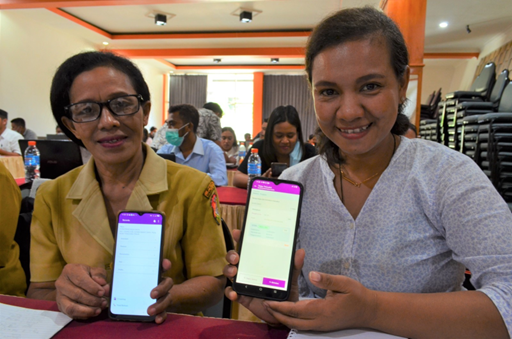
To date, SMILE has facilitated the distribution of 454 million doses of COVID-19 vaccines to over 12,000 health facilities nationwide. Additionally, temperature loggers installed at 5,000 health facilities have maintained vaccine efficacy, thanks to support from Gavi, the Vaccine Alliance. Vaccine stock-outs have been reduced by 36% and over-stocking by 56%. Vaccine stock wastage has been reduced by more than 90%.
Following its use for COVID-19 vaccines, SMILE is now supporting national vaccination campaigns to increase children’s routine immunization coverage, which declined during the pandemic.
From SMILE to ME-SMILE
UNDP’s SMILE Project has been working with the ministries of health and the environment and forestry on an internet based medical waste management information system. Piloted in three health facilities, ME-SMILE uses Internet of Things technologies to track the waste removal process, including collection, sorting and disposal. Dozens of health workers received training to input data, enabling real-time analysis during the waste management process.
The digital tracking system allows health facilities and authorities to identify current streams and determine total waste generated and help reduce carbon footprint. ME-SMILE reduced waste processing time from three hours to 30 minutes, while providing health facilities with more accurate data to plan future disposal capacity.
UNDP and the health ministry are scaling up ME-SMILE in 2023, initially involving 30 major hospitals in four provinces. The long-term goal is to implement ME-SMILE in all 3,000 hospitals by 2025, ensuring the safe management of approximately 3,000 tons of medical waste daily and reporting waste management data from all facilities to the national level.
Combatting Malaria with SMILE
UNDP and the MoH, in collaboration with the Access and Delivery Partnership and the Global Fund, are piloting the SMILE Malaria app. This initiative supports Indonesia’s goal to eradicate malaria by 2030. With over 90% of malaria cases concentrated in the eastern provinces of Papua, West Papua and East Nusa Tenggara, the app digitizes the recording, monitoring and reporting of malaria logistics. By improving supply chain management and preventing stock-outs of malaria drugs and diagnostic tools, the SMILE Malaria app will contribute to malaria elimination efforts. The success of SMILE in immunization and malaria programmes will enable its scalability for monitoring essential drugs nationwide.
Over the past four years, UNDP’s SMILE system has revolutionized Indonesia’s digital logistics monitoring, bridging the digital divide and promoting digital innovation. The commitment of frontline health workers in utilizing SMILE has played a crucial role in informing decision-makers with critical health data. By leveraging SMILE’s capabilities, Indonesia is bolstering its health system preparedness and resilience and taking significant steps toward achieving universal health coverage, ensuring the effective delivery of life-saving vaccines and essential logistics to all its citizens.