Revenue generation
Purpose
Revenue generation strategies identify resources to be mobilized to enhance sustainability. These approaches also help to build resilience.
Revenue generation in health systems focuses on developing detailed investment cases to advocate for additional funding, providing a detailed analysis of the imposition of a particular charge or tax. Funding could be from within countries’ own available funding or from external sources.
When a country is experiencing an economic downturn, a strong case may need to be made that budget cuts within other government departments are not applied with the same vigour in the health system. Revenue generation should also ensure that patients payments for medicines and other services are captured completely within the existing finance systems.
UNDP’s approach
To support revenue generation for health programmes, UNDP does the following:
- It supports ministries of health to build political commitment to improve financial revenue generation for health programmes.
- It works closely with the World Health Organization (WHO) and the Joint United Nations Programme on HIV/AIDS (UNAIDS) to support the development of investment for increased funding to the health sector, and specific disease programmes. This includes through the development of investment cases for non-communicable diseases and expanding innovative financing for HIV and health.
Suggested capacity development indicators
Suggested indicators to monitor activities to enhance revenue generation include:
- A resource mobilization plan has been developed
- Policies for new revenue streams have been developed and approved
- A plan to ensure the sustainable funding of health reform is approved
- Domestic financing for health increases by a certain percentage.
Examples
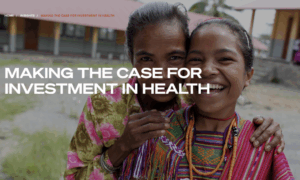
Health Investment Cases
Health investment cases empower governments with data-driven insights on the economic and social impact of diseases, while illustrating the financial and health benefits of investing in prevention and control measures. Developed through collaborative, country-led processes, these cases equip policymakers with the tools to implement cost-effective policies that enhance governance, financing, and health service delivery. By providing evidence-based data, they support policies that reduce inequalities, foster inclusive governance, and strengthen sustainable health systems.
Case Study: Mental Health Investment as a Key to Zimbabwe’s Well-Being and Economic Growth
Zimbabwe’s Mental Health Investment Case highlights the urgent need for increased investment in mental health services, demonstrating significant economic and social returns. The country faces a high burden of mental health conditions, with an annual economic loss of USD 163.6 million, 95% of which stems from lost productivity. By scaling up evidence-based, cost-effective mental health interventions, Zimbabwe could save over 11,000 lives, gain 500,000 healthy life years, and generate USD 689 million in economic benefits over 20 years. The case, developed with support from UNDP and WHO, underscores the cost-effectiveness of targeted investments in clinical services, policy reforms, and prevention initiatives such as school-based mental health programs and a pesticide ban to reduce suicides. Mental health investments offer high economic returns, with epilepsy treatment yielding USD 11.6 and depression care USD 3.3 for every dollar spent, underscoring the urgency of expanding access. These gains reduce productivity losses from absenteeism and premature death while strengthening long-term financial sustainability and national development. As Zimbabwe moves forward, aligning mental health funding with national health priorities will be essential to achieving universal health coverage and sustainable development goals (SDGs).
Learn more here.
Key Resources