Strengthening national systems for health: focus areas
Investments in resilient and sustainable systems for health lay the foundation for the effective and equitable delivery of HIV, tuberculosis (TB) and malaria programmes, other essential health services and the achievement of universal health coverage. As a key partner of the Global Fund to Fight AIDS, Tuberculosis and Malaria (The Global Fund), UNDP supports investments in strengthening systems for health. UNDP is increasingly requested by governments to provide technical assistance in core functional areas of health system strengthening, such as procurement and supply chain management or financial management systems.
Key areas for building resilient and sustainable systems for health
- The Global Fund’s Modular Framework Handbook underlines the following key areas for investment in resilient and sustainable systems for health:
- Health product management and systems strengthening. This includes policy strategy and governance; storage and distribution capacity; procurement capacity; regulatory and quality assurance support; and avoidance, reduction and management of health-care waste.
Examples
Case Study: Building Resilience Against Health Crises Through Long-Term Investments in Health Systems
In 2020, the simultaneous threats of malaria, Ebola, and COVID-19 placed immense strain on Burundi’s healthcare system. Since 2017, UNDP, with funding from the Global Fund, has supported the Ministry of Health in scaling up programs, procuring essential medical supplies, and strengthening supply chains. Key interventions included distributing 6.8 million bed nets, deploying mobile clinics, and conducting insecticide spraying in high-risk areas. Investments in health infrastructure and medical equipment enhanced Burundi’s ability to respond to emerging outbreaks. The national health crisis center, originally established for Ebola, became the coordination hub for COVID-19, equipped with 200 smartphones and laptops. Additionally, malaria control pumps were repurposed for medical decontamination, and a health monitoring app was adapted to track COVID-19 cases.
These efforts not only controlled disease outbreaks but also fortified Burundi’s healthcare system, ensuring life-saving medicines and diagnostic tools reached even remote communities. By strengthening disease surveillance and response capacity, Burundi reduced malaria-related deaths and enhanced its resilience against future health crises, protecting millions of lives.
Case Study: Building resilience through strengthened ICU care
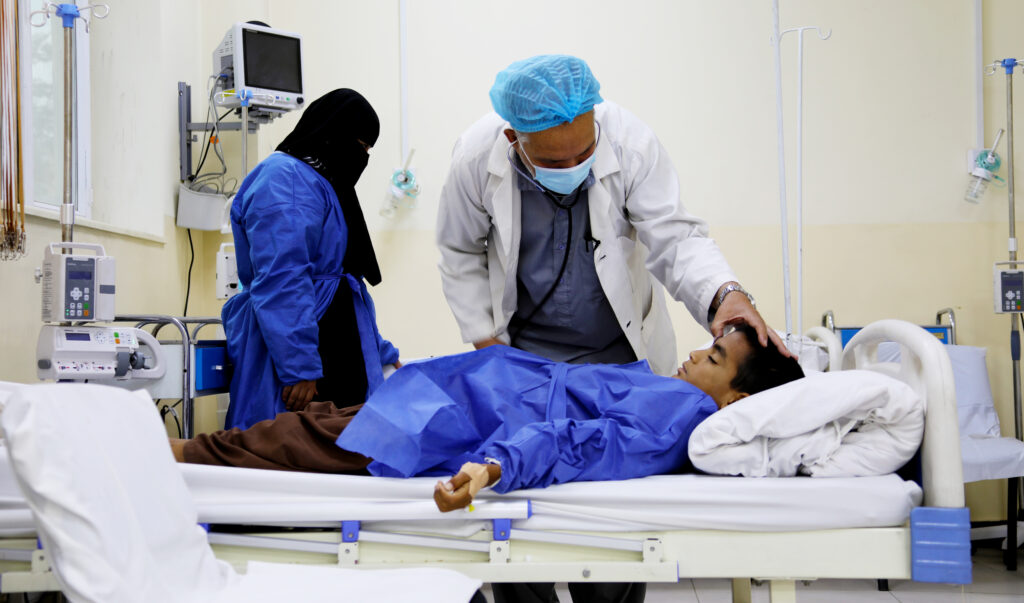
Strengthening the Intensive Care Unit ICU care in Afghanistan
In Afghanistan, Intensive Care Units (ICUs) play a crucial role in providing emergency care, particularly in regions affected by conflict, disasters and public health crises. With support from the Global Fund, UNDP upgraded ICUs in Kandahar, Logar, and Balkh provinces, enhancing emergency care and infectious disease treatment for over 500 patients monthly. These improvements included renovating ICU wards and installing oxygen plants that deliver oxygen directly to patients’ beds while also generating backup supplies in cylinders. These measures enable the ICUs to provide intensive care services to patients in need.
These investments provide the infrastructure, equipment and healthcare capacity to improve critical care, manage infectious diseases and chronic illnesses, improve maternal and neonatal health and respond to emergencies and disasters. Crucially, this also ensures a more integrated healthcare network, enabling telecommunication links between departments and boosting the long-term readiness of facilities to respond to crises. With hundreds of patients now receiving care each month from the upgraded ICUs, this approach helps safeguard communities, bolster health systems and build resilience against future health emergencies.