UNDP's commitment to addressing HIV and other major health and development challenges is based on the principles that health is a driver for and an indicator and outcome of development.
As outlined in the UNDP Strategic Plan 2022-2025, UNDP’s support to countries aims to eradicate poverty in all its forms and dimensions, accelerating structural transformation for sustainable development and supporting governments to build resilience to shocks and crises.
UNDP defines capacity development as the process through which individuals, organizations and societies obtain, strengthen and maintain the capabilities to set and achieve their own development objectives over time.
Strong partnerships are the cornerstone of UNDP's work to strengthen systems for health. In its support to countries UNDP works closely with other United Nations entities, development organizations, civil society organizations, the private sector, academia and key populations to develop resilient and sustainable systems for health.
The effectiveness of UNDP's model of health programme support, with its emphasis on end-to-end capacity development, is evident in the results of its long-standing partnership with the Global Fund to Fight AIDS, Tuberculosis and Malaria (the Global Fund).
Whether in its role as an implementing partner managing large-scale HIV, TB, and malaria programmes funded by the Global Fund or as a technical assistance
Investments in resilient and sustainable systems for health lay the foundation for the effective and equitable delivery of HIV, tuberculosis (TB) and malaria.
Human rights barriers include stigma and discrimination, punitive laws, policies and practices, violence, harassment, gender, and social and economic inequalities.
People most affected by HIV, tuberculosis (TB) and malaria are often the same people who are marginalised and have limited or no access to health care.
Gender equality is essential to achieving health and well-being for all, accelerate progress towards the health-related Sustainable Development Goal (SDG) targets and ensuring that no one is left behind.
Supporting countries to harness innovation is central to UNDP’s approach to strengthening resilient and sustainable systems for health. UNDP views innovation as a critical driver to do development differently and better. Innovation for development is about identifying more effective solutions that add value for the people affected by development challenges. UNDP’s approach embraces an expansive definition of innovation as a break from previous practice that has significant positive impact, shifting the focus away from the introduction of specific technologies, to helping partners identify, test, and scale new ways of working based on the sustainable and measurable impact brought about by the new technology or process.
Within its health and development portfolio, UNDP leverages innovation at the policy and programme level to help achieve more inclusive service delivery and support countries to transform systems to attain universal health coverage. These efforts range from introducing and scaling innovative ways of reaching people, to identifying innovative financing instruments in support of sustainable health outcomes.
In health as in other spheres of development, technology plays a tremendous role in leapfrogging development dividends. However, technology is part of a chain of dynamic collaborations among invested, trusted and diverse stakeholders. A mobile phone app for health logistics management is not enough to ensure more effective decision-making, nor is the development of a new health technology enough to guarantee increased access to medicines for key populations.
Recognizing that innovation is not just cutting-edge technology but requires changing the status quo, UNDP invests in an integrated approach to foster innovation as a means of scaling and sustaining positive impact. This is based on the understanding that:
Innovation is not an end in itself. It is about using the most relevant and up-to-date concepts and means available to create better development results.
Innovation needs to have an impact and create value for the end-user.
Innovation is about continually examining our work as a development partner to make it more effective, legitimate, and nationally-owned.
Innovation also entails retiring concepts that do not provide clear evidence of impact.
Entry points for innovation
UNDP supports innovation in multiple forms and contexts. This includes:
Mission-driven innovation: Mission-driven innovation tackles complex development issues through concrete and measurable “missions” that are ambitious and foster multi-disciplinary collaboration. They motivate and unite diverse groups in society to work towards a big goal over time, that often transcends electoral cycles. With its wide country presence and role as an integrator, UNDP is uniquely placed to support innovation that goes beyond incremental improvements to those which help to drive broader systems change. This includes through the work driven by its Strategic Innovation Unit and Accelerator Lab Network.
Improvement-oriented innovation: Driving new agile ways of working to improve the efficiency and effectiveness of development programmes, both within UNDP and with the partner countries. This includes experimenting with new capacities, tools and regulations that often lead to more cost, time and resource efficiencies in programme, policy and operation design and services.
Bottom-up solutions: Leveraging local collective intelligence about successful solutions to drive systems change and organizational learning. UNDP plays a key role in connecting, promoting and mainstreaming cutting edge ideas to decision-makers for large scale impact.
Anticipatory innovation: Addressing potential future risks and liabilities by designing experiments to explore them today. This is particularly relevant for frontier technologies and their impact on economies, on human freedom and our well-being. It also entails building new mental models and capacities (e.g. foresight, impact modelling, systems thinking) to understand emerging futures by shifting perceptions and creating future-oriented ambitious programmes.
The following examples further illustrate the multi-faceted ways through which UNDP leverages innovation for increased impact in health and development:
Scaling access to innovations for HIV and TB prevention, testing and treatment
Access and Delivery Partnership across West and Central Africa: Since 2013, UNDP, WHO, the Special Programme for Research and Training in Tropical Diseases (TDR) and PATH have collaborated through theAccess and Delivery Partnership (ADP) in advancing the use of new health technologies in low- and middle-income countries. For instance, work under the ADP contributed to the safe introduction to new treatments for DR-TB, based on WHO treatment guidelines. ADP supported the establishment of a regional working group of national TB programmes and pharmacovigilance authorities from 27 countries across West and Central Africa, and facilitated South–South knowledge exchange, trainings and study visits to build capacity on Active TB-drug safety monitoring and management (aDSM). The working group developed key resources and documents related to aDSM implementation for clinicians and programme managers, as well as a model national guideline on aDSM for countries to adapt to their own contexts. As a pilot, a national aDSM guide was developed for Senegal.
Pre-exposure Prophylaxis (PrEP) in Zimbabwe: In 2021, more than 1.6 million people worldwide were receiving oral pre-exposure prophylaxis (PrEP) for HIV, which remains well short of the 2025 target of 10 million people. UNDP is supporting countries to increase access to PrEP for the most vulnerable communities, as part of its larger efforts to improve and expand coverage of HIV prevention for key populations and their sexual partners who now account for 70 percent of new HIV infections worldwide.
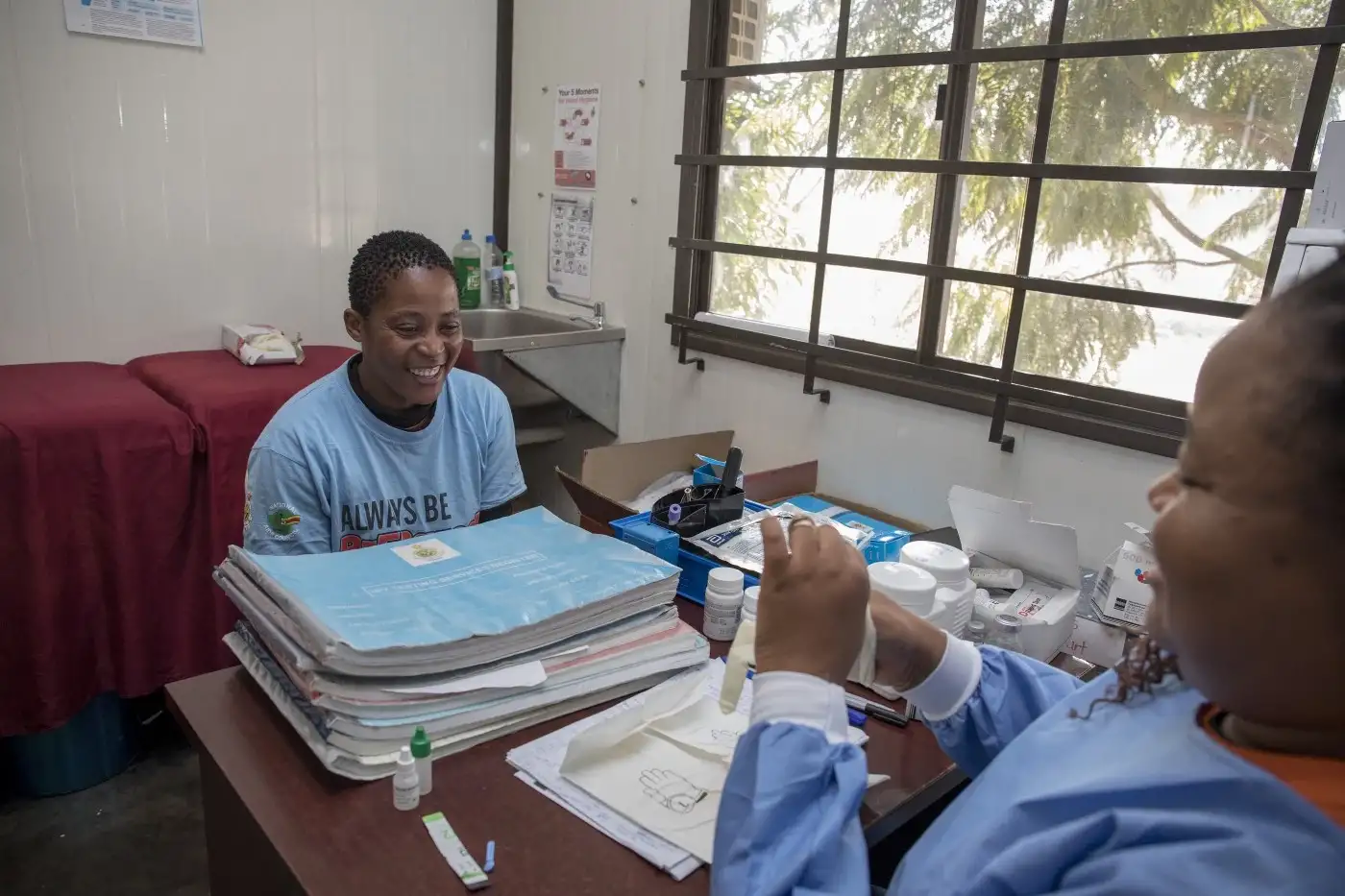
Bridget Ngorima shares a light moment with Beauty Dhliwayo before her HIV test at the CeSHHAR clinic in Mutare, Zimbabwe. Photo: UNDP Zimbabwe/Cynthia R. Matonhodze
In 2021, in Zimbabwe, UNDP in partnership with the Global Fund, the Ministry of Health and NGOs reached 3,300 female sex workers with PrEP. This was done through a combination of fixed sites providing prevention services, and outreach conducted by NGO partners such as the Centre for Sexual Health and HIV/AIDS Research Zimbabwe (CeSHHAR). In addition, in November 2022, Zimbabwe became the first country in Africa to announce regulatory approval for long-acting injectable cabotegravir as PrEP for HIV prevention, paving the way for the provision of more safe and highly effective prevention options.
New PrEP initiative in Pakistan: In Pakistan, UNDP with support from the Global Fund and in partnership with local community-based organizations, the Government, UNAIDS and WHO launched a new PrEP initiative in June 2022. The initiative is also working closely with key population communities to provide PrEP through networks of peer outreach workers and drop-in centers. In addition, government health care workers stationed at existing antiretroviral (ART) treatment centers are being trained in delivering safe and effective PrEP services.
Rapid HIV and syphilis test across Western Pacific: In the Western Pacific, geographic isolation significantly hinders testing for HIV and other sexually transmitted infections (STIs). The majority of HIV and STI cases are detected during health care visits using laboratory-based diagnostic testing, yet populations are often scattered across a multitude of remote small islands, many with either limited or no access at all to clinical health services. People are often forced to travel great distances to seek testing, treatment and care. Additionally, test turnaround times can be lengthy, requiring patients to return on a separate date for test results, resulting in substantial loss to follow-up. Under the Multi-Country Western Pacific HIV/TB grant, UNDP and partners have rolled-out use of a rapid HIV and syphilis test across the region to reach key and vulnerable populations including those living on remote islands. A crucial component of the initiative was to provide training for the community and non-governmental organizations involved in the programme that are conducting outreach with key populations.
Multi-month dispensing of anti-retroviral medicines in Belize: Multi-month dispensing of anti-retroviral medicines is a modality that aims to improve HIV treatment retention and adherence support among people living with HIV. Providing them with medication for up to 3-6 months minimizes their trips to the health facilities/hospitals and helps ensure continuity of treatment. In Belize, the COVID-19 pandemic posed a strong challenge for retention of people living with HIV, which can partly be explained by the unwillingness of some of them to travel to clinics due to fear of COVID-19 infection. The Ministry of Health and Wellness introduced multi-month dispensing and the CSO Hub provided home delivery of medications to address treatment retention challenges.
Leveraging technology to improve health services and access
Mass screening to eliminate TB in Micronesia In 2023, UNDP partnered with the Micronesia Department of Health and Social Affairs, Chuuk state authorities, World Health Organization and Centers for Disease Control and Prevention to conduct a mass tuberculosis (TB) screening in Chuuk state, including with portable chest X-rays assisted by artificial intelligence (AI) software.
Supported by the Global Fund, the screening reached more than 12,000 people at higher risk of TB in Weno Island and selected villages in Chuuk Lagoon. The screening led to the diagnosis of 176 people with active TB and 2,170 people with latent TB. Nearly all people with active TB started treatment. Of those with latent TB, 95 percent started preventive treatment with the support of local community health workers. The campaign also screened for leprosy and diabetes, leading to the diagnosis of 400 people with diabetes. As part of this screening campaign, 8,000 people received leprosy prevention medication, in addition to the more than 2,000 people protected from leprosy through preventive TB treatment for people with latent TB (3HP).
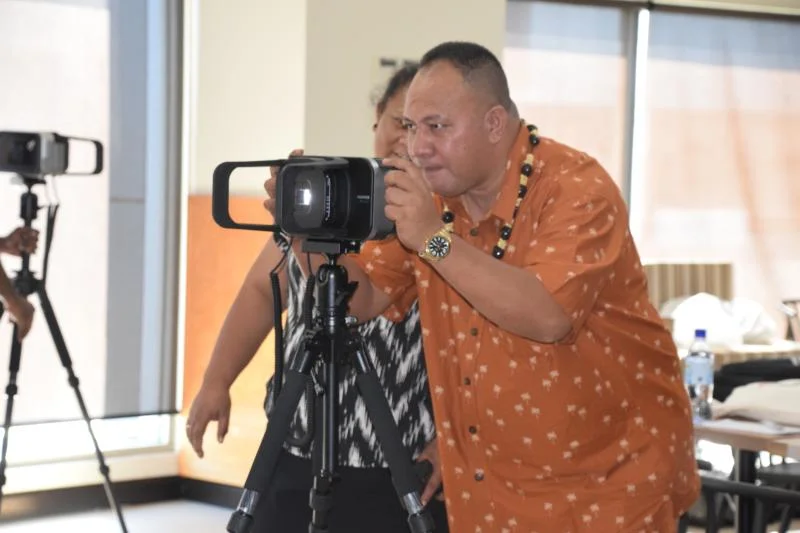
Photograph from a workshop in Nadi, Fiji in August 2023, which provided hands-on training on the new x-ray systems for health workers from the Federated States of Micronesia, Fiji, Kiribati, the Republic of Marshall Islands, Samoa, Tuvalu and Vanuatu.
The new X-rays have several advantages. Battery operated and relatively small, they can be transported by hand to remote communities that lack radiology services. Combined with AI-assisted software, the X-ray system enables health workers to quickly detect anomalies in chest X-ray images, which could be TB. After confirming with a radiologist remotely, health workers promptly refer patients to further testing and treatment, which encourages adherence to medical advice.
As a result of the mass screening, Micronesia’s TB case notification rate increased from 49 to 212 per 100,000 people from 2022 to 2023, quadrupling the number of people effectively diagnosed and treated. In particular, the detection of latent TB is essential during the elimination phase of TB response, which underlines the importance of mass screening as a strategy.
Testing behavioural insights and video technology to improve treatment access in Moldova: UNDP partnered with the Ministry of Health, Labour and Social Protection, Act for Involvement (AFI), the Center for Health Policies and Studies (an implementer of Global Fund projects in Moldova), and the Behavioural Insights Team (United Kingdom) to test the effects of virtually observed treatment compared with directly observed treatment on patients’ adherence to the TB treatment regimens. Altogether, 175 people affected by tuberculosis were included in the research, with patients randomly assigned to one of two groups: the treatment of one group of patients was routinely directly observed (DOT—directly observed treatment) and the other group was observed remotely (VO—video observed treatment). Preliminary results show that the adherence level for VOT was 87%, double that of the control group, DOT—43%. People who received VOT reported saving time and money compared with their peers who went to the local clinic to take the medicines in front of the medical staff. Results also showed that VOT reduced patients’ exposure to stigma. Thanks to the results obtained in the study and with the support of the Global Fund, another 10 districts will pilot video observance of tuberculosis treatment. Read more here.
Supporting open-source innovations in the COVID-19 response: UNDP’s Global Center for Technology, Innovation and Sustainable Development has developed a COVID-19 Open-Source Digital Toolkit. The Toolkit features free-to-download tools that have been proven in other communicable disease and public health challenges – and which are also driving governments around the world. The tools address disease monitoring; prevention and containment; diagnosis; and recovery efforts. It also launched the COVID-19 Detect and Protect Challenge to create a repository of 350+ fully-fledged innovations that can be built and implemented locally.
Instigating systems change
Creating enabling legal, rights and policy environments for health: Driven by an approach that helps countries to harness bottom-up innovation, UNDP supports innovative platforms, for example, that bring key populations and civil society together with judiciaries and policymakers in the design of legal, rights and policy frameworks for health. Incorporating human-centered design principles into efforts to enhance legal environments for health helps to ensure that policies are designed according to the lived realities and needs of those for whom they are meant to serve.
A risk-management approach to testing and scaling corruption prevention measures in the health sector: Corruption in the health sector remains a critical obstacle to the achievement of national development objectives, contributing to weak health systems and the diversion of fundamental health resources from those who need them. Mainstream approaches to corruption have tended to focus on generic, and generally technical governance reforms rather than explicit anti-corruption measures or have otherwise been characterized by an overemphasis on legalistic responses and law enforcement efforts. Recognizing the added value of risk management for corruption prevention, and the need for tools adapted to sector specific contexts and challenges, UNDP in the Arab States has defined new methodologies based on its experiences in operationalizing a corruption prevention agenda. UNDP has helped numerous countries, such as Tunisia and Morocco, to successfully design action-oriented corruption risk assessments targeted to their political and institutional realities and unique needs. It has achieved notable results applying this approach at the sub-national level by testing small-scale, focused interventions in public hospitals, which have helped to inform national policy responses. This prevention-based approach using the language of “risk” and grounded in scientific method has also helped to shift attitudes towards corruption in the health sector by framing it as an institutional rather than ethical issue.
Innovative finance
Tobacco control social impact bond: UNDP is working with partners to launch the world’s first social impact bond for tobacco control, to support tobacco farmers in Zambia. The project aims to demonstrate the capacity of an innovative finance tool to help farmers switch from tobacco-leaf cultivation to alternative crops and livelihoods that are healthier, environmentally-sustainable, and more profitable, thereby attracting increased private investment in an issue threatening progress towards multiple SDGs.
Impact investing for planetary health: Impact investment is an important vehicle for the engagement and ownership of the private sector in the process of SDG implementation. UNDP’s work to support planetary health helps to address gaps and promote synergies between SDGs related to health and the environment. The positive impact of its Solar for Health initiative on health access and reductions in CO2 emissions, for example, illustrates the important social and environmental returns of investments that simultaneously address the health of humans and the planet. To build on these efforts, UNDP is exploring sustainable business models and innovative financing options in several countries, such as blended finance or social impact bonds, that will support ministries of health and social services to generate increased private investments in Solar for Health.
Investment cases to support co-financing of non-communicable diseases (NCDs): As an intervention that can help countries realize significant health savings and development gains across multiple sectors, NCD prevention is a strategic area for mobilizing private sector investments. UNDP is working closely with WHO, the NCD Alliance, ministries of health and ministries of finance and other partners to develop national NCD investment cases, to prioritize action, mobilize resources from multiple sectors and develop innovative solutions in different countries. This health investment approach is prevention-centred, focuses on the population level, engages all sectors, and identifies how economic gains accrue to private and public sectors. Read more about the value of co-financing across sectors in the UNDP Guidance Note Financing across sectors for sustainable development.
Harnessing existing public sector innovation to enhance health outcomes
Innovative initiatives outside the health sector can also have important health outcomes.
For example:
Access to Information programme in Bangladesh: The Access to Information (a2i) programme of the Bangladesh Prime Minister’s Office, with technical assistance from UNDP and USAID, has been looking at service delivery challenges, focused especially at meeting the needs of rural communities. One identified challenge is the limited number of medical personnel in rural areas, so a2i launched a telemedicine service that has improved access to health services for rural communities by introducing virtual consultations and connecting patients to doctors in urban settings.
Increasing citizen participation in the design and delivery of public services in Kazakhstan: In Kazakhstan, UNDP is supporting the government to increase citizen participation in the design and delivery of public services in Kazakhstan, including through real-time citizen-generated data. This builds on the country’s introduction of the “Listening State” concept in 2019, a constructive dialogue between the state/ government and its citizens as a key principle for public services delivery. In the context of health service delivery, mechanisms that make citizens co-designers of public services can be invaluable to help governments understand the needs and experiences of those meant to benefit from the services.
Measuring impact: a key enabler for innovation
A key focus of UNDP’s approach is supporting partners to take innovations to scale: to identify new tools or techniques that work and expand or adapt them to different contexts. The capacity to define and measure the impact of innovation is crucial to determining what works and what does not, allowing for quick iteration and the ability to shift courses along the way based on evidence. Strong mechanisms to continually evaluate the impact of innovation and monitor for unintended consequences not only help to ensure that initiatives are on the right track, but also help to de-risk investments in new solutions by starting small and testing their results before scaling. This emphasis on measurement and evaluation is reflected in the focus of UNDP’s innovation for health initiatives, from its investment in numerous feasibility studies to help partners understand the potential for new financing modalities, to its joint efforts with partners to define metrics for health interventions whose impacts are long-term and complex, such as legal reforms to protect human rights and health access.
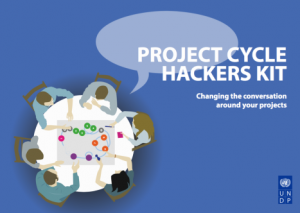
A practical toolkit to help UNDP and partners identify opportunities to embed innovation throughout the project management business cycle. The kit provides structure to support new conversations, principles and tools...