Distribution
Purpose
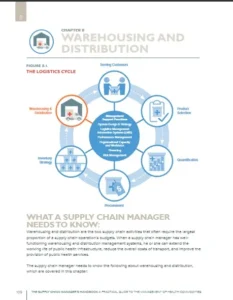
In-country distribution systems are designed to move health products down the pipeline from central warehouses the final service delivery point (last mile) or until they reach end-users. They are key to maintaining an uninterrupted supply of health products.
A in-country health product distribution system should achieve the following objectives:
- maintain an uninterrupted supply of health products to the end users;
- keep medicines and other health products in good conditions throughout the distribution chain;
- ensure secured transport conditions to prevent diversion, losses of health products due to spoilage and expiry;
- contribute to stock visibility across the supply chain and facilitate tracking and traceability of products with accurate inventory records;
- optimize storage points according to public health objectives;
- use available transportation resources as efficiently as possible, including considering opportunities for public private partnerships with third party logistics;
- provide regular operational information for forecasting health products needs.
UNDP’s approach
UNDP offers expertise to countries to conduct assessments of existing national supply chains’ maturity and to identify interventions for capacity-strengthening related to distribution chains. Within its broader support for the formulation of supply chain strategies, UNDP helps to design and operationalize distribution systems. This support is also complemented by infrastructure and pilot projects to improve logistic management information systems, which are essential to plan, monitor and review distribution cycles at different levels of the supply chain.
Reaching hard-to-reach areas with essential health products in Sudan amidst COVID-19
Navigating sanctions, using its procurement experience and strengthening Ministry of Health capacity, UNDP has a history of supporting health ministries with grants from the Global Fund to Fight AIDS, Tuberculosis and Malaria in complex environments. While procuring and delivering essential medicines, UNDP aims to transfer full responsibility to national agencies.
Working with Sudan’s Federal Ministry of Health and NSMF, a solution was developed: providing a five-month supply of medication and laboratory supplies to in-need areas of Sudan and deploying an inter-state fleet of permitted World Food Programme trucks for distribution.
Key Resources
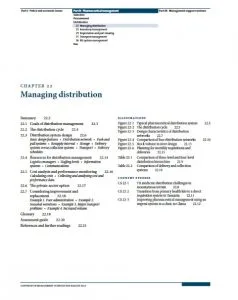
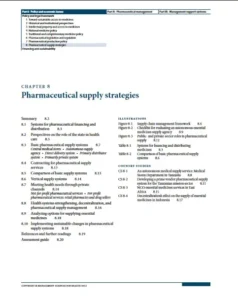
Management Science for Health (2012). Managing Access to Medicines.
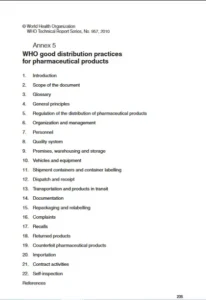
World Health OrganizationEstablished standards for the storage of pharmaceuticals. The standards are known as good storage practices.