UNDP's commitment to addressing HIV and other major health and development challenges is based on the principles that health is a driver for and an indicator and outcome of development.
As outlined in the UNDP Strategic Plan 2022-2025, UNDP’s support to countries aims to eradicate poverty in all its forms and dimensions, accelerating structural transformation for sustainable development and supporting governments to build resilience to shocks and crises.
UNDP defines capacity development as the process through which individuals, organizations and societies obtain, strengthen and maintain the capabilities to set and achieve their own development objectives over time.
Strong partnerships are the cornerstone of UNDP's work to strengthen systems for health. In its support to countries UNDP works closely with other United Nations entities, development organizations, civil society organizations, the private sector, academia and key populations to develop resilient and sustainable systems for health.
The effectiveness of UNDP's model of health programme support, with its emphasis on end-to-end capacity development, is evident in the results of its long-standing partnership with the Global Fund to Fight AIDS, Tuberculosis and Malaria (the Global Fund).
Whether in its role as an implementing partner managing large-scale HIV, TB, and malaria programmes funded by the Global Fund or as a technical assistance
Investments in resilient and sustainable systems for health lay the foundation for the effective and equitable delivery of HIV, tuberculosis (TB) and malaria.
Human rights barriers include stigma and discrimination, punitive laws, policies and practices, violence, harassment, gender, and social and economic inequalities.
People most affected by HIV, tuberculosis (TB) and malaria are often the same people who are marginalised and have limited or no access to health care.
Gender equality is essential to achieving health and well-being for all, accelerate progress towards the health-related Sustainable Development Goal (SDG) targets and ensuring that no one is left behind.
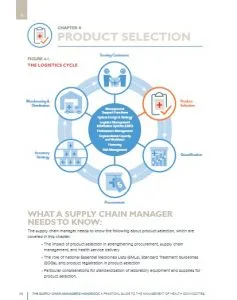
Quantification is the process of estimating the quantities of health products and the financial means required for a health programme or service for a given period. It refers to the step that determine the ‘right’quantities of health products to be procured for ensuring uninterrupted supply.
The results of a quantification exercise help programme managers to:
identify the funding needs and gaps for procurement of the required commodities;
leverage the sources, amounts, and timing of funding commitments to maximize the use of available resources;
advocate for additional resources, when needed;
develop a supply plan to coordinate procurements and shipment delivery schedules to ensure a continuous supply of commodities.
Source: John Snow, Inc. (2017). The Supply Chain Manager’s Handbook.
UNDP’s approach
UNDP has supported quantification activities for malaria, tuberculosis and HIV health products for national quantification committees in all countries funded by the Global Fund to Fight AIDS, Tuberculosis and Malaria (The Global Fund) since 2002. UNDP encourages the use of standardized quantification tools developed by partners. UNDP also provides expertise during national quantification committee meetings and the training of personnel responsible for forecasting the needs for medicines, diagnostics and laboratory items for the three diseases.
For countries receiving the Global Fund grant funds, strengthening quantification processes is a key element to ensure that the right quantities of health products are procured to prevent overstock or products being out of stock. Support may include the review of the quantification process and the terms of references of national quantification committees.
UNDP offers technical assistance on quantification to countries beyond those receiving the Global Fund funds as well, by mobilizing partners with quantification expertise or directly by including this need in service level agreements with UNDP.