Selection
Health product selection refers to the process by which health programmes select and ultimately procure the ‘right’ health products that will be used at different levels of the health care system. To ensure value for money, the selection of health products should be in accordance with national treatment guidelines or national diagnostics algorithms or national essential list of medicines, that are revised periodically and/or in accordance to WHO prevention and treatment guidelines.
What are essential medicines?
Essential medicines are those that satisfy the priority health-care needs of the population. Essential medicines are selected with due regard to disease prevalence and public health relevance, evidence of clinical efficacy and safety, and comparative costs and cost-effectiveness. Essential medicines are intended to be available within the context of functioning health systems at all times in adequate amounts, in the appropriate dosage forms, with assured quality and at a price the individual and the community can afford.
Source: World Health Organization
Policy considerations for the selection of essential medicines:
- “Access to essential medicines depends on four factors: rational selection, affordable prices, sustainable financing and reliable health systems.
- The selection of essential medicines, preferably linked to standard clinical guidelines, is a crucial step in ensuring access to health care and promoting rational use by health professionals and consumers.
- Official adoption of the essential medicines concept identifies priorities for government involvement in the pharmaceutical sector in general, and for medicine supply in the public sector and medicine benefits as part of health insurance in particular.
- Systematic and transparent procedures for defining the national list(s) of essential medicines, on the basis of evidence-based treatment guidelines should be established”
Source: World Health Organization (2002). The Selection of Essential Medicines.
UNDP’s approach
When UNDP acts as interim Principal Recipient of grants from the Global Fund to Fight AIDS, Tuberculosis and Malaria (The Global Fund), UNDP supports ministries of health in the selection of quality-assured medicines and diagnostic products, recommended in the current national guidelines, the World Health Organization (WHO) Standard Treatment Guidelines and/or the WHO Essential Medicines List.
Key Resources
The Global Fund’s selection of medicines, diagnostics and other health products for supported countries is based on principles outlined in the “Guide to Global Fund Policies on Procurement and Supply...
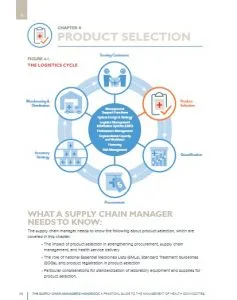
John Snow, Inc. The Supply Chain Manager’s Handbook.

WHO Standard Treatment Guidelines as well as WHO recommendations on diagnostics are developed using the GRADE (Grading of Recommendations Assessment, Development and Evaluation) methodology. This method, which has been adopted...
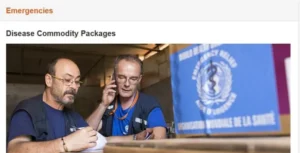
The Disease Commodity Packages are a series of disease-specific datasheets that list the critical commodities and the technical specifications for each commodity per disease.
WHO has developed several evidence-based recommendations for the selection and use of diagnostic tools outlining conditions for use at the different level of the health system. In May 2018, the...
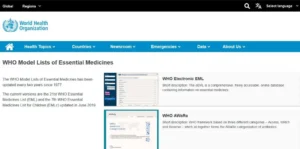
WHO has established the WHO Model Lists of Essential Medicines for adults and children, which are updated every two years and act as tools for the selection of medicines, jointly...