Key populations
Strengthening access to health services for key populations
Overview
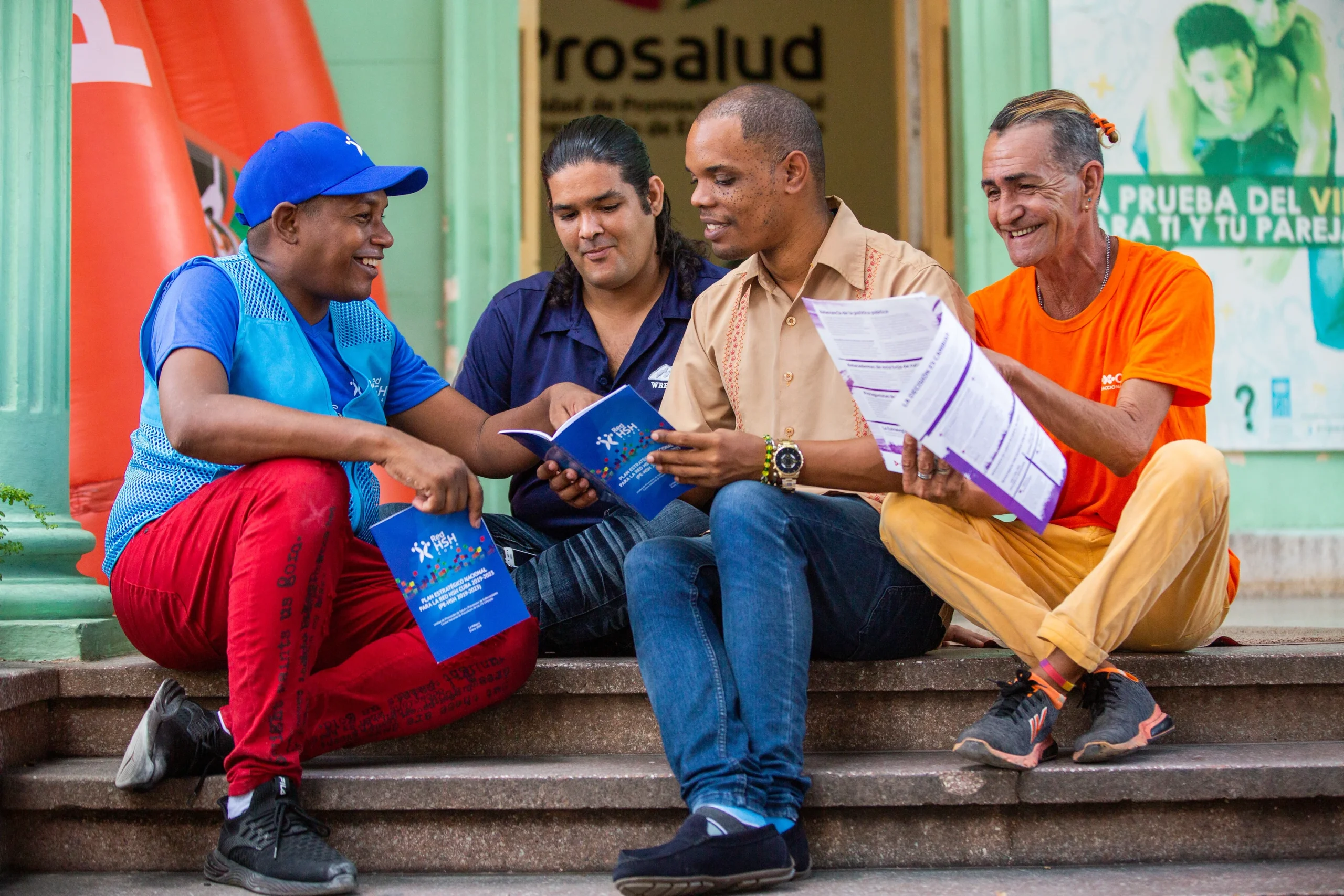
People most affected by HIV, tuberculosis (TB) and malaria are often the same people who are marginalised and have limited or no access to health care. Widespread stigma and discrimination, violence and harassment, punitive laws, policies and practices, and criminalization of behaviours increase marginalisation, put key populations at heightened risks and undermine their access to services.
Who are key populations?
A group is deemed to be a key population if it meets all the following three criteria :
- Epidemiologically, the group faces increased risk, vulnerability and/or burden with respect to at least one of the three diseases – due to a combination of biological, socioeconomic, and structural factors.
- Access to relevant services is significantly lower for the group than for the rest of the population – meaning that dedicated efforts and strategic investments are required to expand coverage, equity, and accessibility for such a group.
- The group faces frequent human rights violations, systematic disenfranchisement, social and economic marginalization and/or criminalization – which increases vulnerability and risk and reduces access to essential services.
Commitments
The Global Fund Strategy 2023 – 2028 commits the Global Fund to:
- prioritizing investment in evidenced-based programs for key populations
- removing barriers to health services and providing support to secure their meaningful engagement
- asking countries to prioritize programs for key and vulnerable populations in their funding requests, as well as through domestic commitments, based on country income context
UNDP’s approach
- UNDP scales up rights-based solutions to improve access to HIV and health services for key populations at risk of HIV, tuberculosis (TB) and malaria and other excluded groups, and eliminate sexual and gender-based violence.
- It integrates programming for gender, human rights, key populations and other excluded groups in the Global Fund to Fight AIDS, Tuberculosis and Malaria (The Global Fund) policies and programmes, leveraging UNDP’s governance and gender portfolio.
- It strengthens the evidence base and capacities for the inclusion of lesbian, gay, bisexual, transgender and intersex (LGBTI) and other excluded groups.
- It supports countries in social contracting, that is, the public financing of civil society service delivery, with a focus on key populations.
Guiding frameworks and examples
UNDP is guided by the following global frameworks and partner strategies in its approach and priorities for work with key populations:
- UNAIDS, Global AIDS Strategy 2021-2026 – End Inequalities. End AIDS
- United Nations General Assembly, Political Declaration on HIV and AIDS: Ending Inequalities and Getting on Track to End AIDS by 2030
- World Health Organization, Political Declaration on the Fight Against Tuberculosis – United to End Tuberculosis: An Urgent Global Response to a Global Epidemic (2018)
- The Global Fund, Global Fund Strategy 2023-2028
- UNDP, Connecting the Dots: Towards a More Equitable, Healthier and Sustainable Future: UNDP HIV and Health Strategy 2022-2025
- UNDP, Beyond Recovery: Towards 2030
Additional tools and resources are provided in the key resources section below. For more guidance on UNDP’s support to civil society organization (CSO) social contracting to expand health services for key populations, visit the Social contracting page.
Case study: Beauty pageants as a channel to address stigma towards transgender people in Tonga
In Tonga, social stigma and discrimination towards transgender people impeded their access to health services. In 1993, the Tonga Leitis Association started the Miss Galaxy Pageant as a platform to advocate for the rights of lesbian, gay, bisexual and transgender (LGBT) people and to raise funds for HIV awareness programmes. Through the Global Fund to Fight AIDS, Tuberculosis and Malaria (Global Fund) Multi-Country Western Pacific Integrated HIV/TB programme, UNDP co-sponsored the pageant in 2019 as a way to promote the social inclusion of transgender people and disseminate HIV prevention messages. As the pageant has become accepted in the country as a channel for entertainment, it has provided an
The project worked to improve relationships between key populations and service providers and access to non-discriminatory services. It also supported organizations to gain the experience, visibility and confidence to participate in policymaking bodies and advocate for the rights of key populations.
Story with more information here.
Case study: regional initiative to promote inclusive health service access and governance for LGBTI people
UNDP has been partnering in combating violence and discrimination against lesbian, gay, bisexual, transgender and intersex (LGBTI) people and promoting equality and inclusive development, through the regional “Being LGBTI in” programmes and the Inclusive Governance Initiative. For instance, UNDP partnered on gender legal recognition work in Thailand and Viet Nam, improving the normative framework for the treatment of transgender people in prison in Pakistan, LBT economic empowerment in the Philippines and LGBT youth entrepreneurship in Asia and the Pacific. The UNDP LGBTI rights country assessment for Cameroon was used to develop the Global Fund to Fight AIDS, Tuberculosis and Malaria (Global Fund) application and the country key populations strategy. In Albania, UNDP supported the government to develop a health protocol for intersex children providing clear guidance for diagnosis, treatment, psychosocial support and voluntary surgeries at adult age with informed consent. In 2020, more than 400 human rights defenders benefitted from the capacity building implemented through the UNDP-led “Being LGBTI in the Caribbean” programme.
Case study: empowering young key populations in policies for HIV
UNDP’s Linking Policy to Programming project seeks to improve sexual and reproductive health (SRH) outcomes for young key populations in the Southern African Development Community (SADC) countries of Angola, Madagascar, Mozambique, Zambia and Zimbabwe. The project is implemented in partnership with the African Men for Sexual Health and Rights (AMSHeR) and the Health Economics and HIV and AIDS Research Division (HEARD) at the University of KwaZulu-Natal.
The project has supported numerous efforts to improve the capacity of young key populations and groups to effectively advocate for their HIV and SRH-related human rights. More than 15 skills-building training sessions have been conducted for nearly 300 people in the five countries. National advocacy working groups have been established and are operational to engage with national institutions and policy processes on rights and access to HIV and SRH services. With the support of the project, two new young key populations groups have been formed in Zambia – Zambia Intersex Society, and Decisive Minds.
To strengthen regional mechanisms on young key population issues, the project has supported the development and implementation of the Regional Strategy for HIV Prevention, Treatment and Care and Sexual and Reproductive Health and Rights among Key Populations. It has also supported the integration of young key populations issues into SADC parliamentary minimum standards for the protection of key populations in the context of HIV.
Read more here.